Q3 2026 Funding: Deep Tech Raises $290 Million as Investors Back Fewer, Bigger Hardware Bets
Third-quarter reports from Inc42, Entrackr and Tracxn show modest overall startup funding growth but a 176% jump in deep-tech investment, led by spacetech, physical AI chips, quantum security and EVs.
The third-quarter funding reports are in, and for India's deep-tech founders they carry a quietly encouraging message. Overall startup funding in July–September 2026 grew only modestly, and investors wrote fewer cheques. But the money that did move went disproportionately to hard technology — physical AI chips, satellites, quantum security, electric vehicles and drones — and deep tech's own share jumped sharply.
Three trackers have now published their numbers: Inc42, Entrackr and Tracxn. Their totals differ because each defines sectors, stages and dates slightly differently, but they point in the same direction.
The headline numbers
Inc42 estimates Indian startups raised about $2.2 billion in Q3 2026, up 5% year on year, as investors grew more selective. Within that, it counts deep tech at $290 million, up 176% from a year earlier — even though the number of deep-tech deals stayed flat at 28. AI startups raised $438 million across 35 deals and cleantech $433 million, putting deep tech third by sector.
Entrackr, which uses a broader definition, puts Q3 funding at about $2.9 billion, up from $2.78 billion in Q3 2025 but below the preceding quarter. By its count, AI led with $635.3 million, followed by EV startups at $583 million and fintech at $487.7 million. It recorded 46 growth and late-stage deals worth $1.89 billion and 194 early-stage deals worth $1.01 billion.
Tracxn, looking at the first nine months of 2026, reports Indian tech funding of $10.3 billion, up 7%, even as the number of deals fell 38%. Nine-month funding included 18 mega-rounds of $100 million or more, and AI infrastructure was the single most-funded segment at $1.2 billion. Seed funding, by contrast, fell 37% to $698 million.
Where the deep-tech money went
The quarter's deep-tech story is one of a few large, conviction-led rounds rather than a broad rally.
- Spacetech made up about 21% of Inc42's deep-tech total, led by Earth-observation company Pixxel's reported $100 million round in September .
- Bengaluru captured about 65% ($189 million) of deep-tech funding by Inc42's count, helped by Pixxel, drone-logistics company Airbound and quantum-security firm QNu Labs.
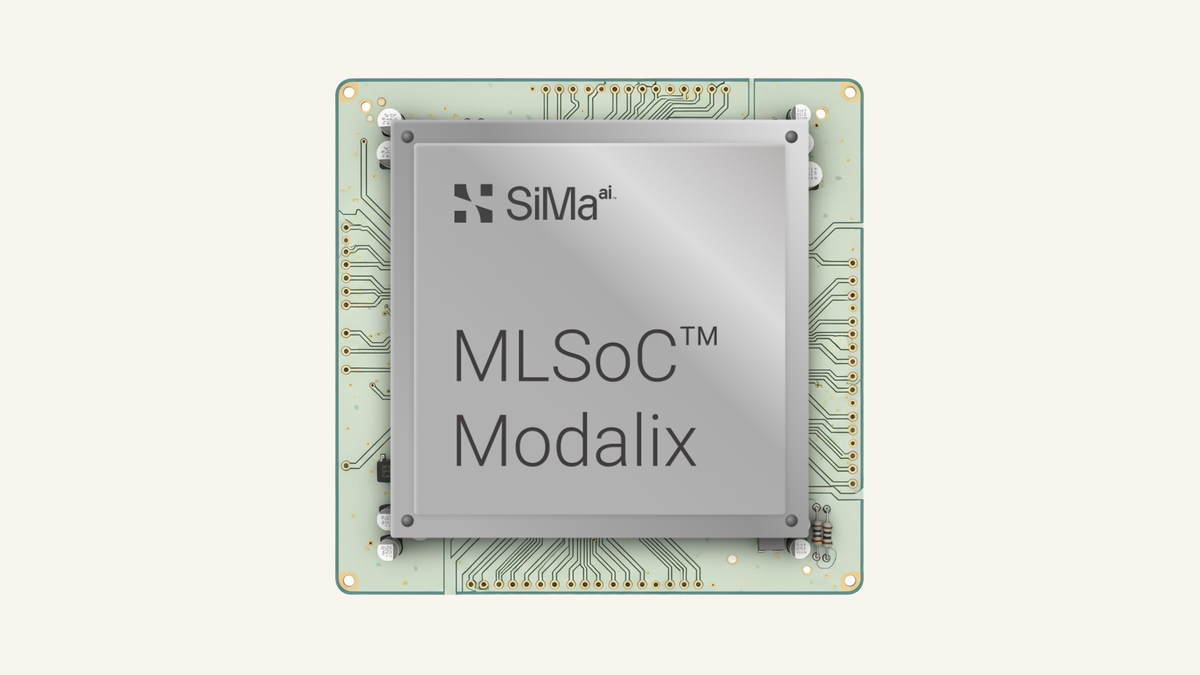
- Physical AI chipmaker SiMa.ai, which has deep engineering roots in Bengaluru, raised $150 million, second only to Simple Energy on Entrackr's list of the quarter's largest rounds.
- Simple Energy's ₹1,750 crore (about $182 million) Series C topped Entrackr's list and anchored the surge in EV funding.
These are capital-intensive businesses — satellites, chips, batteries and aircraft — that need patient money and long development cycles. That such rounds are closing at scale is a signal that investors are increasingly willing to underwrite Indian hardware.
Fewer, larger cheques
The most consistent theme across all three reports is concentration. Deal counts are falling while average round sizes rise. Tracxn's 38% drop in deal volume alongside a 7% rise in value captures it neatly: investors are backing fewer companies, but backing them more heavily.
For deep-tech founders this cuts both ways. Startups with proven technology and a clear path to revenue are finding larger rounds — Peak XV's decision this quarter to raise its Surge seed cheque to $5 million is one example of investors acknowledging that deep tech needs bigger early cheques. But the 37% fall in seed funding suggests the earliest-stage companies, which have not yet de-risked their technology, face a tougher market.
The policy tailwind
The quarter also saw the state step further into deep-tech financing. Public R&D financing and mission-linked support also form part of the wider financing context. The trackers’ datasets should not be combined into a single sector total. And government-linked capital is increasingly crowding in alongside private VCs through fund-of-funds and alliances such as the India Deep Tech Alliance.
That public capital matters precisely where private money is thinnest: long-horizon, high-risk technology with strategic value for India.
What to watch in Q4
Three indicators will show whether Q3 was a turning point:
- Breadth. Does deep-tech deal count finally rise, or does funding stay concentrated in a handful of large rounds?
- Seed recovery. Without a healthy seed pipeline, today's large rounds will have fewer successors.
- Public-private co-investment. How quickly RDI Fund and mission-linked money is deployed — and whether it draws more private capital in alongside it.
For now, the numbers say Indian deep tech is no longer a niche on the edges of the startup market. It is where an increasing share of the serious money is going.
Sources
- Core announcement or reporting.
- Image and subject source.
- Entrackr quarterly report.
- Tracxn nine-month data via CIOL.
Image: SiMa.ai. Official existing Modalix hardware visual, illustrating one company discussed in the quarterly funding report; not a new chip unveiled this quarter. Original source.