Bioscan Research raises $1 million to scale CEREBO, its non-invasive brain-injury scanner
Mumbai-based Bioscan Research has raised $1 million in a seed round led by Unicorn India Ventures to scale CEREBO, a portable near-infrared spectroscopy device that detects intracranial bleeding and traumatic brain injuries non-invasively.
Manik Gupta
Founder and editor of DeepTech India. Manik writes about India's frontier technology ecosystem — AI, semiconductors, space, quantum, robotics and biotech — translating research and policy into clear, reliable reporting.
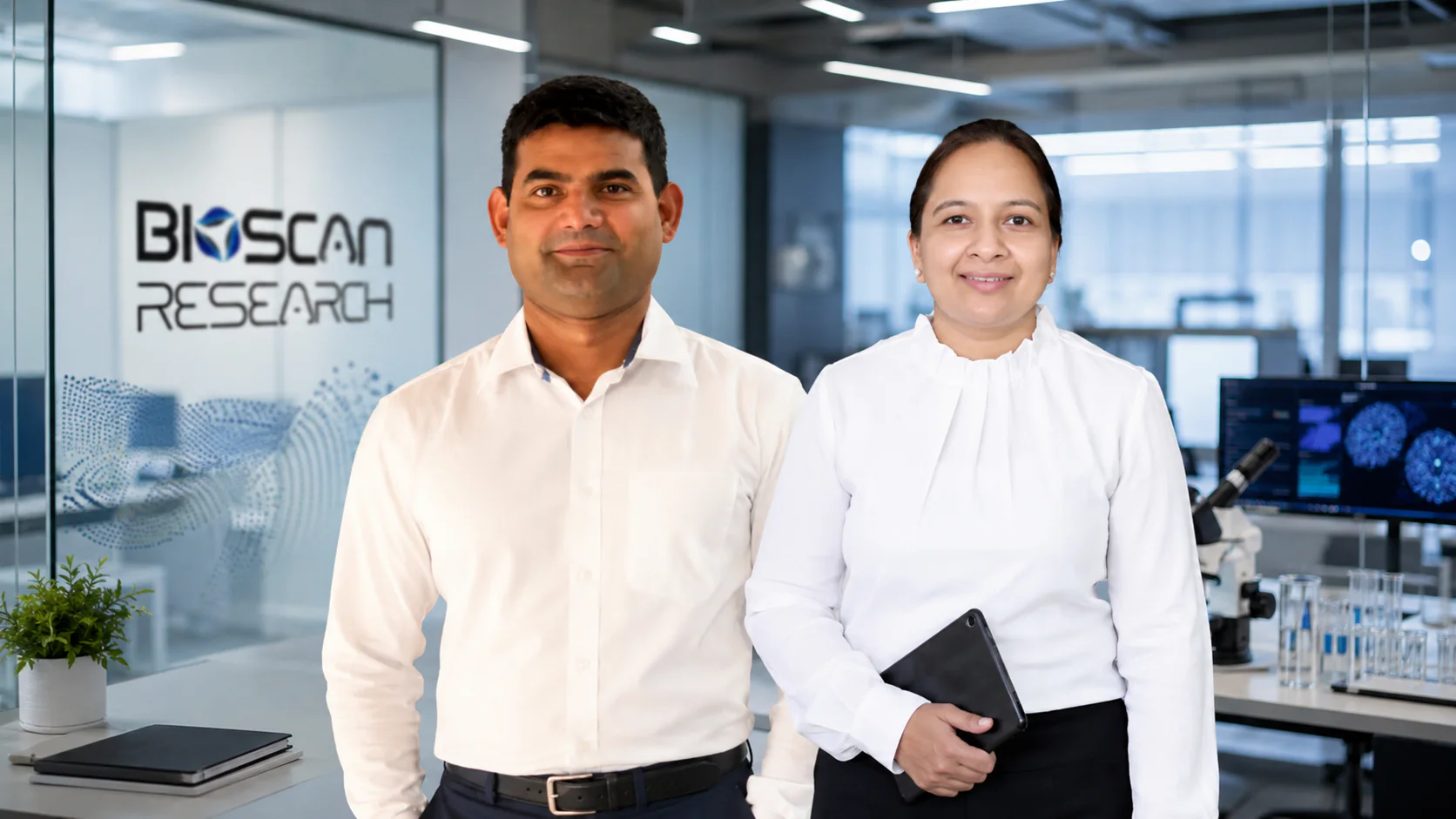
Bioscan Research, an Indian medtech startup building a handheld device that can spot bleeding inside the skull without a CT scan, has raised $1 million in a seed round led by Unicorn India Ventures. The company announced the round on 22 July 2026, and said the capital would go toward scaling its flagship product, CEREBO, and pushing it through fresh regulatory approvals in India and abroad.
The problem CEREBO is built for
When someone suffers a head injury, the clock starts immediately. Bleeding between the brain and the skull — an intracranial or intracerebral haemorrhage — can turn fatal within hours, and the standard way to detect it is a CT scan. But CT scanners are expensive, immobile and concentrated in larger hospitals, which means that in an ambulance, a rural clinic, a sports ground or a battlefield, the crucial early minutes are often spent simply getting the patient to a machine.
CEREBO is Bioscan's attempt to close that gap. It is a portable, machine-learning-powered device built around Near-Infrared Spectroscopy (NIRS) — a technique that shines harmless near-infrared light through tissue and reads how it is absorbed and scattered. Because blood pooling from a fresh bleed absorbs that light differently from healthy brain tissue, the device can flag a likely intracranial injury at the point of care, non-invasively and in a matter of minutes.
Crucially, the company says CEREBO is designed to help clinicians identify injuries even in cases where outward symptoms have not yet appeared — the so-called "talk and deteriorate" patients who look stable but are quietly bleeding.
Engineering across four disciplines
Bioscan Research was founded in 2017 by Anupam Lavania and Shilpa Malik. The device they have built sits at the intersection of several hard engineering problems: it combines optics, electronics, mechanics, software and machine learning into a single handheld unit rugged enough to be used outside a controlled hospital setting.
The machine-learning layer is central to the pitch. Raw NIRS signals are noisy and vary from patient to patient; turning them into a reliable, binary "bleed or no bleed" read that a paramedic or a junior doctor can trust requires models trained on real clinical data. That software layer — not just the optics — is what the company is looking to sharpen with its new funding, alongside developing new intellectual property around the technique.
What the money is for
Bioscan said it will use the seed capital to expand its market presence, strengthen its medical devices, secure additional regulatory approvals and accelerate innovation in brain-injury detection. The company has reported roughly 5x growth over the past 12 months and has set a goal of tripling again over the next year, with plans to expand both within India and into overseas markets.
Those regulatory approvals matter more than the headline figure. A device that makes a call on something as consequential as a brain bleed lives or dies on clinical validation and clearances; each new approval widens the settings — and geographies — in which CEREBO can legally be deployed.
A deep-tech investor leans in
The round was led by Unicorn India Ventures, a firm founded in 2016 that has increasingly concentrated on early-stage deep-technology sectors, including semiconductors, space technology and medical diagnostics. The firm recently closed its third fund at ₹1,200 crore and launched a separate ₹1,000 crore fund in partnership with IIT Madras — a sign of how much dry powder is now aimed at Indian hardware and health-tech founders who are building physical products rather than pure software.
For Unicorn India, CEREBO fits a thesis that India's demographic and infrastructure realities create a large market for affordable, portable diagnostics that do not assume a fully equipped tertiary hospital is nearby.
Why it matters
India records a very high burden of traumatic brain injury, much of it from road accidents, and a persistent shortage of imaging infrastructure outside major cities. A credible, low-cost triage tool that can be carried to the patient — in an ambulance, an emergency room, a defence forward post or a remote clinic — could change who gets scanned, when, and how quickly life-saving surgery follows.
It is early. A seed round of $1 million is a starting gun, not a finish line, and Bioscan still has to prove CEREBO's accuracy at scale and win the approvals that turn a promising device into standard practice. But the company is chasing a genuinely hard, genuinely useful problem — putting a piece of the emergency room into a device you can hold in one hand.
Sources
- Bioscan Research Raises $1 Million Seed Funding from Unicorn India — SiliconIndia
- Medtech startup Bioscan Research raises $1 Mn in seed round led by Unicorn India Ventures — Entrackr
- Medtech startup Bioscan Research raises $1 million to scale brain injury diagnostic technology — Indian Startup News
- Bioscan Research raises $1 Mn to advance AI-powered brain injury detection technology — Digital Health News
Tags
More from Neurotechnology
Deepinder Goyal's Temple Acquires London's Longevous to Ground Its Wearable in Clinical Science
Temple has acquired London's Longevous, bringing two longevity-medicine physicians in-house as chief medical officer and head of science just as Deepinder Goyal's brain-monitoring wearable heads toward its first paid launch.
Deepinder Goyal Unveils Redesigned Temple Brain-Monitoring Wearable, Now Half the Size
Zomato and Eternal founder Deepinder Goyal has unveiled a radically shrunk redesign of Temple, his brain-monitoring wearable, ahead of a limited pre-order launch planned before the end of 2026.