
Deepinder Goyal's Temple Acquires London's Longevous to Ground Its Wearable in Clinical Science
Temple has acquired London's Longevous, bringing two longevity-medicine physicians in-house as chief medical officer and head of science just as Deepinder Goyal's brain-monitoring wearable heads toward its first paid launch.
Manik Gupta
Founder and editor of DeepTech India. Manik writes about India's frontier technology ecosystem — AI, semiconductors, space, quantum, robotics and biotech — translating research and policy into clear, reliable reporting.
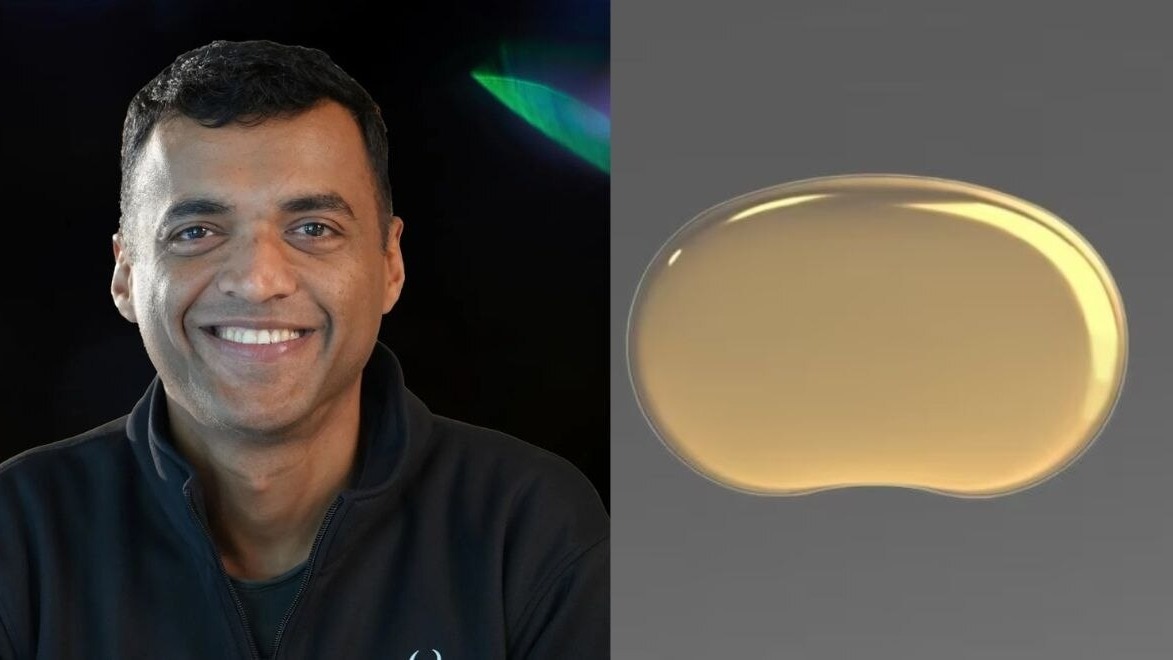
Deepinder Goyal's Temple Acquires London's Longevous to Ground Its Wearable in Clinical Science
Temple, the brain-monitoring wearable startup Deepinder Goyal founded after stepping back from Eternal, has acquired Longevous, a London-based longevity-medicine practice, and brought both of its founders in-house full time. The deal, announced August 27, 2026, is small in headline terms — the financial details haven't been disclosed — but it marks a deliberate shift for Temple, from a hardware company chasing an ambitious sensor design toward one trying to anchor that hardware in the kind of clinical rigor that makes a health claim defensible rather than just plausible.
Two Doctors, Not Just an Acquisition
Longevous's founders, Dr Robert Mohr and Dr Avi Roy, will join Temple as chief medical officer and head of science respectively, continuing to look after Longevous's existing clients while building out Temple's science function. Mohr is a board-certified physician who moved from emergency medicine into evidence-based longevity care over nearly two decades of clinical practice. Roy is an Oxford-trained biomedical scientist who has worked across longevity science and business, co-founding Founders Health and UDA and serving as a research fellow at Oxford's Centre for the Advancement of Sustainable Medical Innovation.
Goyal's account of how the deal came together is unusually informal for a corporate acquisition: he said he met Mohr and Roy at a dinner in London a few months ago, where they noticed the Temple device on his temple and asked about it. They went on to wear an early Temple unit themselves for two months, tracking their own data, before the conversation turned into a full-time offer. "They bring in deep clinical expertise and publication experience to work alongside our in-house science team as we prepare for launch," Goyal said, adding that after the pair "became deeply involved in our validation work," inviting them to build Temple with him full-time "felt like an obvious next step."
Why Clinical Validation Is the Bottleneck
Temple's core product is a forehead-worn wearable designed to measure cerebral blood flow, oxygenation and cognitive load in real time — a category of consumer neurotechnology that has almost no established regulatory or clinical playbook to follow. Unlike a heart-rate sensor or a sleep tracker, where decades of clinical literature and off-the-shelf validation methods already exist, a device claiming to read brain blood flow through the skull is making claims that need to be built and defended largely from scratch. That is a fundamentally different problem from the hardware-engineering one Temple has spent the past year and a half solving in public — Goyal has posted successive, shrinking iterations of the device on social media, most recently a version he says is less than half the size of the one he wore on a podcast appearance earlier in 2026.
Acquiring an outside longevity-medicine practice, rather than simply hiring individual scientists, gives Temple an existing base of patients, publication history and clinical protocol experience to draw on immediately rather than build from zero. It also signals where Temple sees its actual competition: not other wearable-hardware startups, but the broader longevity-medicine industry — concierge clinics, biomarker panels and consumer diagnostics companies — where credibility is earned through peer-reviewed validation rather than device specs.
Temple's Momentum Going Into the Deal
The acquisition lands at a moment when Temple's business fundamentals are moving quickly. The company raised $54 million in its first funding round in February 2026 at a $190 million valuation, then doubled that to $375 million by July via a secondary share sale that funded the company's first employee stock ownership liquidity programme. Temple is now said to be targeting a fresh round at a $500 million valuation, and Goyal has said the company's first paid wearable — a limited launch edition expected to be priced in the ₹75,000–80,000 range — will open for pre-order soon, with shipments planned before the end of 2026.
That timeline puts the Longevous acquisition on the critical path rather than at the margins: a consumer device asking people to pay a premium price for continuous brain-blood-flow readings needs a credible clinical story before it ships, not after. By absorbing an established longevity-medicine practice and its two founding physicians, Temple is betting that the fastest way to get that credibility is to buy it rather than build it from a standing start — a pattern increasingly familiar from India's other neurotech and health-wearable plays, where hardware alone has rarely been enough to earn a place in a category still working out what evidence actually looks like.
Sources
- Deepinder Goyal's Temple acquires London based longevity medicine firm Longevous - BusinessToday
- Deepinder Goyal's Temple Acquires London-Based Longevous - Inc42
- Deepinder Goyal's Temple expands into UK with Longevous acquisition - The Tribune
- Deepinder Goyal's Temple Acquires Longevous to Pivot Hardware Engineering Toward Clinical Validation - Healthcare.Digital
- Deepinder Goyal's Temple jumps to $375 million valuation - BusinessToday
- Deepinder Goyal Reveals New Temple and You Can Soon Pre-Order It - Ground News
Tags
More from Neurotechnology
Deepinder Goyal Unveils Redesigned Temple Brain-Monitoring Wearable, Now Half the Size
Zomato and Eternal founder Deepinder Goyal has unveiled a radically shrunk redesign of Temple, his brain-monitoring wearable, ahead of a limited pre-order launch planned before the end of 2026.
Bioscan Research raises $1 million to scale CEREBO, its non-invasive brain-injury scanner
Mumbai-based Bioscan Research has raised $1 million in a seed round led by Unicorn India Ventures to scale CEREBO, a portable near-infrared spectroscopy device that detects intracranial bleeding and traumatic brain injuries non-invasively.