IIT Madras Maps the Human Brainstem at Cellular Resolution
IIT Madras's Sudha Gopalakrishnan Brain Centre released ANCHOR, an open-access 3D atlas of the human brainstem at cellular resolution, mapping more than 200 nuclei and fibre tracts from prenatal development to adulthood.
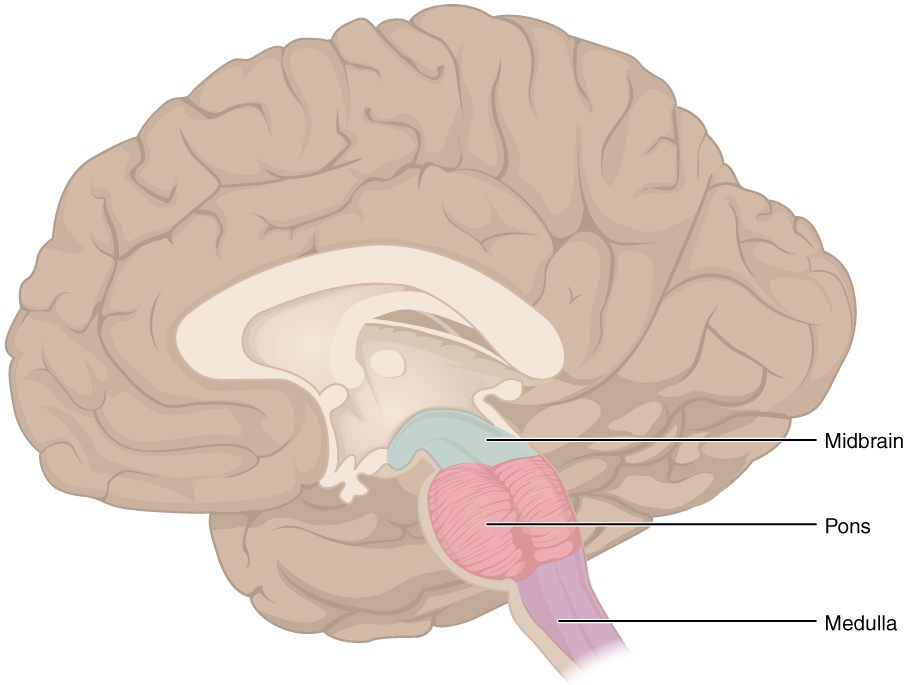
The Sudha Gopalakrishnan Brain Centre (SGBC) at IIT Madras has released ANCHOR, the Atlas of Neurochemical Characterization of the Human Brainstem with 3D Reconstruction, described as the world's most detailed three-dimensional atlas of the human brainstem at cellular resolution, and made it openly available. Unveiled at the third BRICS Neuroscience Symposium around 12 June 2026, ANCHOR maps more than 200 brainstem nuclei and fibre tracts, integrates macro-scale MRI with micro-scale cellular imaging, and spans development from the prenatal stage to adulthood. It was endorsed by figures including the Principal Scientific Adviser to the Government of India, Ajay Kumar Sood, and TIFR's Shubha Tole.
Why the brainstem, and why cellular resolution
The brainstem is one of the most consequential and least mapped parts of the human brain. It regulates breathing, heart rate, sleep and consciousness itself, and it packs an extraordinary density of distinct nuclei and crossing fibre tracts into a small volume. That density is exactly what has made it so hard to chart: distinguishing one nucleus from its neighbour requires resolution far finer than a standard MRI can provide.
Mapping it at cellular resolution, and across the developmental timeline from fetus to adult, turns the brainstem from a relatively blurry region into a precise reference. That has practical consequences. Neurosurgeons operating near the brainstem work in territory where a millimetre separates success from catastrophe; researchers studying neurodegenerative and developmental disorders need to know exactly which cell populations sit where; and anyone building computational models of the brain needs an accurate map of the wiring. A cellular-resolution, developmentally staged atlas serves all three at once.
Open access as strategy
The decision to release ANCHOR openly is as strategic as the science. By giving researchers worldwide a high-resolution, India-built reference, IIT Madras establishes the SGBC as a serious node in global neuroscience rather than a consumer of atlases built elsewhere. It is the same logic that runs through India's other open-data deep-tech efforts: the asset accrues influence precisely because it is shared, and the institution that builds and maintains it sets the standard others work to.
The honest framing is that an atlas is a resource, not a therapy. It does not by itself treat any condition, and the coverage of ANCHOR's launch did not detail what role, if any, machine learning played in its construction. But foundational reference maps are how fields move forward, and a world-leading human-brainstem atlas coming out of an Indian institution, and freely available to all, is a meaningful marker of where Indian neuroscience now sits.