
RIDE! Targets Q3 2028 Launches for Two TakeMe2Space Satellites
The launch-services agreement covers mission management for two spacecraft in the Hyderabad company’s planned orbital-computing constellation. It is a future deployment commitment, not evidence that the network is operating.
Manik Gupta
Founder and editor of DeepTech India. Manik writes about India's frontier technology ecosystem — AI, semiconductors, space, quantum, robotics and biotech — translating research and policy into clear, reliable reporting.
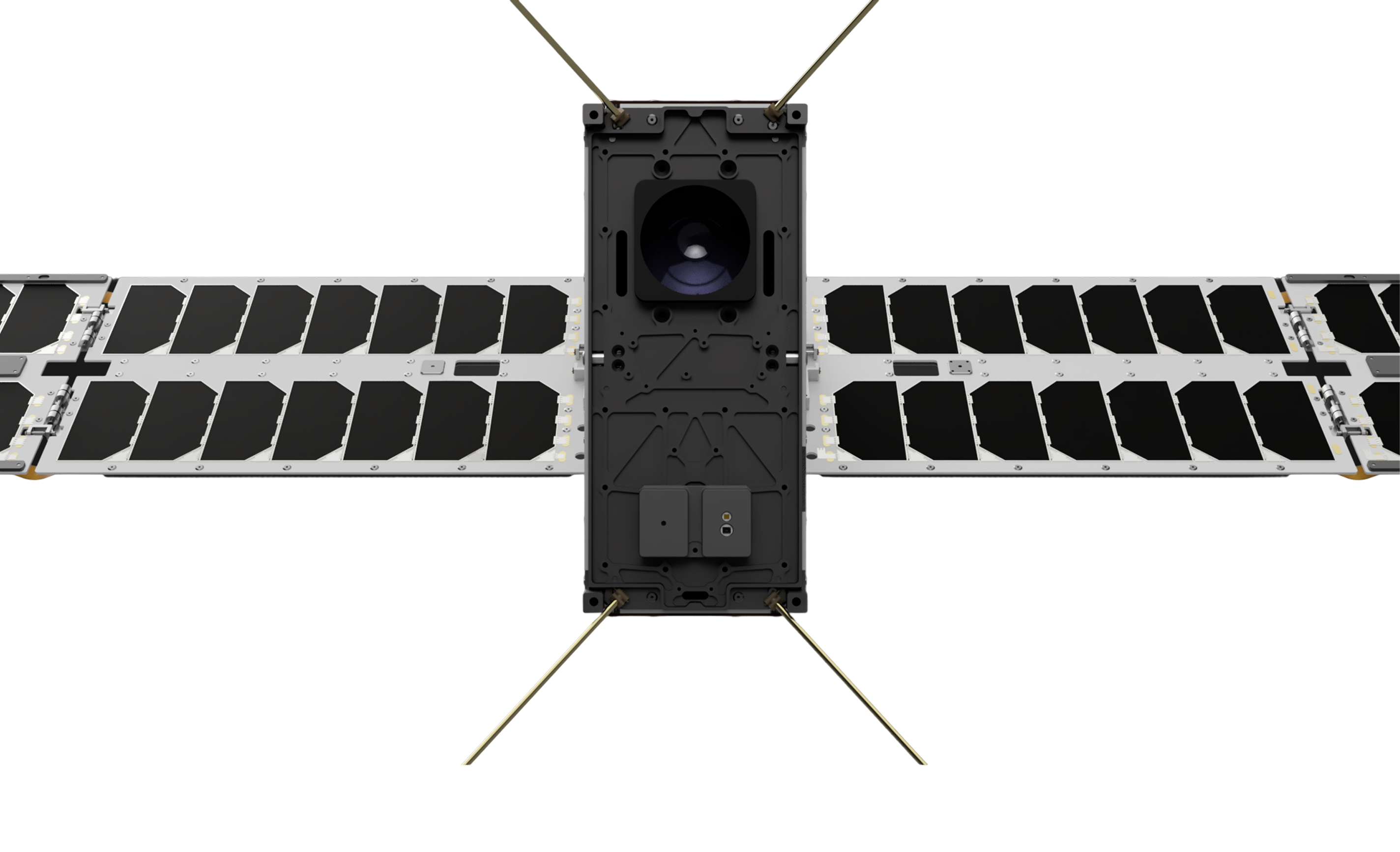
Two satellites, one launch-management agreement and a target of Q3 2028: that is the concrete milestone in RIDE!’s new arrangement with Hyderabad-based TakeMe2Space.
In a public announcement reposted by TakeMe2Space, RIDE! says it will provide complete mission management for two satellites intended for the Indian company’s six-spacecraft orbital-computing constellation. The announcement establishes a launch-services relationship. It does not identify a rocket, a precise launch date or a completed flight.
Computing before the downlink
TakeMe2Space’s technology page describes satellites designed to combine Earth-observation imaging with onboard computation. The underlying idea is to process observations near the sensor and send selected results to Earth, reducing the amount of raw data that must cross a communications link.
That is a different proposition from putting a terrestrial cloud data centre into orbit at equivalent scale. A satellite has constrained electrical power, heat rejection, communications access and maintenance options. Whether local processing helps depends on the workload: an alert or compact classification may be useful without the full image, while other users need the original observations.
The company’s published mission pages discuss nearer-term spacecraft as well. Those schedules should not be substituted for the Q3 2028 target attached to this agreement. The two contracted satellites’ final configurations and deployment arrangements still need mission-specific confirmation.
What the agreement changes
A launch-services partner can coordinate the interfaces between a spacecraft team and the organisation carrying it to orbit. Securing that role is a useful step towards deployment, but it cannot establish that a spacecraft has passed qualification or that a launch slot is immune to delays.
For the orbital-computing service, the more revealing evidence will come after deployment: how much work can be completed within the available power budget, how often useful outputs reach customers, and what happens when an uploaded model fails or needs updating. These are evaluation questions, not demonstrated results from the agreement.
The next reporting milestone is a mission manifest or joint update identifying the launch vehicle, spacecraft and integration schedule. For now, the defensible story is a named partner and a dated deployment target—not a completed constellation.
Image: Official MOI satellite render. Contextual company hardware, not confirmed artwork of the two spacecraft in the 2028 agreement.
Tags
More from Space Technology
Agnikul Adds Stage-Testing and Pressure-Vessel Facilities
The Chennai expansion addresses ground testing and manufacturing needed for future reusable vehicles. It does not establish that Agnikul has recovered or reflown a stage.
ISRO Clarifies Its Research Role as Industry Takes on Manufacturing
ISRO’s September 6 statement rules out privatisation and retains government control of critical infrastructure. Programme-level transition arrangements still need scrutiny.