
EON Space Labs' 502-Gram MIRA Telescope Reaches Orbit on Transporter-18, Testing India's Bet on Home-Grown Space Optics
EON Space Labs’ 502-gram MIRA telescope reached orbit inside TakeMe2Space’s MOI-1A on Transporter-18. The nine-band payload is designed for roughly 9.2-metre ground sampling; first-light data will test the monolithic optics in orbit.
When SpaceX's Falcon 9 lifted off from Vandenberg Space Force Base in California at 12:02 am IST on 2 October, carrying around 130 payloads on the Transporter-18 rideshare mission, most of the attention in India went to two satellites: TakeMe2Space's MOI-1A, billed as the country's first orbital computing satellite, and SatLeo Labs' TAPAS-1 thermal payload. Tucked inside MOI-1A, however, was a third Indian technology that may matter just as much for the long run: MIRA, a 502-gram multispectral telescope built by Hyderabad-based EON Space Labs.
MIRA has now reached orbit. For a startup that set out less than four years ago to prove India could design and build space-grade optics at home rather than import them, it is the first real test of the idea in the environment it was built for.
What MIRA is
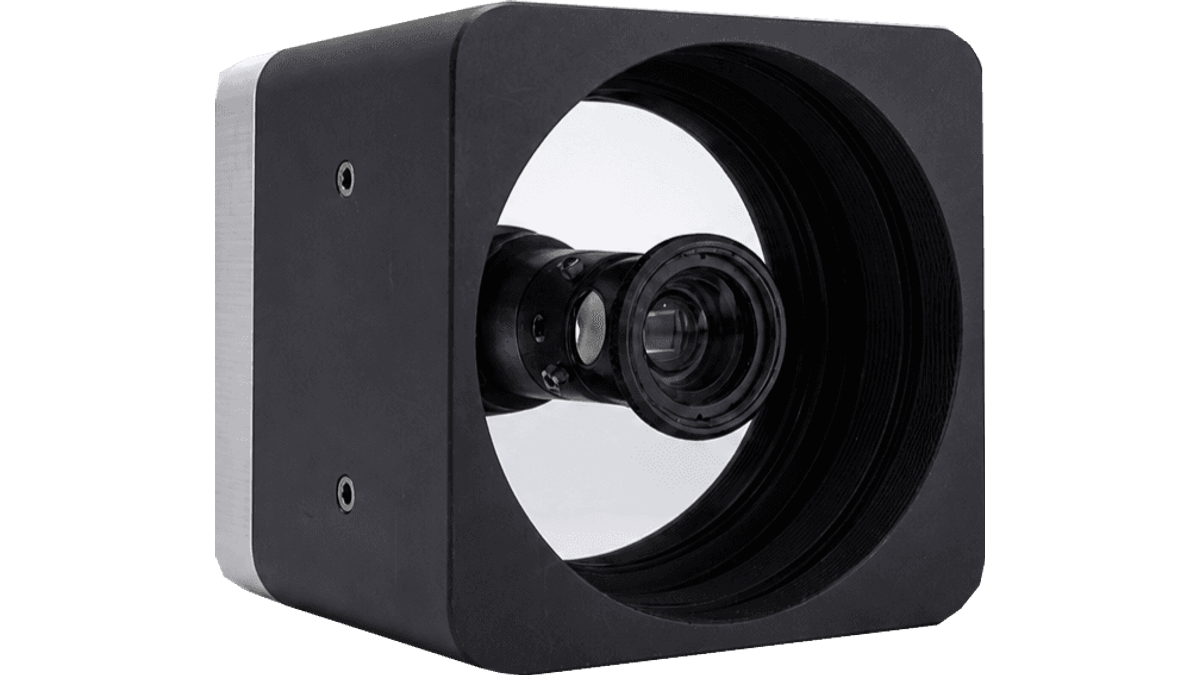
MIRA is a miniaturised, telescope-based imaging system for Earth observation from low Earth orbit. The company says the 502-gram payload is designed to deliver imagery at roughly 9.2-metre ground sample distance (GSD) across nine spectral bands, which places it in the class of multispectral sensors used to monitor crops, water bodies, mining sites and coastlines rather than to resolve individual vehicles or buildings.
Its distinguishing feature is the optics. Instead of assembling a telescope from many separately mounted lenses and mirrors, EON uses what it calls an indigenous monolithic optical architecture, built around a single piece of fused silica. The design aims to reduce the number of alignments that can drift under launch vibration and orbital thermal cycling, while fitting inside a CubeSat-class spacecraft.
In an interview with ETV Bharat published on 5 October, co-founder Punit Badeka said the challenge was not simply to make the camera smaller but to retain the useful information that can be captured from a single-piece optical system.
A second attempt, and a different rocket
This is not MIRA's first trip to a launch pad. The payload was first integrated with TakeMe2Space's earlier MOI-1 satellite and flew on ISRO's PSLV-C62 mission in January 2026. A mission anomaly on that flight prevented the payloads from being deployed. EON has said the mission still validated MIRA's mechanical integration, spaceflight packaging and hardware readiness, but it did not produce any imagery from orbit.
After the PSLV-C62 failure, TakeMe2Space looked for the earliest available slot and found it on SpaceX. The re-flown satellite, MOI-1A, is a 14 kg spacecraft carrying an Nvidia Jetson Orin NX-based computer rated at 117 trillion operations per second, 2 TB of storage and the nine-band MIRA imager. The pairing is deliberate: MOI-1A is designed to run analysis on images in orbit and send down results rather than raw data, while MIRA provides the pictures to analyse. Target applications named by the companies include agriculture, mining, marine monitoring, supply chains and insurance.
The team and the business
EON Space Labs was founded in 2022 by Sanjay Kumar, Punit Badeka and Manoj Kumar Gaddam. The company describes its background in precision medical optics as the foundation for its space-imaging work. In the ETV Bharat interview, it outlined a planned ₹40-crore Series A1 round, additional MIRA flight opportunities with ISRO, and future higher-resolution imaging systems. These are expansion plans, not completed deployments.
Why it matters
Earth-observation satellites are only as good as their cameras, and the optical payload can be a substantial cost and procurement constraint for a small satellite. Indian startups building constellations have typically sourced lenses, telescopes and sensors from overseas suppliers, which adds cost, export-control exposure and delay.
A light, rugged, domestically designed multispectral imager changes that equation in three ways:
- Cost and mass. A sub-kilogram, nine-band telescope leaves more of a small satellite's mass and power budget for computing, communications or propulsion. On MOI-1A, that budget went to onboard AI hardware.
- Supply-chain control. Domestic optics reduce dependence on imported components for a capability that is sensitive for both civilian and strategic users. EON says it builds payloads for dual-use needs, spanning CubeSats, satellites, drones and ground-mounted optics.
- An export product. If MIRA performs as designed, a compact imager is something Indian firms can sell to small-satellite builders worldwide, not just use at home.
What to watch
Reaching orbit is the first step, not the result. The real milestones ahead are first light from MIRA, independent assessment of how close its imagery comes to the claimed 9.2-metre GSD across all nine bands, and evidence that the monolithic optics hold their alignment over months of thermal cycling. EON told ETV Bharat it expects initial contact and first images around 10–14 October. Those observations should show whether the optical design performs as intended.
For India's space ecosystem, MIRA is a small object with a large ambition: to show that the optics at the heart of Earth observation do not have to be bought from abroad.