A ₹1 Lakh Battery That Flew: TakeMe2Space's PowerBank-50 Becomes India's First Space-Proven Off-the-Shelf Satellite Battery
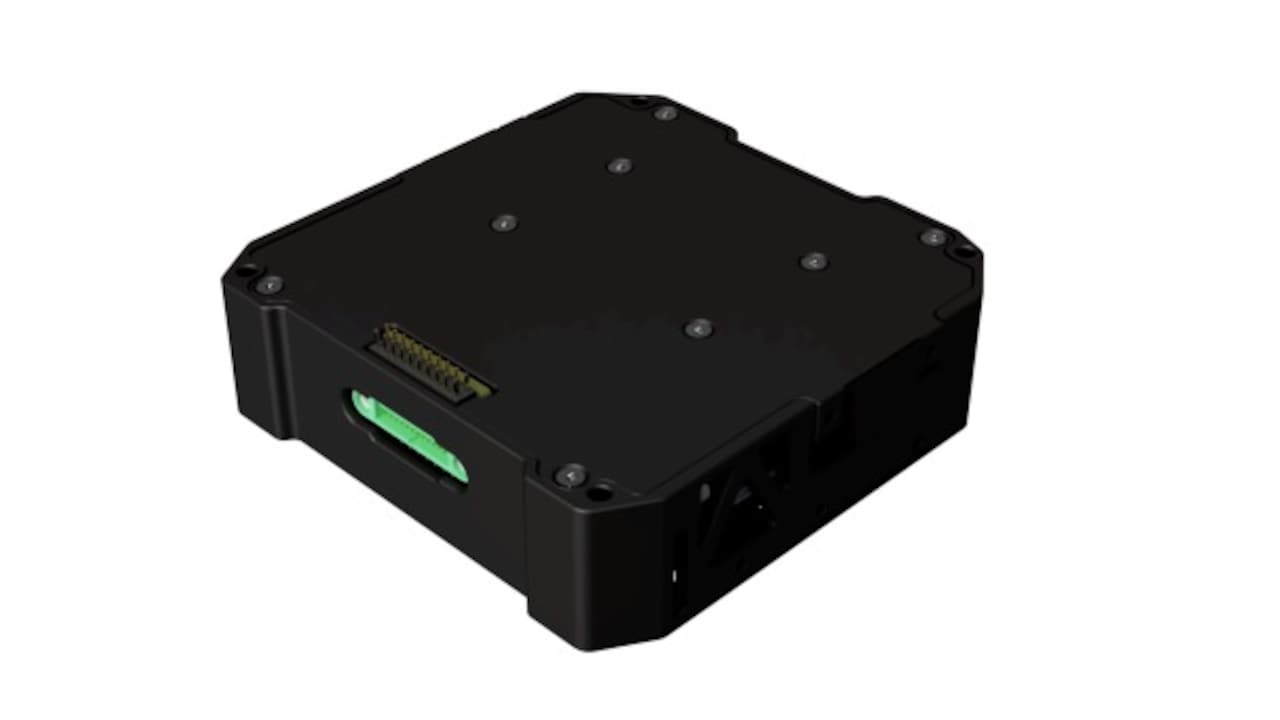
Hyderabad startup TakeMe2Space says its PowerBank-50 has become India's first commercially available, off-the-shelf satellite battery proven in space, after powering a payload at 450 km on Skyroot's Vikram-1. The ₹1,04,900 pack packs over 50 Wh into 380 grams.
Manik Gupta
Founder and editor of DeepTech India. Manik writes about India's frontier technology ecosystem — AI, semiconductors, space, quantum, robotics and biotech — translating research and policy into clear, reliable reporting.
Flight heritage, bought off the shelf
In the satellite business there is a chasm between a component that has been tested on the ground and one that has actually worked in orbit. Crossing it is called earning "flight heritage," and it is the single credential that most reassures a customer about to trust their mission to a part. On 30 July 2026, a Hyderabad startup called TakeMe2Space said one of its products had crossed that line: its PowerBank-50 satellite battery had become, by the company's account, India's first commercially available, off-the-shelf satellite battery to be proven in space.
The battery earned the credential aboard Skyroot Aerospace's Vikram-1, the rocket whose maiden flight — Mission Aagaman — lifted off from the Satish Dhawan Space Centre at Sriharikota on 18 July 2026 and made India only the third country, after the United States and China, where a privately built rocket has reached orbit. A launch that was itself a landmark also, quietly, delivered a landmark for an Indian component-maker.
What actually flew
The PowerBank-50 powered an experimental payload built by Cosmoserve Space at an altitude of about 450 km. Over the mission it validated not just its cells but the whole pack — the lithium-ion cells, the battery-management system that keeps them balanced and safe, the heaters that fight the deep cold of orbit, and the aluminium enclosure holding it together — under the real conditions of vacuum, radiation and thermal cycling that no ground test fully reproduces.
The specifications read almost mundanely for something built to survive space. The unit stores more than 50 watt-hours of energy — roughly the capacity of a large phone power bank — in a package the size of a paperback that weighs about 380 grams, the heft of a smartphone. TakeMe2Space says it is rated for low-Earth-orbit missions of up to five years, and it carries a list price of ₹1,04,900.
Why "off-the-shelf" matters
That price, and the phrase "off-the-shelf," are the real story. Satellite power systems have traditionally been bespoke — designed, qualified and space-rated for a single mission at high cost and over long lead times. For the swarm of small satellites and CubeSats now being built by university labs and young companies, that model is a bottleneck. A catalogue part that already carries flight heritage, one a team can simply order, collapses months of engineering and qualification into a purchase order.
That is the segment TakeMe2Space is aiming at. The company works in the small-satellite and orbital-services niche, and a standardised, flight-proven battery lets it sell a critical subsystem to other builders rather than reinventing it for every spacecraft. In a market where trust is earned flight by flight, a priced, proven part is a genuine differentiator.
Riding India's private-space wave
The milestone is inseparable from the launch that delivered it. Skyroot's Vikram-1 success has become a reference point for India's private space sector, which set funding records through 2026 as policy reforms opened launch, manufacturing and services to companies. Flights like Aagaman do more than lift payloads: they create the on-orbit opportunities that let component-makers like TakeMe2Space and payload builders like Cosmoserve prove their hardware in the first place. Each successful private launch widens the runway for the suppliers beneath it.
A single 380-gram battery will not, on its own, reorder the global space-components market, which is still dominated by established Western and Japanese suppliers. But flight heritage is cumulative and hard to fake, and it is exactly the credential Indian space startups have lacked. With PowerBank-50, an Indian company can now point to a part and say it has been to space and come back working — and put a catalogue price next to it.
Sources
- Business Standard — TakeMe2Space's PowerBank-50 becomes first India-made satellite battery to be space-proven
- UNI India — PowerBank-50 becomes India's first off-the-shelf satellite battery to achieve space flight heritage
- Swarajya — Made-in-India satellite battery gets space-proven on Skyroot's Vikram-1
Tags
More from Space Technology
U-Space and AXISCADES Sign Cooperation Deal to Explore India's Microsatellite Market
French space company U-Space and Bengaluru's AXISCADES have signed a commercial cooperation agreement to jointly pursue India's microsatellite market, one of three India-France private space deals struck at the Paris International Space Summit.
RIDE! Targets Q3 2028 Launches for Two TakeMe2Space Satellites
The launch-services agreement covers mission management for two spacecraft in the Hyderabad company’s planned orbital-computing constellation. It is a future deployment commitment, not evidence that the network is operating.