
Skyroot signs three-launch deal with HEX20, its first big commercial contract after Vikram-1’s orbital debut
Weeks after Vikram-1 became India's first privately built rocket to reach orbit, Skyroot Aerospace has signed a three-launch agreement with small-satellite firm HEX20 for Earth-observation and demo missions on its Vikram series from late 2027 — an early sign the maiden flight is converting into commercial demand.
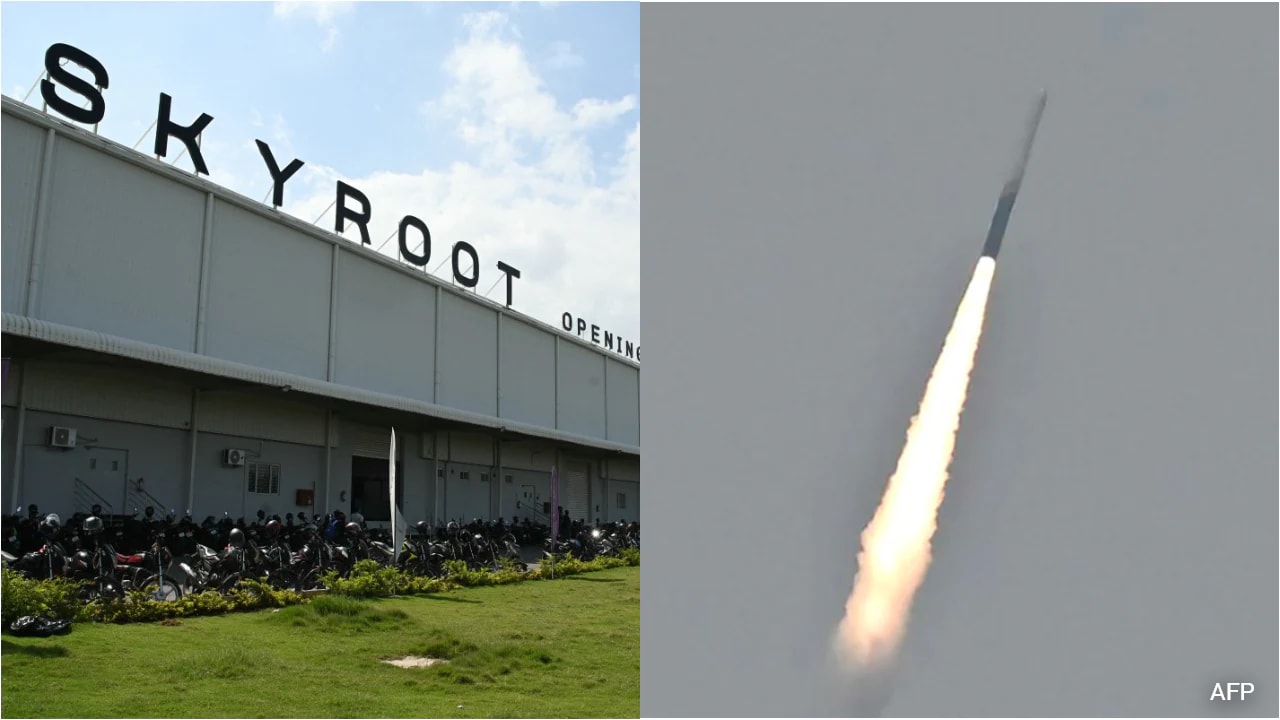
Less than a month after putting India's first privately built rocket into orbit, Skyroot Aerospace has landed a commercial anchor. The Hyderabad-based launch company has signed a multi-launch agreement with small-satellite firm HEX20 for three dedicated missions on Skyroot's Vikram series of launch vehicles. The pact, announced on 7 August 2026, is one of the clearest early signs that Skyroot's maiden orbital flight is beginning to convert into paying business.
The agreement
Under the deal, HEX20 has booked three dedicated launches on the Vikram series, with missions slated to begin in the fourth quarter of 2027. The flights are earmarked for Earth-observation and payload-demonstration missions — the kind of small, mission-specific satellites that benefit from a dedicated ride rather than waiting for space as a secondary passenger on a larger rocket.
The agreement was signed by Naga Bharath Daka, co-founder and chief operating officer of Skyroot Aerospace, and M.B. Aravind, co-founder and chief operating officer of HEX20. A multi-launch commitment, rather than a single booking, gives Skyroot forward visibility on demand and gives HEX20 assured, schedule-controlled access to orbit for a run of missions.
Riding on Vikram-1's success
The timing is deliberate. On 18 July 2026, Skyroot's Vikram-1 completed its maiden orbital flight, making it India's first privately developed rocket to reach orbit and placing the country's private sector alongside a small club of nations with commercially built orbital launchers. That flight transformed Skyroot from a promising developer into a company with a demonstrated vehicle — and demonstrated vehicles are what customers sign contracts against.
Vikram-1 is a small-lift launch vehicle designed to carry payloads of a few hundred kilograms to low-Earth orbit, aimed squarely at the fast-growing market for small and nanosatellites. Dedicated small launchers promise operators control over orbit, timing and deployment that they cannot get as a rideshare passenger — the value proposition Skyroot is now selling on the back of a successful debut.
Who HEX20 is
HEX20 is a small-satellite technology company that develops spacecraft platforms and avionics for nano- and microsatellite missions; as reported by ETV Bharat, the company operates out of Kerala and is eyeing larger satellites as it grows. Booking a block of dedicated launches with an Indian provider lets HEX20 build its manifest around a domestic vehicle and a known schedule rather than competing for slots on crowded foreign rideshare missions.
A commercial launch market takes shape
For India, the significance runs beyond a single contract. The country's space sector has expanded rapidly since it was opened to private players, with hundreds of startups and a growing list of IN-SPACe authorisations for private missions. What has been missing is a track record of indigenous commercial launch — the recurring, revenue-generating flights that turn a national space programme into an industry.
Skyroot's back-to-back milestones — an orbital debut followed within weeks by a multi-mission commercial booking — begin to fill that gap. They also sharpen the emerging contest among India's private launch hopefuls, including Chennai's Agnikul Cosmos, as each races to convert test flights into order books. Rather than competing with ISRO, these firms are building a parallel commercial layer that can take on high-cadence small-satellite launches, freeing the national agency to focus on larger and more complex missions.
Why it matters
Contracts, not launches, are what ultimately sustain a rocket company. By securing a three-mission commitment so soon after Vikram-1 reached orbit, Skyroot is signalling that India's private launch market is moving from demonstration to demand. If the Vikram series can hold to schedule and fly HEX20's missions from late 2027, it would mark one of the first sustained commercial launch relationships built entirely on an Indian privately developed rocket — a template the rest of the country's launch startups will be watching closely.
Sources
- ETV Bharat — Kerala Space Startup Hex20 Inks Multi-Mission Launch Deal With Skyroot Aerospace
- Channel IAM — HEX20 Partners With Skyroot For Space Missions
- Analytics India Magazine — Skyroot, HEX20 Sign Multi-Launch Agreement for 3 Vikram Missions
- BISinfotech — Skyroot Aerospace Signs Multi-Launch Deal With HEX20 for Three Vikram Missions
- VARINDIA — Spacetech startup HEX20 signs multi-mission launch pact with Skyroot Aerospace