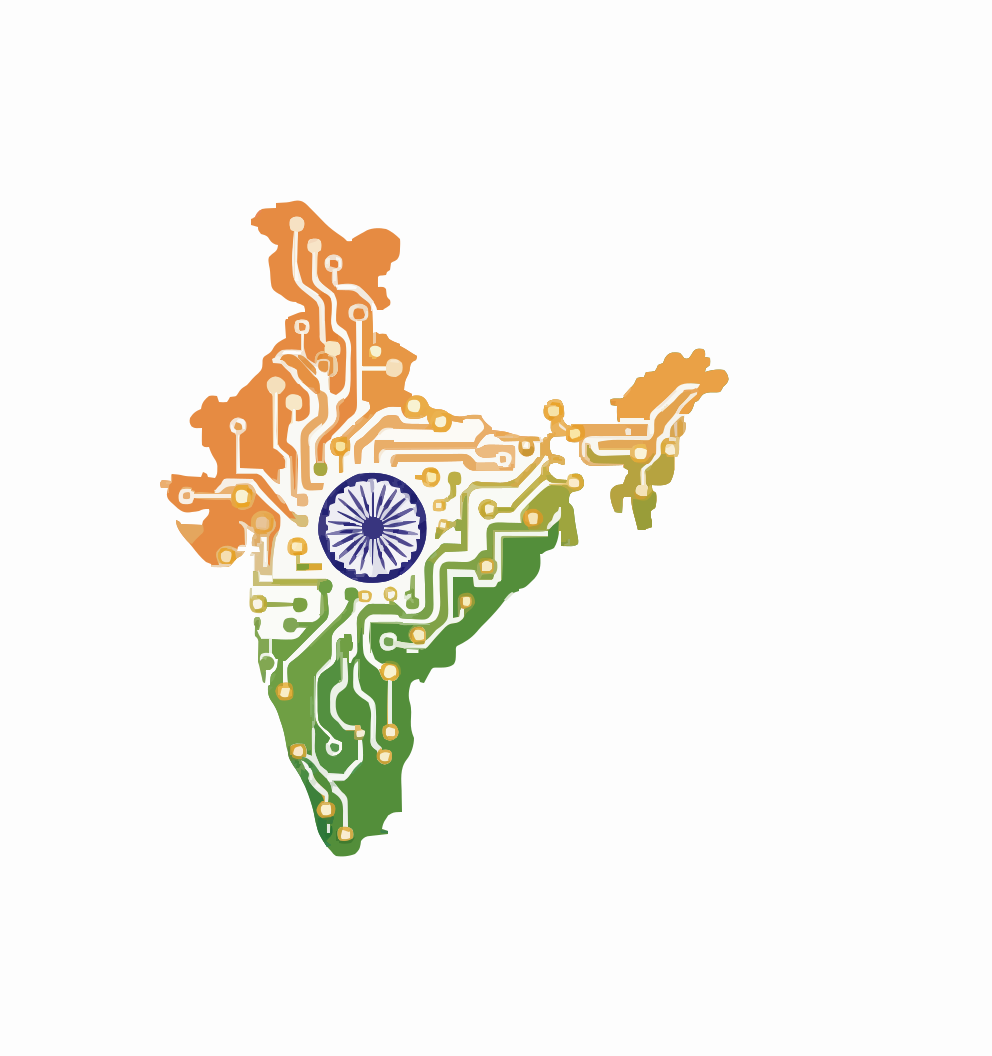
SEMICON India 2026 Opens in Delhi With Modi Inaugurating, 600+ Exhibitors
SEMICON India 2026, the fifth edition of the country's flagship chip-industry event, opens in New Delhi on September 17 with Prime Minister Modi inaugurating and more than 600 exhibitors taking part.
Manik Gupta
Founder and editor of DeepTech India. Manik writes about India's frontier technology ecosystem — AI, semiconductors, space, quantum, robotics and biotech — translating research and policy into clear, reliable reporting.

SEMICON India 2026 Opens in Delhi With Modi Inaugurating, 600+ Exhibitors
India's biggest semiconductor showcase returns to New Delhi this week, and the guest list — and the government policy stacked behind it — signal how much the country's chip ambitions have scaled since the event's first edition.
The Event
SEMICON India 2026, the fifth edition of the annual conference and exhibition, runs September 17–19 at Yashobhoomi, the India International Convention and Expo Centre in New Delhi. Prime Minister Narendra Modi is set to inaugurate the event on September 17. It is jointly organized by the India Semiconductor Mission (ISM), the Ministry of Electronics and Information Technology (MeitY), and SEMI, the global semiconductor industry association, under the theme "Silicon to Systems: Building the Ecosystem."
The scale is the largest yet for the event: more than 600 exhibitors, including roughly 300 international companies, are taking part across 15,000 square metres of exhibition space, with more than 150 speakers across the three-day programme. The exhibition includes six international country pavilions, 12 state-government pavilions, and a dedicated Startup Pavilion featuring 40 startups.
What's On the Agenda
Beyond the exhibition floor, the event is built around a "Sand to Silicon to Systems" Value Chain Experience — an exhibit intended to walk visitors through the entire semiconductor supply chain, from raw materials and wafer fabrication through advanced packaging, chip design, and finished electronic systems. The programme also includes a startup pitch competition, a student hackathon, an innovation showcase, and sessions aimed at workforce development and expanding women's participation in the sector.
That structure reflects where India's semiconductor strategy has moved in its fifth year: earlier editions leaned heavily on attracting fabrication investment, while this year's programming puts comparable weight on design, packaging, talent and the downstream systems that actually consume chips.
The Policy Backdrop
SEMICON India 2026 follows directly on the Union Cabinet's approval of Semicon 2.0 in July 2026 — the second phase of the India Semiconductor Mission, carrying a budget outlay of roughly ₹1.27 lakh crore aimed at deepening India's semiconductor design and manufacturing ecosystem beyond the fabs and assembly plants funded under the first phase. That approval, together with a run of OSAT (outsourced semiconductor assembly and test) and ATMP (assembly, testing, marking and packaging) facilities that have come online across Gujarat, Assam and Rajasthan over the past year, gives this year's event a different character than earlier editions: less about persuading global chipmakers to commit to India, and more about showcasing commitments that are already under construction.
Why It Matters
India's semiconductor demand is estimated at around $50 billion today and is projected to grow to roughly $103 billion by 2030, part of a global semiconductor market that itself is expected to more than double past $2 trillion in the same window, driven substantially by AI hardware demand. India still cannot fabricate an advanced logic chip domestically, but the government's bet — visible across this week's exhibitor list, pavilions and policy announcements — is that owning enough of the surrounding ecosystem (design, packaging, materials, talent) positions the country to capture a meaningful share of that growth even before a leading-edge fab comes online.
For India's semiconductor startups specifically, the event functions as an annual checkpoint: the Startup Pavilion and pitch competition give early-stage chip-design and hardware companies visibility in front of the customers, investors and government officials who can decide whether India's design ecosystem scales from its current base of a few hundred startups into something resembling a durable industry.
Sources
Tags
More from Semiconductors
CDIL Confirms Commercial Chip Production, Partners With Japan's Shindengen on Packaging
Continental Device India Ltd (CDIL), one of India's oldest chipmakers, confirmed commercial-scale semiconductor production and a new packaging partnership with Japan's Shindengen Electric at SEMICON India 2026.
Leanwatts Raises $2 Million to Develop and Manufacture EV Chargers
The company says seed funding will support product development, manufacturing and validation. Its charger claims need product-level evidence, beyond the choice of semiconductor material.