
Inbound Aerospace and Space Angel Partner on Re-Entry Development
Space Angel has named Inbound Aerospace among its new spacecraft re-entry partners. The agreement creates a development route, while the proposed Australian spaceports remain at the assessment and planning stage.
Manik Gupta
Founder and editor of DeepTech India. Manik writes about India's frontier technology ecosystem — AI, semiconductors, space, quantum, robotics and biotech — translating research and policy into clear, reliable reporting.
A recoverable spacecraft needs a place to test the return journey as well as a vehicle capable of making it.
Space Angel has named Inbound Aerospace among three new partners joining its Australis Spaceports programme at the Bengaluru Space Expo. The company identifies spacecraft re-entry as the focus of its agreement with Inbound.
The partnership is a development step. It should not be described as proof that an operational Australian range is already available for Inbound’s flight campaign.
Separating the vehicle from the infrastructure
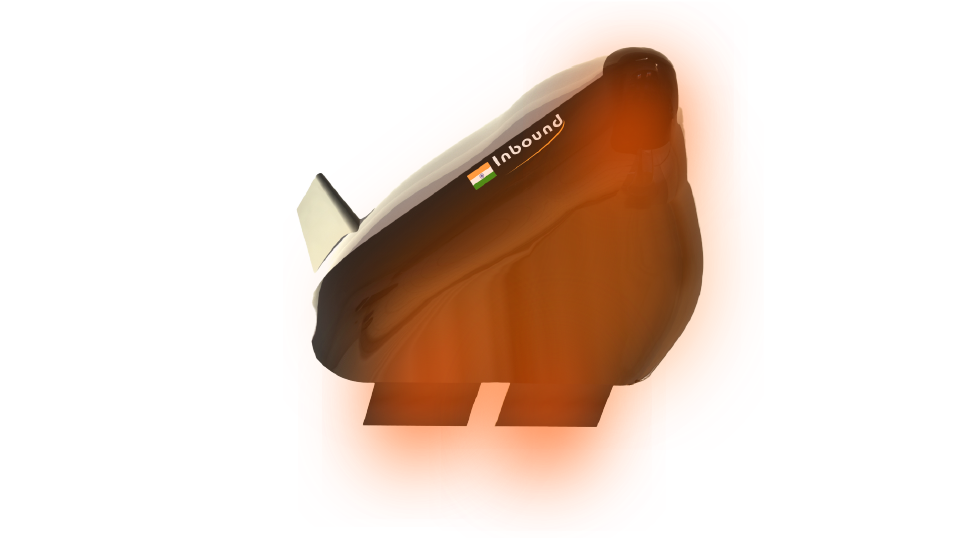
Inbound’s official website presents a lifting-body spacecraft concept intended to carry experiments into microgravity and return them through runway recovery. Its illustrated mission sequence describes an ambition, rather than a completed orbital demonstration.
Space Angel is working on another part of that chain: the facilities needed to receive and support returning hardware. In its public announcement, the company groups Inbound with other prospective re-entry and recovery partners.
The infrastructure’s status is clearer in the Western Australian Government’s August 14 grant announcement. The A$1.75 million award, to be matched by Space Angel, supports site assessments for planning and regulatory approvals and development of a business case. It is not an announcement that construction is complete.
From agreement to test campaign
The engineering value of a partnership like this becomes concrete when it produces an executable test programme. That means specified hardware, test conditions, facilities, responsibilities and a clear way to judge the result.
For a spacecraft developer, different tests answer different questions. A drop test can examine one part of a recovery sequence without demonstrating survival of orbital re-entry. A landing demonstration likewise should not be treated as proof of the entire mission.
Those distinctions will matter when the partners announce their first campaign. The current public evidence does not establish a booked test date or completed flight qualification.
Why it matters
India’s growing spacecraft industry will need repeatable ways to test recovery, not simply more designs for vehicles that can launch. International cooperation could help provide that capability.
For Inbound and Space Angel, the next reportable milestone is a defined, authorised test and its measured result. The MoU establishes a relationship from which that work may develop.
Sources
- Space Angel: Bengaluru Space Expo partner announcement
- Inbound Aerospace: illustrated mission concept
- Western Australian Government: scope of the spaceport grant
Image: Inbound Aerospace re-entry concept illustration; not flight photography.
Tags
More from Space Technology
RIDE! Targets Q3 2028 Launches for Two TakeMe2Space Satellites
The launch-services agreement covers mission management for two spacecraft in the Hyderabad company’s planned orbital-computing constellation. It is a future deployment commitment, not evidence that the network is operating.
Agnikul Adds Stage-Testing and Pressure-Vessel Facilities
The Chennai expansion addresses ground testing and manufacturing needed for future reusable vehicles. It does not establish that Agnikul has recovered or reflown a stage.