The ePlane Company Unveils India's First Full-Scale e200X Air Taxi Prototype
IIT Madras-incubated The ePlane Company has unveiled the first full-scale prototype of its e200X electric air taxi at a new Chennai facility, with certified flight testing targeted for 2027.
Manik Gupta
Founder and editor of DeepTech India. Manik writes about India's frontier technology ecosystem — AI, semiconductors, space, quantum, robotics and biotech — translating research and policy into clear, reliable reporting.
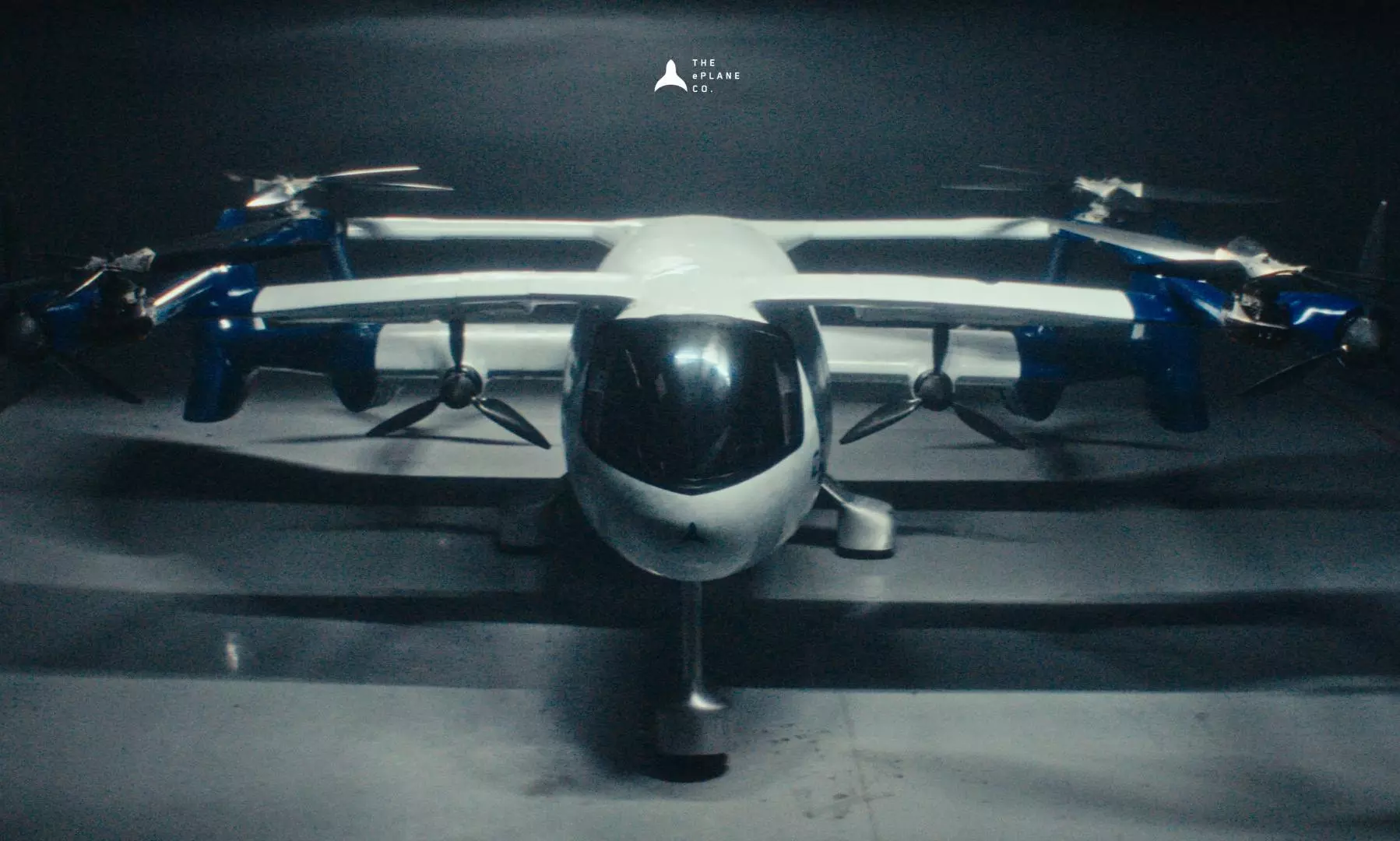
India's flying-taxi ambitions took physical shape this week. On 20 July 2026, the IIT Madras-incubated startup The ePlane Company unveiled the first full-scale prototype of its e200X electric vertical take-off and landing (eVTOL) aircraft — a compact, all-electric air taxi it hopes will one day hop passengers between city rooftops. The reveal, at the company's new 60,000-square-foot production facility in Chennai, moves the e200X from renderings and sub-scale demonstrators to a tangible, fully assembled aircraft.
From lab bench to full-scale hardware
The ePlane Company was founded out of the Indian Institute of Technology Madras by Satyanarayanan Chakravarthy, a professor of aerospace engineering at the institute who serves as the company's co-founder and technical lead. Building a full-scale prototype — designated PT-01 — is a milestone that separates serious eVTOL developers from the many concept-stage entrants worldwide, because it forces a startup to confront the real weight, wiring, structures and integration challenges of a flying vehicle.
The aircraft on display weighs about 2.2 tonnes and is built around a carbon-fibre composite airframe. It has an eight-metre wingspan and a footprint of roughly eight by ten metres, which the company says makes it one of the most compact winged passenger eVTOLs developed anywhere — a deliberate choice aimed at letting the aircraft operate from small rooftop and helipad-sized sites in dense Indian cities.
What is inside the e200X
The e200X is designed to carry a pilot and two passengers, or around 200 kilograms of cargo, over distances of up to 110 kilometres. Lift comes from eight fixed vertical-lift propellers for take-off and landing, with separate propulsion for forward cruise, integrated with a patented wing concept the company calls "Synergistic Lift."
Under the skin, the aircraft runs on an 800-volt high-voltage electric powertrain. The company has specified NVIDIA's IGX Thor platform for onboard compute and HENSOLDT avionics for its flight systems — a notable use of high-end edge-AI and sensor hardware in an Indian-designed aircraft. The combination reflects how modern eVTOLs blur the line between aviation and autonomous-systems engineering, leaning heavily on software, sensing and electric propulsion rather than conventional turbine technology.
A certification path, not just a photo op
The unveiling is a step in a longer regulatory journey. The ePlane Company has already become the first private Indian firm to receive Design Organisation Approval (DOA) from the Directorate General of Civil Aviation for an electric aircraft — a prerequisite for eventually certifying a new aircraft type in India. With the full-scale prototype now built, the company has said certified flight testing is scheduled to begin in 2027.
Its stated commercialisation plan starts with the least glamorous but most defensible use case: air ambulance and medical-transport missions, where speed over congested roads can be lifesaving and where customers are less price-sensitive. Airport shuttle services and intra-city passenger hops are envisaged to follow once the aircraft is certified and operations mature.
India's place in the global eVTOL race
The eVTOL sector is crowded and capital-hungry. Well-funded American and European developers such as Joby Aviation, Archer, BETA Technologies and Vertical Aerospace have spent hundreds of millions of dollars each and are still working through certification. Against that backdrop, an IIT Madras spin-off unveiling a full-scale, sensor-rich prototype from an Indian factory is a meaningful marker of how far the country's deep-tech aerospace ecosystem has come.
The e200X's compact, rooftop-friendly design is also a bet on Indian conditions specifically — chaotic urban traffic, limited landing real estate and a large potential market for fast medical logistics. Whether the economics ultimately work will depend on battery performance, certification timelines and the build-out of vertiport infrastructure, all of which remain unproven at scale anywhere in the world.
For now, the significance is concrete: India has a home-grown, full-scale electric air taxi that exists as hardware rather than a slide deck, built in a dedicated production facility, with a regulator already engaged. The next test — literally — comes when PT-01 leaves the ground.
Sources
- The ePlane Company Unveils Full-scale e200X eVTOL Prototype — Aviation International News
- India's ePlane Company unveils full-scale version of its e200X eVTOL — Urban Air Mobility News
- IIT Madras startup unveils India's latest flying taxi prototype — YourStory
- ePlane reveals first full-scale e200X eVTOL aircraft prototype — STAT Times
Tags
More from Space Technology
ISRO's GSLV-F17 Places EOS-05 Into Orbit, Its Heaviest-Ever Payload on a GSLV
ISRO's GSLV-F17 placed the 2,367-kg EOS-05 satellite into a higher-than-planned geosynchronous transfer orbit on September 4, redeeming the GSLV family after the 2021 loss of its predecessor and setting up a packed launch calendar toward Gaganyaan.
Kepler Aerospace Raises $8 Million to Build Six Autonomous ISR Satellites That Talk to Each Other in Orbit
Bengaluru's Kepler Aerospace has closed its first-ever external funding round to launch six swarming ISR satellites under two Ministry of Defence iDEX contracts.