
India Issues Its First Space Re-Entry Rulebook as Agnikul Prepares an Ocean Booster Recovery
IN-SPACe has published India's first authorisation framework for planned atmospheric re-entry, requiring operators to keep ground-casualty risk below 1-in-10,000 and accept no-fault liability — arriving just as Agnikul Cosmos readies India's first ocean booster-recovery attempt on Mission-02.
Manik Gupta
Founder and editor of DeepTech India. Manik writes about India's frontier technology ecosystem — AI, semiconductors, space, quantum, robotics and biotech — translating research and policy into clear, reliable reporting.
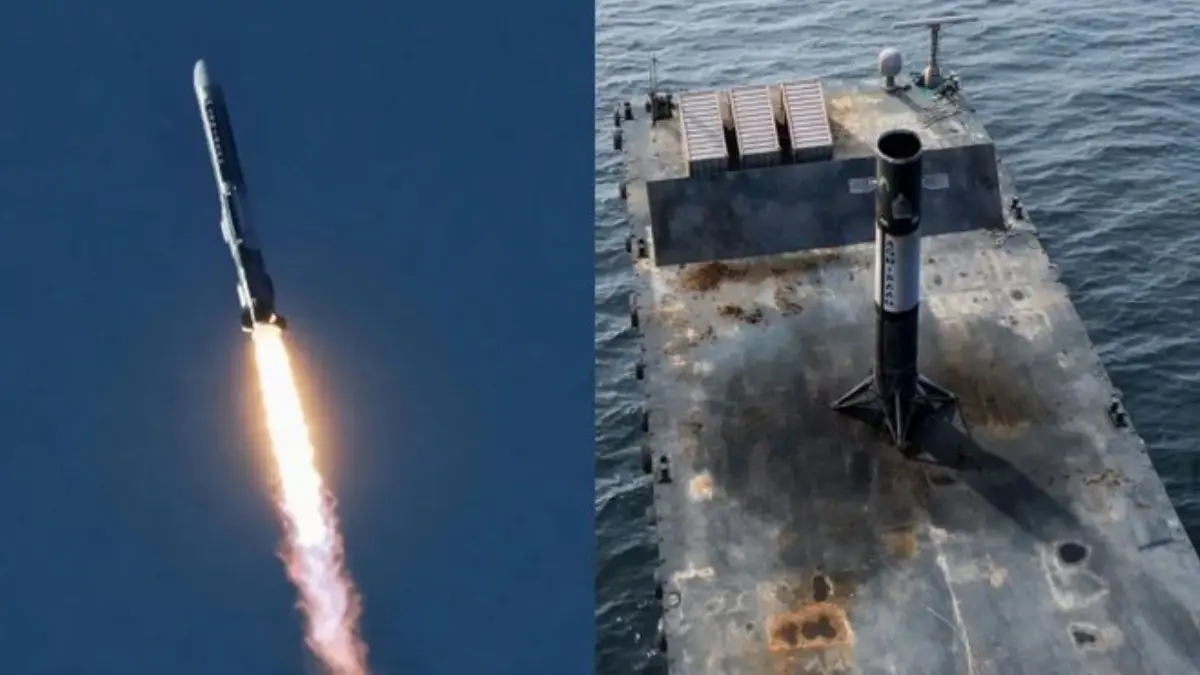
India's space regulator has published the country's first-ever authorisation framework for the planned atmospheric re-entry of space objects — a foundational piece of rulemaking that arrives just as private launch company Agnikul Cosmos prepares to attempt India's first ocean recovery of a rocket booster. Released in late July 2026, the framework from the Indian National Space Promotion and Authorisation Centre (IN-SPACe) is the first time an Indian operator wanting to bring hardware down through the atmosphere in a controlled way has had a formal rulebook to follow.
Until now, India's private space rules covered launches, satellite operations and, more recently, authorisations for private entities to use ISRO facilities. Deliberate re-entry — the controlled return of a booster or spacecraft — sat in a regulatory gap. That gap matters more with each passing month, because the reusability and in-orbit-servicing ambitions of India's youngest space firms depend on being able to bring things back safely.
What the framework requires
The new IN-SPACe framework makes authorisation mandatory for planned re-entries and sets a hard safety bar. According to the published requirements, an operator must demonstrate that the expected casualty risk on the ground stays below 1-in-10,000 — the internationally recognised threshold for such operations — before it can be cleared to proceed.
Meeting that bar is an engineering exercise in its own right. The operator has to:
- Define the predicted re-entry corridor — where the object is expected to come down.
- Compute debris survivability — how much of the hardware survives the intense heating of atmospheric entry, and how the surviving fragments disperse.
- Apply population-density data to the projected ground footprint.
- Multiply these factors to derive an expected-casualty figure that must fall under the 1-in-10,000 ceiling.
Beyond the numbers, the framework introduces a strict liability regime. Operators face absolute, no-fault liability for damage caused by a re-entering object, and are required to carry adequate insurance, including mandatory third-party liability cover where IN-SPACe prescribes it at the time of authorisation. In short: if you plan to bring something down over Indian jurisdiction, you must prove it is safe, insure against the worst, and accept responsibility regardless of fault.
Why the timing is not a coincidence
The rulebook lands alongside concrete plans by Agnikul Cosmos, the IIT Madras-incubated start-up known for Agnibaan, its rocket powered by the single-piece 3D-printed Agnilet engine. Agnikul has signalled that its Mission-02 will attempt something no Indian entity has done before: after stage separation, the first-stage booster will attempt a controlled descent and a splashdown recovery in the open ocean.
Directing a spent booster to the sea is a deliberate safety choice as much as a reusability one. Ocean population density is effectively negligible compared with populated land, which sharply lowers the expected-casualty figure the operator must satisfy — precisely the metric the new IN-SPACe framework governs. In that sense, the regulation and the mission are two halves of the same story: India is building the legal machinery for controlled returns at the same moment its private sector is ready to test them.
Agnikul's ambitions reportedly extend further. Rather than let the upper stage burn up as orbital debris, Mission-02 is designed to repurpose the upper stage into a functional in-orbit platform — an approach the company has said is supported by patents held in India, the United States and Europe. If it works, it would fold debris mitigation directly into mission design instead of treating it as an afterthought.
The bigger picture for Indian space
Two forces are converging here. On one side, IN-SPACe has spent the past few years steadily building the scaffolding for a private space economy — issuing authorisations to firms such as Skyroot and opening ISRO's test and launch facilities to companies through formal agreements. On the other, India's launch start-ups are moving from single technology demonstrations toward the harder engineering of reusability, booster recovery and responsible end-of-life practices.
A re-entry framework is essential connective tissue between the two. Reusable rockets are only economical if operators can legally and safely recover stages; in-orbit servicing and debris removal — fast-growing global markets — likewise depend on clear rules for bringing objects down. By setting a quantitative casualty bar, a liability regime and an insurance requirement now, India is signalling that it intends to grow its commercial space sector without lowering safety standards, and giving companies the regulatory certainty they need to invest in recovery technology.
For a sector that has, in a single year, seen a private orbital launch and record funding, the arrival of India's first re-entry rulebook is a quieter milestone — but a telling one. It marks the point at which India began writing the rules for what goes up to also come safely back down.
Sources
- Tech Times — India's First Re-Entry Rules Arrive Just as Agnikul Plans Booster Recovery
- Indian Defense News — India Enforces Strict Space Re-Entry Safety Norms With Casualty Risk Cap
- Republic World — How Agnikul Cosmos Aims to Conquer India's First-Ever Ocean Booster Recovery
- IDRW — India's Agnikul to attempt rocket stage recovery
Tags
More from Space Technology
RIDE! Targets Q3 2028 Launches for Two TakeMe2Space Satellites
The launch-services agreement covers mission management for two spacecraft in the Hyderabad company’s planned orbital-computing constellation. It is a future deployment commitment, not evidence that the network is operating.
Agnikul Adds Stage-Testing and Pressure-Vessel Facilities
The Chennai expansion addresses ground testing and manufacturing needed for future reusable vehicles. It does not establish that Agnikul has recovered or reflown a stage.