ISRO to Exit Rocket Manufacturing, Hand PSLV, LVM3 and SSLV Production to Private Industry
IN-SPACe Chairman Pawan Goenka has confirmed that ISRO will exit rocket manufacturing entirely, handing PSLV, LVM3 and SSLV production to private industry as India targets a $44 billion space economy by 2033 -- a move former ISRO chief G. Madhavan Nair has publicly questioned.
Manik Gupta
Founder and editor of DeepTech India. Manik writes about India's frontier technology ecosystem — AI, semiconductors, space, quantum, robotics and biotech — translating research and policy into clear, reliable reporting.
A structural pivot, announced on India's Space Day
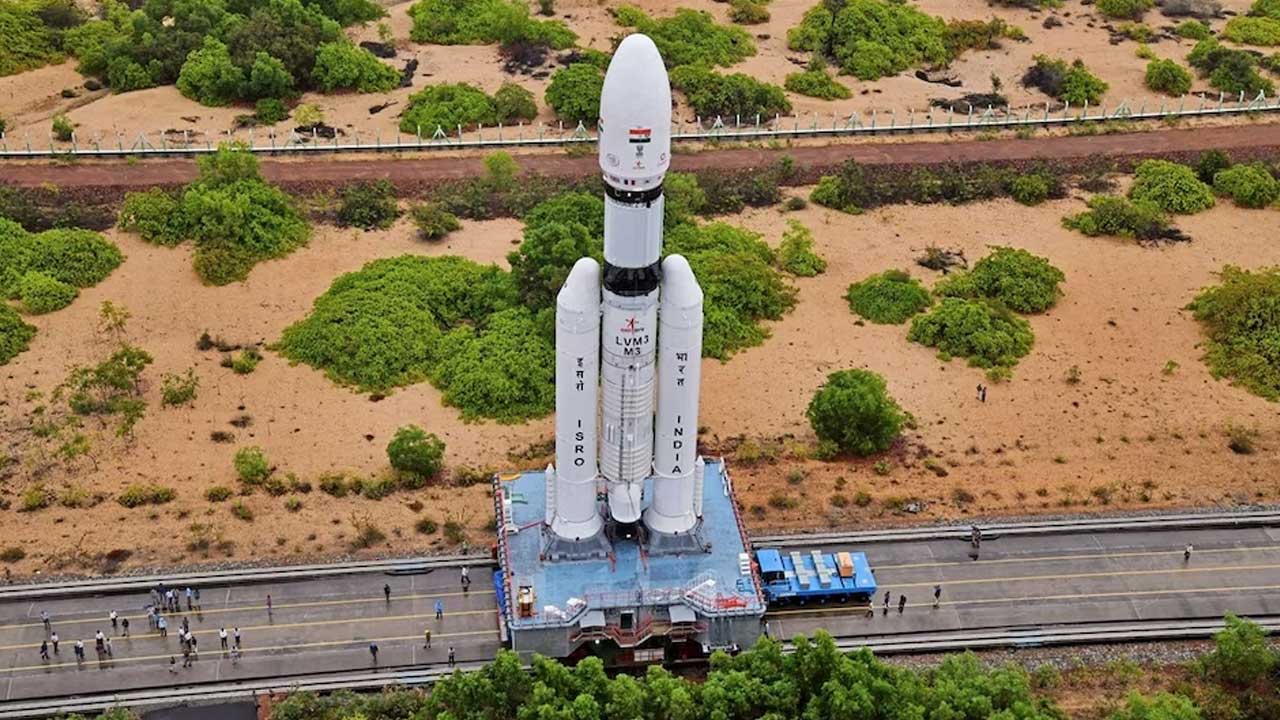
Speaking at Business Today's India @100 Economy Summit on August 21, 2026, and again around the third National Space Day celebrations two days later, IN-SPACe Chairman Pawan Goenka laid out what may be the most consequential change to India's space programme in a decade: ISRO will stop manufacturing launch vehicles altogether. The agency's three operational rockets — the Polar Satellite Launch Vehicle (PSLV), the Launch Vehicle Mark-3 (LVM3) and the Small Satellite Launch Vehicle (SSLV) — are all slated to have their production handed over to private industry or public-sector undertakings.
"ISRO will not make any launch vehicles," Goenka said, describing a future in which the space agency designs and matures new technology, then hands it off once it is ready for repeatable commercial production. ISRO itself would redirect its engineers and budgets toward deep-space missions, next-generation propulsion, and the kind of frontier research that only a government agency has the risk appetite to fund.
What is actually changing, rocket by rocket
The SSLV transfer is already underway. Hindustan Aeronautics Limited (HAL) won the competitive bidding process for the SSLV's production and technology rights, making it the first of ISRO's three launch vehicles to be fully handed to a single industrial entity. The PSLV — the "workhorse" that has carried Chandrayaan and Mangalyaan payloads to orbit for three decades — and the more powerful LVM3, which flew the Chandrayaan-3 mission, are next in line. Unlike the SSLV process, government officials have indicated that public-sector companies will not be allowed to bid for these follow-on transfers, a deliberate move to ensure the work goes to genuinely private industrial consortia rather than another arm of the state.
The rationale ISRO and IN-SPACe have offered is straightforward: an agency built to explore cannot also be the entity mass-producing rockets at commercial cadence. Since the 2020 liberalisation of India's space sector, the number of registered space start-ups has grown to roughly 440, and the country's private space companies are now targeting more than eight commercial launches across FY27 and FY28. Skyroot Aerospace's Vikram-1 reached orbit on July 18, 2026 — India's first privately built orbital launch — a milestone officials have pointed to as proof that domestic industry is ready to take on more than component supply.
The numbers behind the push are large. Union Minister Dr Jitendra Singh has said India's space economy, currently valued at around $8.4 billion, is targeted to grow roughly fivefold to $44 billion by 2033. IN-SPACe's own projections split that target into an estimated $33 billion in domestic market activity and $11 billion in exports, requiring an estimated $22 billion in cumulative investment over the coming decade — capital that officials argue the private sector, not ISRO's budget, will have to supply.
Not everyone is convinced
The plan has already drawn public pushback from inside the space establishment. Former ISRO chairman G. Madhavan Nair has questioned both its logic and its economics. Industry, he has pointed out, already builds the overwhelming majority of India's rockets — by his estimate, "around 90% of the work" on vehicles like the PSLV and the GSLV is already done by private contractors. What ISRO retains, he argues, is the hardest and highest-consequence part: final assembly, integration, testing and launch — the AIT&L work where a single error can destroy a mission. Handing that residual 10% to newer, less experienced players, Nair suggests, is a bigger leap than the "90% already privatised" framing implies.
Nair has also questioned whether private industry has the appetite to fund an ISRO-scale launch enterprise on its own commercial terms. "If you want to create an establishment similar to ISRO, today it will cost something like 50,000 crores," he said, "and the income from that will be hardly a few thousand crores" — a return profile, he argues, that makes sense for a state mission agency absorbing strategic risk, but a much harder sell for a private balance sheet answerable to investors.
What it means for the ecosystem
For India's launch-vehicle supply chain — companies like HAL, Larsen & Toubro, and a widening set of private aerospace manufacturers — the announcement effectively confirms a multi-year pipeline of serial rocket production work that was previously the exclusive domain of ISRO's own centres. For newer entrants like Skyroot, Agnikul Cosmos and Bellatrix Aerospace, it also validates the broader thesis that private capital, not just ISRO contracts, is now the primary route to scaling a launch business in India.
Whether the transition proceeds on Goenka's timeline — or runs into the integration and safety-certification hurdles Nair has flagged — will likely become one of the defining storylines of India's space sector through the rest of the decade. ISRO has not indicated a firm date by which PSLV and LVM3 production will fully move to private hands, and the specifics of the bidding process for those two vehicles have yet to be published.
Sources
- ISRO Transitions Rocket Manufacturing to Domestic Private Sector to Scale India's Space Economy
- "ISRO Will Not Make Any Launch Vehicles": IN-SPACe Chairman Pawan Goenka
- India's private space sector enters commercial take off, says Pawan Goenka, Chairman of IN-SPACe
- ISRO to privatise launch vehicle production, ex-chief Madhavan Nair questions viability
- India's space economy will grow five times from $8.4 billion to $44 billion by 2033: Dr Jitendra Singh
- ISRO to Exit Launch Vehicle Manufacturing, Hand Over Technology To Private Sector
Tags
More from Space Technology
ISRO's GSLV-F17 Places EOS-05 Into Orbit, Its Heaviest-Ever Payload on a GSLV
ISRO's GSLV-F17 placed the 2,367-kg EOS-05 satellite into a higher-than-planned geosynchronous transfer orbit on September 4, redeeming the GSLV family after the 2021 loss of its predecessor and setting up a packed launch calendar toward Gaganyaan.
Kepler Aerospace Raises $8 Million to Build Six Autonomous ISR Satellites That Talk to Each Other in Orbit
Bengaluru's Kepler Aerospace has closed its first-ever external funding round to launch six swarming ISR satellites under two Ministry of Defence iDEX contracts.