
GSLV-F18 Puts NVS-03 Into Orbit, Giving NavIC a Path Back to Four Working Satellites
ISRO's GSLV-F18 placed the NVS-03 navigation satellite into transfer orbit on 30 October, carrying an Indian-built atomic clock. If orbit raising goes to plan, it restores the four working satellites NavIC needs for standalone positioning.
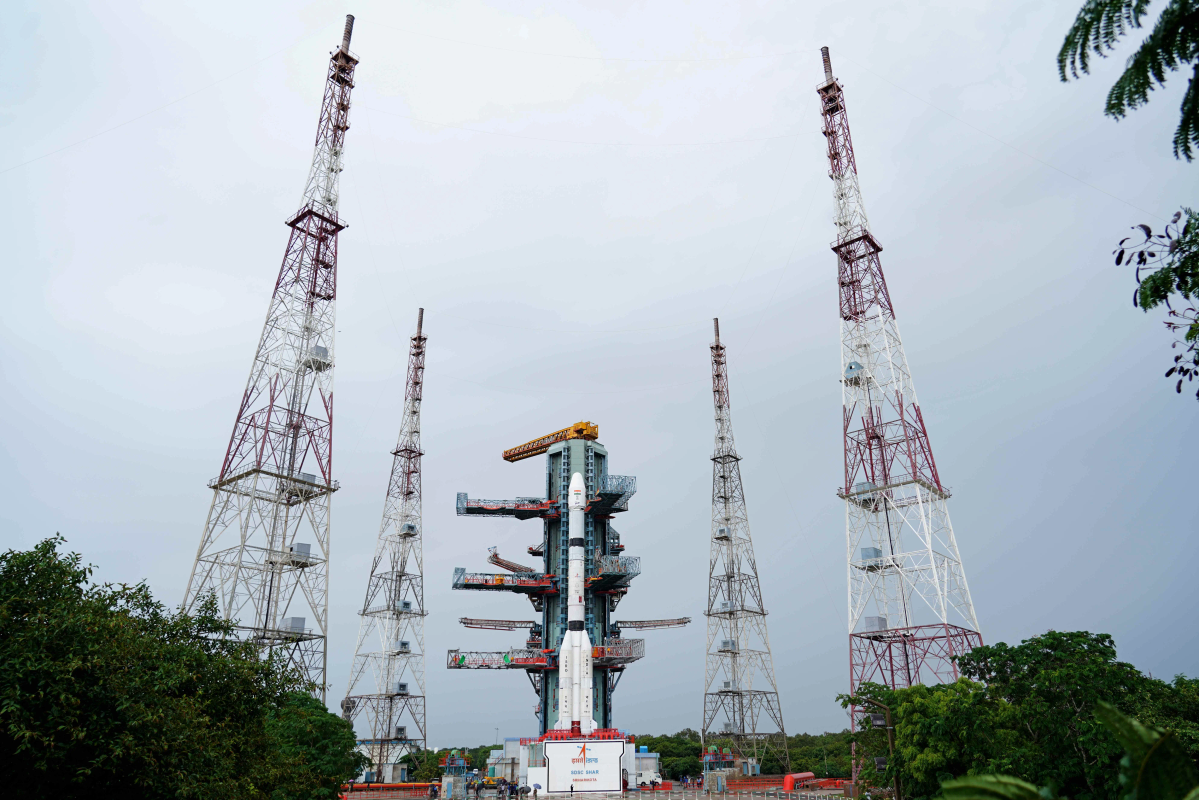
ISRO's Geosynchronous Satellite Launch Vehicle lifted off from Sriharikota at 11:51 pm IST on 30 October 2026 carrying NVS-03, the third satellite in India's second-generation NavIC navigation series. ISRO’s mission page confirms placement into the intended transfer orbit. PTI’s 31 October report places liftoff at 11:51 pm IST on 30 October; the mission page displays an earlier 28 October page date.
This launch matters more than most. India's regional navigation system has been running below the minimum it needs to work as a standalone positioning service. NVS-03 is intended to add capacity, subject to successful orbit raising and commissioning.
What happened on launch night
GSLV-F18 flew from the Second Launch Pad at the Satish Dhawan Space Centre (SDSC-SHAR). According to ISRO's mission brochure, it was the 20th flight of the GSLV. The vehicle carried a satellite of about 2.2 tonnes, which press reports put at roughly 2,232 kg.
The rocket did not take NVS-03 straight to its final position. It released the satellite into a geosynchronous transfer orbit (GTO). The pre-launch brochure planned that orbit with a perigee of about 170 km and an apogee of about 37,023 km. Over the coming days, ISRO will fire the satellite's own engine several times to circularise the orbit and move it to its operational slot about 35,800 km above the Earth.
That phase is where the risk lies. ISRO's GSLV succeeded in January 2025 too, when it put NVS-02 into transfer orbit on what was the 100th launch from Sriharikota. NVS-02 then failed to raise its orbit and never reached its working position. Until NVS-03 finishes its orbit-raising burns and starts transmitting, Friday's mission is only half done.
Why NavIC needed this satellite
NavIC (Navigation with Indian Constellation), formerly the Indian Regional Navigation Satellite System (IRNSS), is India's answer to GPS. It covers India and the region up to about 1,500 km beyond its borders. Unlike GPS, it is controlled entirely from Indian soil. The original IRNSS-1 satellites were launched from 2013 onward, and several later lost their imported rubidium atomic clocks. Without a working clock, a navigation satellite cannot provide positioning.
What the satellite carries
The most important item on board is the clock. NVS-03 carries an atomic clock developed in India, along with procured clocks. ANI described the launch as placing the country's third indigenous atomic clock in space. Clock reliability has been a concern for the first-generation constellation. Building them in India reduces exposure to a single foreign supplier for the component that most limits the constellation's life.
What this means for India
Strategic autonomy. A navigation system run from Indian ground stations means armed forces, power grids, telecom networks and banks do not have to rely only on foreign systems for positioning and timing. The timing signal alone matters: telecom networks and stock exchanges stamp their transactions with satellite time.
The phone ecosystem. The L1 signal is aimed at mass-market devices. India's push to get NavIC into smartphone chipsets depends on a dependable constellation. A system that could not offer standalone positioning was difficult to promote to handset makers and app developers.
Industrial depth. A home-built atomic clock, the GSLV's Indian-built cryogenic upper stage, and ground segments run from Indian stations together cover a large share of the space navigation value chain. That chain had long-standing import dependencies.
What to watch next
The next milestones are the orbit-raising manoeuvres, the move to the satellite's assigned slot, payload switch-on, and in-orbit tests of the signals and clock. Once NVS-03 is confirmed in service, ISRO's focus moves to NVS-04 and NVS-05. Those satellites would turn a minimal operating constellation into a constellation with some redundancy.
For now, India's navigation programme is a step closer to recovery.
Sources
- https://www.isro.gov.in/Mission_GSLVF18.html
- https://theprint.in/india/gslv-successfully-places-next-gen-navigation-satellite-nvs-03-into-designated-orbit/3086666/
- https://www.isro.gov.in/media_isro/image/index/GSLVF18_NVS03/GSLV_F18_NVS03_Mission_Brouchure_27102026.pdf