Deep Algorithm’s Earlier ₹16-Crore Round Backs Behavioural Identity for India’s Banks
The Hyderabad-based, IIT Mandi-incubated AI cybersecurity start-up raised a pre-Series A round led by Unicorn India Ventures to take its behavioural-identity platform adapID AI global.
Passwords and one-time passwords (OTPs) check what you know or what you have. Hyderabad-based Deep Algorithm Solutions is betting that the stronger signal is how you behave. In reporting dated 23 April 2026, the AI cybersecurity start-up said it had raised ₹16 crore in a pre-Series A round led by Unicorn India Ventures. It plans to use the money to expand internationally and add new identity and AI-security features to its platform.
Other participants in the round were UAE-based SB Investment, Prakash Govindan (CEO of US-based Gradiant) and Himanshu Singhal (CEO of inMorphis). Unicorn India Ventures also led the company's ₹10.8-crore seed round in July 2025.
Behaviour as the fingerprint
Deep Algorithm was founded in December 2021 by JP Mishra and Amit Shukla. It was incubated at IIT Mandi and IIT Kanpur, and it keeps its research and development office at IIT Mandi, where Shukla has served as a faculty member at the Centre for Artificial Intelligence and Robotics.
Its main product, adapID AI, is a behavioural identity-intelligence platform. It learns patterns unique to each user, such as how hard they press the screen, how they hold the phone and how fast they type, and gives every session a real-time risk score. Users are authenticated passively and continuously, not at a single checkpoint. A fraudster who has stolen a password, or intercepted an OTP, still has to behave like the account's real owner, and that is much harder to fake.
The company markets BotShield-AI for application security and DDoS protection; those capabilities are product claims, not independent performance findings established here.
Mishra described identity as dynamic and based on continuous behavioural signals in the April funding report.
Traction with banks and public infrastructure
The company's customers are mostly in banking, financial services and fintech. They include Canara Bank, Karnataka Bank, DCB Bank and CSB Bank, along with the National Capital Region Transport Corporation (NCRTC), which runs the Delhi–Meerut RRTS rapid-rail corridor, and BVH.
Deep Algorithm says closing annual recurring revenue (ARR) grew threefold between FY25 and FY26. It has set a goal of growing it 20 times by FY27, an aggressive target that the new capital is meant to support.
Why it matters
India runs the world's largest real-time digital payments system, and digital fraud has grown alongside it. OTP-based authentication, for years the default safeguard, is under pressure from SIM-swap fraud, phishing and social-engineering scams, and now from AI tools that can automate attacks or impersonate users at scale. Regulators have been pushing banks towards more robust, risk-based authentication.
Behavioural biometrics fits that shift well. It aims to assess risk continuously in the background. Its practical value depends on false-positive rates, coverage across devices, privacy safeguards and integration with banks’ existing controls. This report does not establish that it replaces every password or OTP.
The round also shows a growing link between Indian academia and commercial cybersecurity. Technology that grew out of AI research at IIT Mandi is now running inside public-sector and private banks, which is the kind of lab-to-market path India's deep-tech policy aims to encourage.
What to watch
The 20x ARR target is the obvious test. International expansion will put Deep Algorithm up against established global players in behavioural biometrics and bot management. Its edge will depend on accuracy across diverse devices, on low false-positive rates, and on whether it can show it detects AI-driven attacks, not just human fraudsters.
Sources
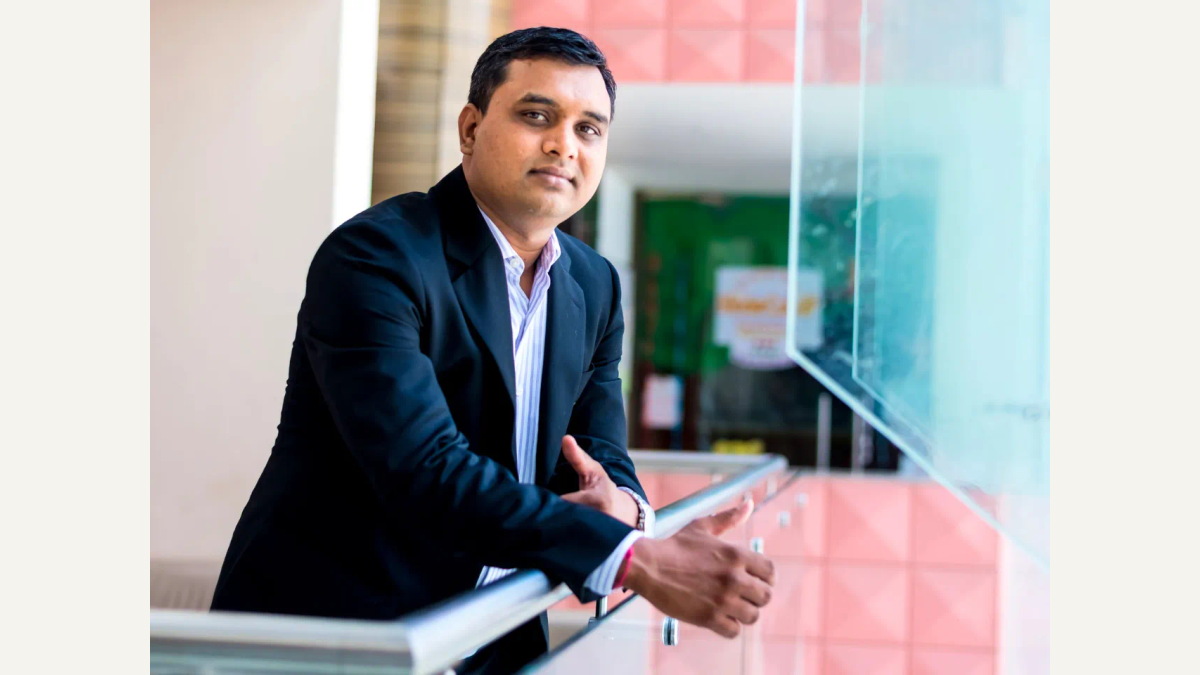
Image: JP Mishra, Deep Algorithms founder and CEO, as identified by Indian Startup News in its 23 April 2026 report. Founder portrait; no publication watermark visible. Original source.