Navy Plans a Record 18 Warship Additions in 2026 as Rajnath Singh Pushes for Exports
At the Naval Commanders' Conference on 29 September, Rajnath Singh said the Navy will induct 18 warships in 2026, its largest single-year addition, with recently commissioned ships carrying over 75% indigenous content, and urged the industry to start exporting warships.
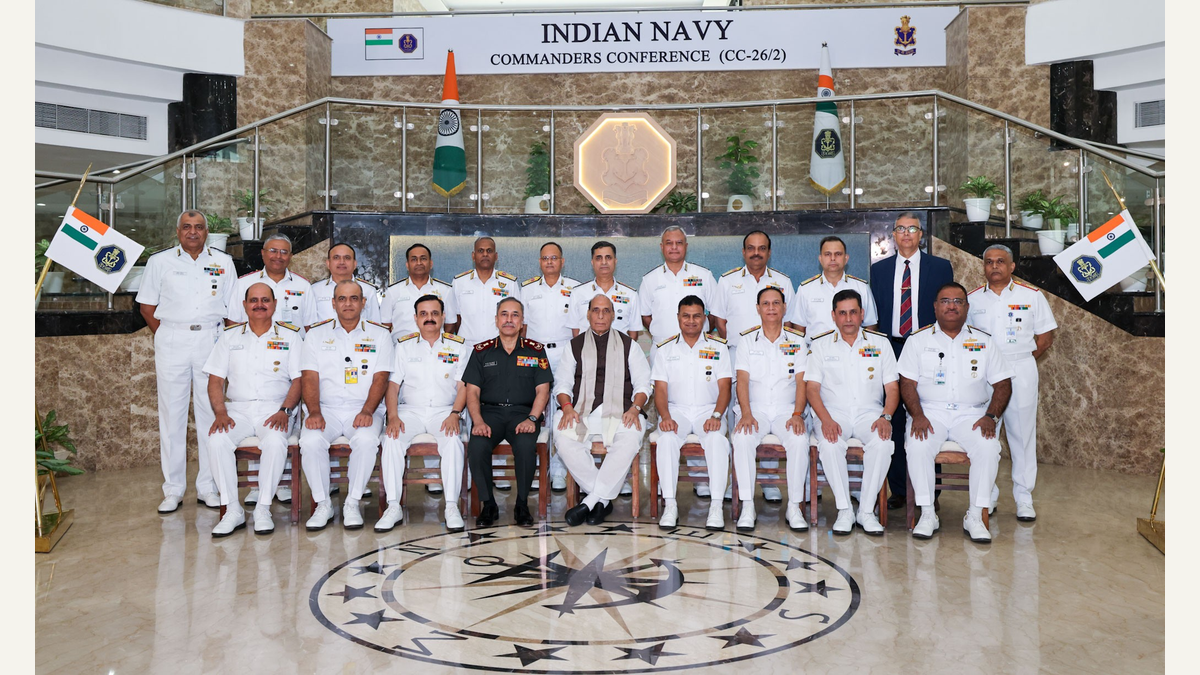
India’s Navy plans 18 warship inductions or commissionings in 2026, which Defence Minister Rajnath Singh described as its largest single-year force addition. Defence Minister Rajnath Singh gave the figure on 29 September. He was addressing the second edition of the Indian Navy's biannual Commanders' Conference 2026 at Nausena Bhawan in New Delhi.
The minister said the ships commissioned recently carry more than 75% indigenous content, and he set the Navy and India's shipyards a new goal. "In the times ahead, we must not only meet our own requirements but also export our warships to friendly foreign nations," he said.
What was announced
The main points from the address, as reported:
- 18 inductions or commissionings in 2026, which Singh called the largest single-year addition of ships in the Navy's history.
- Indigenous content above 75% in recently commissioned warships, all built at Indian shipyards.
- A call to export warships to friendly countries, moving the industry from building for the Navy alone to competing for foreign orders.
- A blue-water posture. Singh pointed to Indian warships deployed in the South China Sea, the Mediterranean and the Atlantic. He described India as the "First Responder" and "Preferred Security Partner" in the Indian Ocean Region.
- Stronger maritime surveillance, which he named as a priority as the fleet grows.
The plan covers inductions or commissionings; it is not confirmation that all 18 ships have already entered service.
Why 75% indigenous content is a technology story
A warship is a system of systems: hull steel, propulsion, power generation, combat management software, radars, sonars, communications and weapons. For decades, India could build hulls but bought much of what went inside them.
The benchmark many people know is INS Vikrant, India's first home-built aircraft carrier. The Navy's Warship Design Bureau designed it and Cochin Shipyard built it, and it was commissioned in September 2022 with about 76% indigenous content. That included warship-grade steel from SAIL and work from more than 550 equipment makers and around 100 MSMEs.
The minister’s figure concerns recently commissioned ships, rather than a verified uniform percentage across all 18 planned additions. It points to a broader domestic supplier base. That base includes:
- Warship-grade steel and fabrication at Indian yards.
- Indigenous combat management and sensor suites, many developed with DRDO labs and defence PSUs.
- A widening layer of private suppliers for pumps, valves, power electronics, cables and automation.
The harder remaining 25% is typically high-end: gas-turbine propulsion, some weapons, and certain sensors. Those are where India's defence R&D budget and programmes such as DRDO's Technology Development Fund are now concentrated.
Exports: the next test
Singh's export call matters because shipbuilding is a scale business. Domestic orders alone leave yards with gaps between programmes. Export orders, even for smaller vessels such as patrol ships, corvettes or support craft, can keep production lines and supplier networks busy. They can also bring down unit costs for the Navy.
India's defence exports have grown in recent years, led by missiles, artillery and electronics. Warships are a much bigger lift: buyers expect long-term support, training and spares. That is where the ecosystem built for the Indian fleet becomes a selling point.
What it means
For India's deep-tech and manufacturing base, the planned 18-ship year points to demand for domestic suppliers. Those orders show up in metallurgy, marine engineering, electronics and software firms well beyond the shipyards themselves. If the export ambition turns into contracts, the same supply chain could become a long-term earner, much as Indian missile and radar programmes have begun to do.
Sources
Official announcement: PIB.
Image: Ministry of Defence / PIB. Rajnath Singh and naval leadership at the second Navy Commanders’ Conference 2026, New Delhi; official conference photograph. Original source.