
Rajnath Singh calls for 'Aatmanirbharta 2.0' at Swavlamban 2026 as Navy iDEX challenges reach 229
At the Navy's Swavlamban 2026 seminar, the defence minister called for a second phase of self-reliance built on advanced technology, secure supply chains and tolerance for research failure, as the Navy reported iDEX challenges up from 20 in 2022 to 229.
For most of the past decade, India's defence self-reliance drive has been about building at home what the armed forces used to import. At the Navy's Swavlamban 2026 seminar in New Delhi on 26 October, Defence Minister Rajnath Singh said that phase is ending, and named what comes next.
He called it "Aatmanirbharta 2.0": a second stage of self-reliance focused on closing gaps in advanced technology, securing supply chains down to raw materials, and changing how the defence establishment treats research that fails.
The event
Swavlamban is the Indian Navy's annual Naval Innovation and Indigenisation Seminar, organised with the Defence Innovation Organisation (DIO) and the Society of Indian Defence Manufacturers (SIDM). The 2026 edition, its fifth, ran on 26 and 27 October at the Manekshaw Centre in New Delhi under the theme "Strength & Power through Innovation and Indigenisation".
At the plenary, Singh released a Compendium of Technology Imperatives, which sets out problem statements for industry, and a "Swavlamban 5.0" document outlining the Navy's priorities and the openings it sees for Indian companies.
What "Aatmanirbharta 2.0" means
Singh's speech made three main points.
Supply chains are now a security question. He said dependence on imported raw materials such as rare earths is a vulnerability, and urged that buffer stocks and domestic production capacity be checked in advance against possible disruption of supply routes. The point has weight: rare-earth magnets are used in motors, actuators, radars and guidance systems, and global supply is concentrated in China.
Research is central, and failure is part of it. Singh called for a change in attitudes towards research failures, describing them as a natural part of innovation. That is a notable message from a ministry whose procurement systems have long been criticised as risk-averse, and where a failed trial can set a programme back years.
The results are starting to show. "Naval contracts worth over Rs 1,900 crore demonstrate that our efforts are delivering tangible results," he said. He also said more than 4,000 proposals had been received against 229 challenges issued by the Navy.
The Navy's iDEX numbers
The 229 figure refers to challenges under iDEX (Innovations for Defence Excellence), the defence ministry's programme for funding start-ups and small companies to solve specific military problems.
Chief of the Naval Staff Admiral Krishna Swaminathan said Navy-specific iDEX challenges have grown more than tenfold, from 20 in 2022 to 229 now, which he said is about 35 per cent of all iDEX challenges across the defence sector. DD India’s account of the event reports 41 Acceptance of Necessity cases worth over ₹3,500 crore and 25 signed contracts worth over ₹1,900 crore. Approvals and contracts are different stages.
Admiral Swaminathan used his address to press for speed. He urged faster conversion of innovation into operational capability, and said rapid advances in AI, autonomous systems, robotics and quantum sensing offer opportunities the Navy should use to strengthen its capabilities and stay ahead of the technology curve.
Why the Navy leads on indigenisation
The Navy has long been the most indigenised of India's three services. Most of its warships are designed by its own Warship Design Bureau and built in Indian shipyards, and it set up the Naval Innovation and Indigenisation Organisation in 2020 to push the same approach into sub-systems and equipment. Swavlamban grew out of that effort.
What it means for industry
For Indian defence start-ups, the seminar sent three signals.
First, demand is specific and published. A compendium of problem statements tells companies what the Navy wants to buy instead of leaving them to guess.
Second, money is moving from approvals to contracts. The gap between ₹3,500 crore approved and ₹1,900 crore contracted shows both progress and how much remains in the pipeline.
Third, the government is framing materials and supply-chain resilience as defence priorities. That could open doors for companies working on rare-earth processing, magnets, specialty alloys and electronic components, not just for those building finished systems.
The open questions
Large challenge counts are not the same as fielded capability. The test of Aatmanirbharta 2.0 will be how many iDEX projects move into series production, how quickly trials and procurement can be completed, and whether the ministry's new tolerance for failed research shows up in how programmes are actually funded and reviewed. The Navy's own chief set the bar on 26 October: innovation counts when it becomes operational capability.
Sources
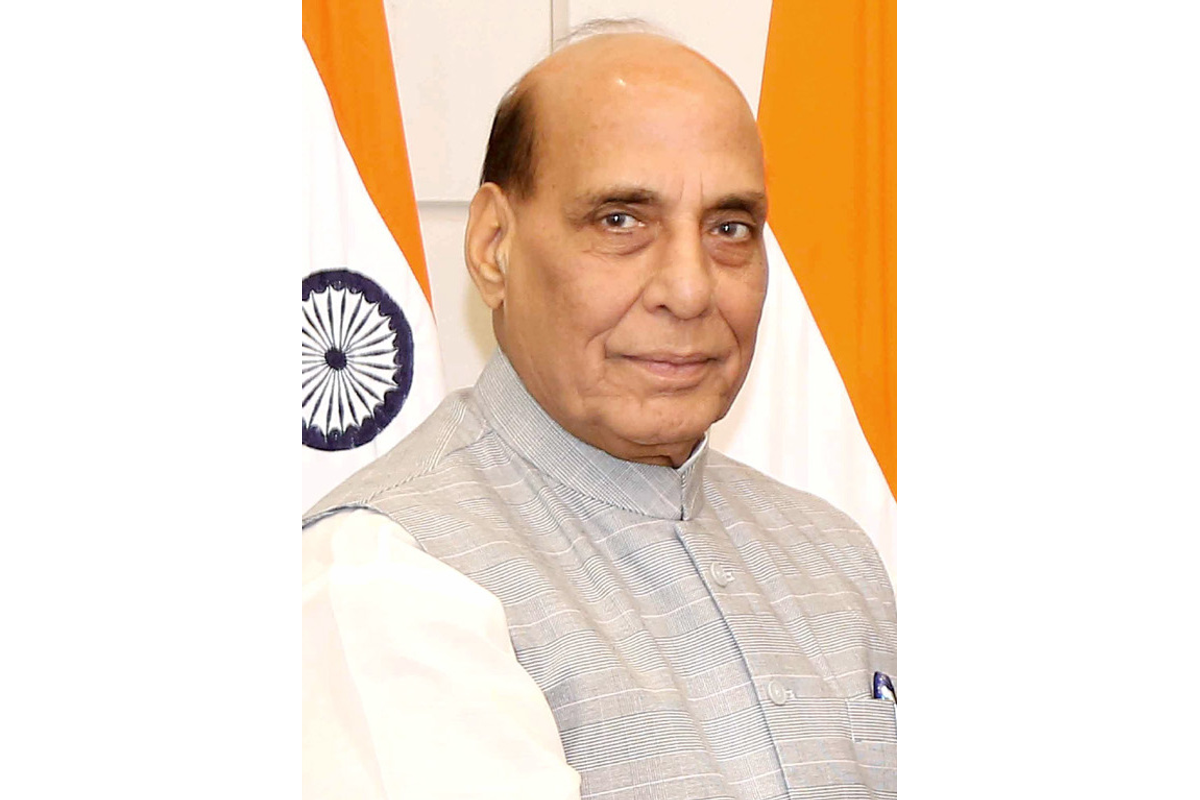
Image attribution: Ministry of Defence / PIB, via Wikimedia Commons, GODL-India. Archival Rajnath Singh portrait extracted from a 9 May 2023 photograph; not the 2026 seminar. Source: https://commons.wikimedia.org/wiki/File:The_official_portrait_of_Defence_Minister_Shri_Rajnath_Singh.jpg. Licence: https://data.gov.in/sites/default/files/Gazette_Notification_OGDL.pdf . No government endorsement implied.