
Navy Commissions INS Samarthak, a Drone Mothership and Trials Ship Built by L&T
India's first multi-purpose vessel, built by L&T at Kattupalli with over 75% indigenous content, joined the Navy at Karwar on 16 October as a host ship for drones, unmanned boats and sea trials of new weapons and sensors.
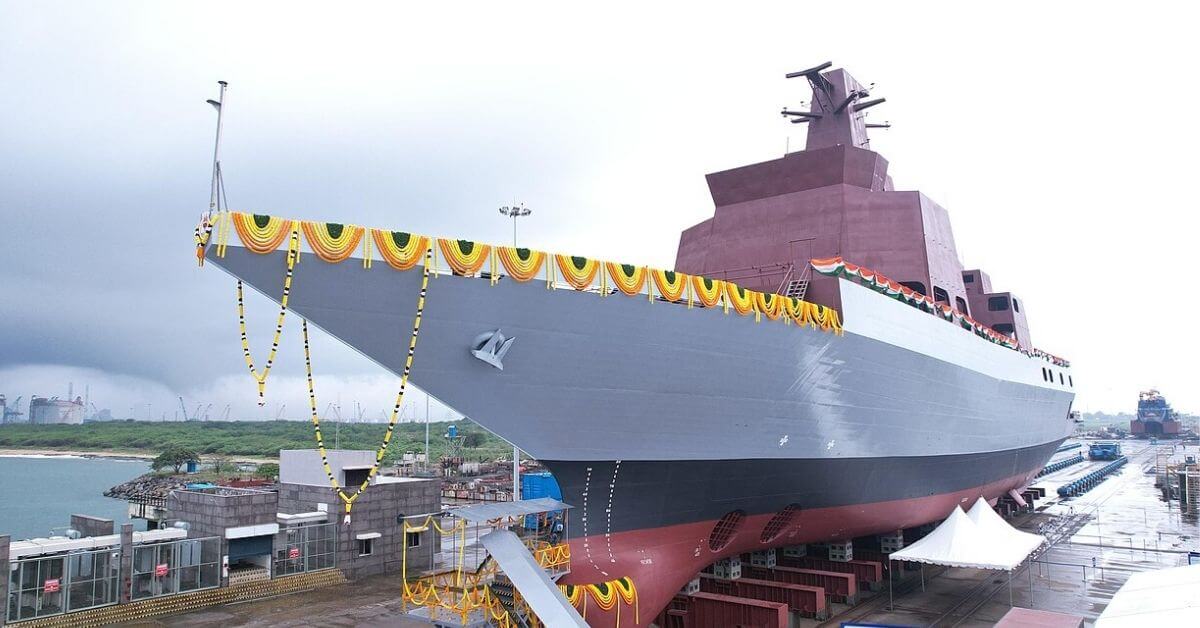
The Indian Navy has a new kind of ship, and a private shipyard built it. On 16 October 2026, INS Samarthak was commissioned at Naval Base Karwar in Karnataka, with Vice-President C.P. Radhakrishnan presiding. Chief of the Naval Staff Admiral Krishna Swaminathan and Karnataka Labour Minister Santosh Lad were among those present.
Samarthak is the Navy's first multi-purpose vessel (MPV). Larsen & Toubro (L&T) designed and built it at its Kattupalli shipyard near Chennai, and the Defence Ministry says more than 75% of its content is indigenous. Marine Insight described it as the first multi-purpose ship built for the Navy by a private shipyard. L&T handed the ship over on 27 August; commissioning is the formal moment it joins the fleet as an active warship.
A ship built to carry other systems
Samarthak is not a frontline combatant like a destroyer or a frigate. Its main value is as a flexible platform for other systems. Reports from the commissioning, including The Tribune and Naval News, list its roles:
- Mothership for unmanned systems: launching and recovering aerial drones and unmanned surface vessels at sea.
- Trials platform: testing weapons, radars and sensors before they go onto frontline ships.
- Maritime surveillance and patrol in coastal and offshore waters.
- Humanitarian assistance and disaster relief, and support tasks such as deploying targets for firing practice.
The ship is about 107 metres long. Reported displacement is roughly 3,700 tonnes, though figures vary slightly between sources.
Why a "mothership" matters now
The drone mothership role explains why the Navy wanted this class. Navies around the world are working out how to use large numbers of unmanned systems: aerial drones for surveillance, unmanned surface vessels for patrol and mine countermeasures, and underwater vehicles for survey work. These systems need a host ship that can carry them, launch them, recover them and control them, without tying up an expensive destroyer.
A trials ship also saves time. Every new Indian sensor, radar or weapon has to be tested at sea before it is approved. Without a dedicated platform, that testing competes with operational ships' schedules. Samarthak gives DRDO laboratories and Indian defence companies a ship to test on, which should shorten the path from prototype to induction for home-grown naval systems.
Naval News' headline described the ship as covering "mothership, MCM [mine countermeasures] and trials platform" roles. That is the kind of multi-role, modular use navies increasingly favour for unmanned operations.
Private yards move into warship building
Admiral Swaminathan noted the growing role of private industry in naval shipbuilding. Most of India's warships have historically come from public-sector yards such as Mazagon Dock, Garden Reach, Cochin Shipyard and Goa Shipyard. L&T's Kattupalli yard has built smaller vessels for the Navy and Coast Guard before, but a 107-metre multi-role ship is a step up.
Radhakrishnan said the commissioning reflected India's growing industrial and shipbuilding capacity. The Navy has said it expects a record number of ship additions this year. Getting private yards to deliver complete, mostly indigenous warships is central to making that pace last, because public-sector capacity alone cannot meet the fleet's plans.
The 75% indigenous-content figure also matters beyond the hull. It means much of the ship's equipment, including machinery, systems and fittings, comes from Indian suppliers. That deepens a domestic naval supply chain that can later serve exports.
What comes next
Reports differ on how many MPVs will eventually join the Navy. Some describe Samarthak as the first of two and others as the first of four. What matters more is how the Navy uses it. The ship's real test will be how quickly it becomes the routine host for Indian-built drones and unmanned boats, and for sea trials of new Indian sensors. If it does, a quiet support ship could end up speeding up much of the Navy's push into unmanned systems.
Sources
- https://www.tribuneindia.com/news/india/ins-samarthak-mothership-for-drones-commissioned/
- https://www.navalnews.com/naval-news/2026/10/indian-navy-first-multi-purpose-vessel-ins-samarthak
- https://www.marineinsight.com/indian-navy-commissions-first-multipurpose-ship-ins-samarthak-built-by-a-private-shipyard/
- https://openthemagazine.com/india/indian-navy-commissions-indigenous-multi-purpose-warship-ins-samarthak
- https://english.punjabkesari.com/india/v-p-radhakrishnan-commissions-navys-first-indigenous-multi-purpose-vessel-samarthak/
- https://aninews.in/news/national/general-news/samarthak-indian-navys-multi-purpose-vessel-to-be-commissioned20261016132056/