Yaanendriya Raises ₹15 Crore to Build India's Own Navigation and Inertial Sensors
Bengaluru deep-tech startup Yaanendriya has raised ₹15 crore in a seed round led by Piper Serica to scale its indigenous inertial sensors and navigation controllers for drones, robots, space and defence — including an MoU to supply the Indian Army's 515 Army Base Workshop.
Manik Gupta
Founder and editor of DeepTech India. Manik writes about India's frontier technology ecosystem — AI, semiconductors, space, quantum, robotics and biotech — translating research and policy into clear, reliable reporting.
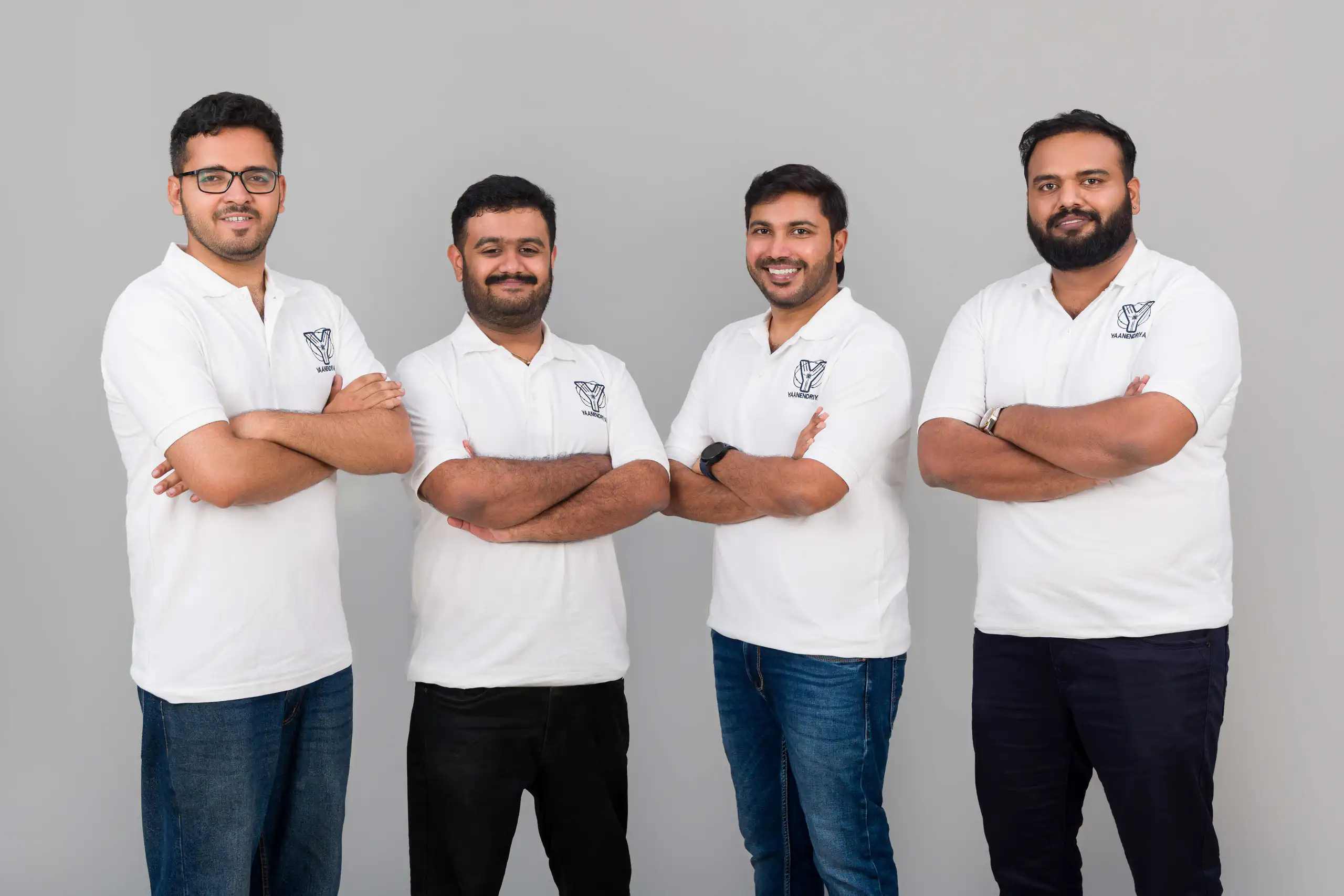
Bengaluru-based deep-tech startup Yaanendriya has raised ₹15 crore in a seed round led by Mumbai-based venture fund Piper Serica, the company confirmed in late July 2026. It is the first institutional cheque Yaanendriya has disclosed since it was founded in 2023, and it lands in one of the least glamorous but most strategically sensitive corners of the hardware stack: the inertial sensors and navigation controllers that tell a moving machine where it is, which way it is pointing, and how fast it is turning.
Why inertial sensors are a strategic gap
Almost every autonomous system — a drone holding position in a gust, a robot arm repeating a motion to sub-millimetre tolerance, a missile or satellite that must know its attitude without a GPS lock — depends on an inertial measurement unit (IMU). An IMU fuses gyroscopes and accelerometers to track motion across all six axes. High-precision units of this kind have historically been imported, and the best of them sit behind export controls that make them expensive, slow to procure and unreliable for defence use.
That is the gap Yaanendriya is targeting. By designing and building inertial sensing and navigation hardware in India, the company is pitching itself as an import-substitution play in a category where sovereign supply matters as much as price. For a country trying to field indigenous drones, guided munitions, satellites and factory robots at scale, a domestic source of trustworthy motion sensors is a genuine enabler rather than a nice-to-have.
What the company builds
Yaanendriya's product line centres on two families. The YDx series is a range of high-precision inertial sensing modules configured as Vertical Reference Units (VRU) and Attitude and Heading Reference Systems (AHRS), offered in 6-DoF and 10-DoF variants — the building blocks that let a platform estimate its orientation and heading. Alongside them sits the SynCore series, navigation controllers designed for autonomous robotic platforms that need to localise and steer without constant external positioning.
The company is also developing MEMS-based inertial sensors aimed at the space sector and a hardware-agnostic navigation platform intended for critical missions where a single point of failure is not an option. Micro-Electro-Mechanical Systems are the miniaturised silicon structures that have made inexpensive, rugged inertial sensing possible; doing them well domestically is non-trivial engineering.
Customers, and a link to the Army
Yaanendriya says it has moved past the prototype stage, with more than 20 customers spread across defence and aerospace, drones and robotics, industrial automation and research. It says its YDx modules are already deployed across four continents in applications ranging from motion capture for gaming to unmanned vehicles and surgical robots.
The most telling engagement is closer to home. The startup has signed a memorandum of understanding with the Indian Army's 515 Army Base Workshop in Bengaluru to supply components and sensors for the Army's unmanned vehicles. Army Base Workshops are the maintenance and overhaul backbone of the force, and an MoU to feed them indigenous sensor sub-systems is exactly the kind of demand signal that hardware startups usually struggle to secure.
What the money is for
Piper Serica's ₹15 crore will go towards deepening research and development, accelerating product development and expanding Yaanendriya's portfolio of high-precision navigation systems for what it calls mission-critical environments. For a components company, the hard part is rarely a single prototype; it is the years of qualification, ruggedisation and reliability testing needed before a defence or space customer will trust a sensor with a platform. Early institutional capital that is patient about that timeline is worth more than the headline number suggests.
The bigger picture
Yaanendriya's round is small against the multi-hundred-crore deals that dominate India's funding headlines, but it is representative of a quieter shift. Investors and the government alike have started backing the unglamorous, deep-hardware layers of the autonomy stack — sensors, actuators, navigation, propulsion — rather than only the software and platforms built on top of them. Drones, robots and satellites are only as sovereign as the parts inside them. On that measure, a homegrown inertial-sensor company with paying customers and an Army MoU is a useful addition to the ecosystem.
Sources
- Deeptech startup Yaanendriya raises ₹15 crore from Piper Serica — Business Standard
- Piper Serica leads Rs 15 Cr seed round in deep tech startup Yaanendriya — Entrackr
- Yaanendriya Raises Rs 15 Crore Seed Funding to Develop Indigenous Sensor and Navigation Technology — VCCircle/Viestories
- Yaanendriya Raises Rs 15 Crore From Piper Serica To Build India's Own Sensor Tech For Drones And Robots — Newskart
Tags
More from Robotics
Alteon Raises $2.5 Million to Build Aircraft That Ride Ocean Wind Like an Albatross
Bengaluru's Alteon has raised a $2.5 million pre-seed round to build autonomous aircraft that use dynamic soaring — the wind-shear trick albatrosses use — to stay airborne for months without fuel.
Hyderabad's WATER Raises $2.5 Million to Build a Robotic Bed That Reshapes Itself Around You
Hyderabad's WATER has raised $2.5 million to scale CAMA, a robotic bed with over 10,000 sensors that reshapes itself around a sleeper in real time.