U-Space and AXISCADES Sign Cooperation Deal to Explore India's Microsatellite Market
French space company U-Space and Bengaluru's AXISCADES have signed a commercial cooperation agreement to jointly pursue India's microsatellite market, one of three India-France private space deals struck at the Paris International Space Summit.
Manik Gupta
Founder and editor of DeepTech India. Manik writes about India's frontier technology ecosystem — AI, semiconductors, space, quantum, robotics and biotech — translating research and policy into clear, reliable reporting.
A Third Deal Out of Paris
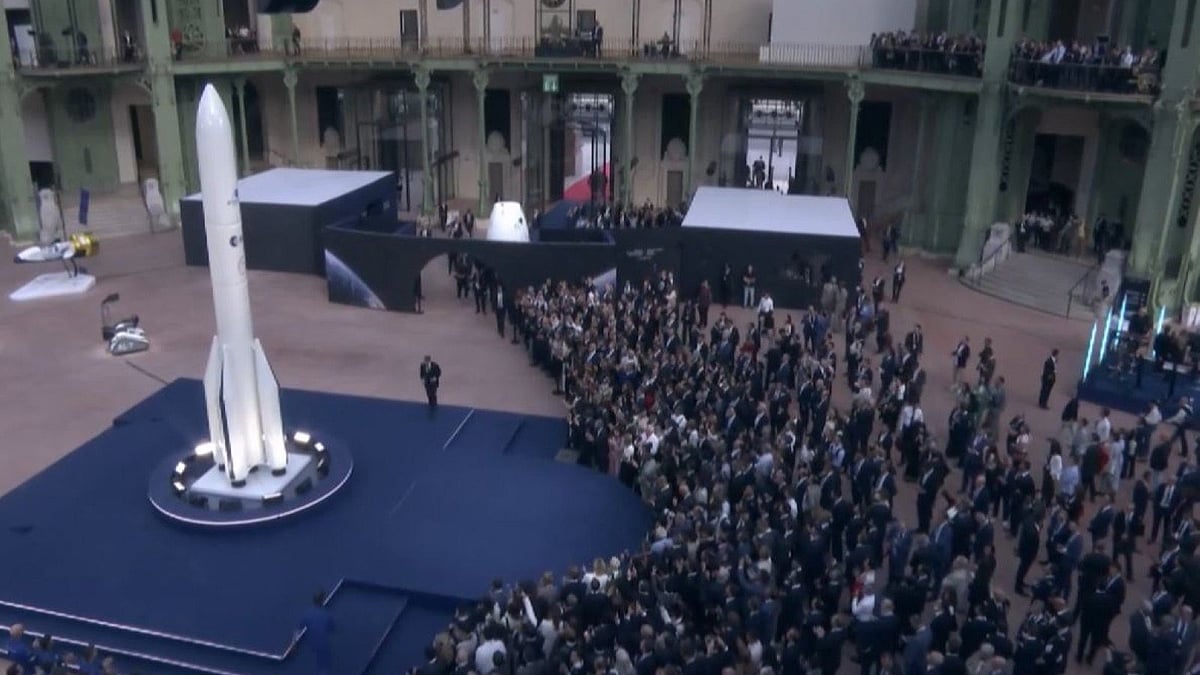
When France's Safran Space and India's Dhruva Space signed a surveillance-constellation agreement at the International Space Summit in Paris on September 9-10, 2026, it was one of three India-France private-sector space deals announced that week. A second, involving French launch-services provider RIDE! and India's TakeMe2Space, covered orbital data-centre satellite launches. The third — and the one that has drawn less attention — paired French space company U-Space with Bengaluru-based engineering and aerospace firm AXISCADES.
U-Space and AXISCADES signed a commercial cooperation agreement to jointly explore India's microsatellite market, addressing what the companies describe as growing commercial and institutional demand for small satellites. Unlike the Safran-Dhruva deal, which came with a specific price tag (contracts worth more than €5 million tied to India's planned 52-satellite SBS-III surveillance constellation), the U-Space-AXISCADES agreement is structured as market-development work rather than a booked production programme.
What the Deal Actually Covers
The partnership is meant to follow a phased roadmap aligned with India's Make in India policy, combining U-Space's French microsatellite technology with AXISCADES's domestic industrial integration and manufacturing capabilities. AXISCADES, which has built a business supplying engineering and manufacturing services to aerospace, defence and industrial clients, is the kind of partner that can take a foreign-designed small-satellite platform and localise its production — sourcing components, managing supply chains, and eventually assembling units in India rather than importing them complete.
That structure is common in early-stage India-France and India-Europe space partnerships: the foreign partner supplies proven satellite technology and design heritage, while the Indian partner supplies manufacturing scale and access to India's expanding roster of institutional and commercial satellite buyers, from ISRO-adjacent programmes to India's growing private space sector.
Context: A Summit With Three Deals, One Constellation
It's worth separating what the Paris summit actually produced. The Safran Space-Dhruva Space and RIDE!-TakeMe2Space agreements were tied to specific, named programmes — a surveillance constellation and a pair of satellite launches, respectively — with the former carrying an explicit contract value. The U-Space-AXISCADES agreement, by contrast, does not yet name a specific satellite programme, a firm order, or a disclosed contract value. It is best read as the two companies formally agreeing to pursue India's microsatellite market together, rather than a manufacturing deal that is already funded and scheduled.
That distinction matters for assessing significance: market-exploration agreements can and do lead to real production contracts, but they can also quietly stall if the underlying market opportunity — or the partners' ability to execute together — doesn't materialise. The Safran-Dhruva and RIDE!-TakeMe2Space deals are more advanced in that sense, since they're attached to named programmes with (in Safran-Dhruva's case) a disclosed value.
Why India's Microsatellite Market Is Getting This Kind of Attention
Small and micro satellites — typically under 500 kg — have become the fastest-growing segment of the global space industry, driven by falling launch costs, the boom in Earth-observation and communications constellations, and India's own push to build a large domestic space-surveillance capability. India's private space sector has crossed 400 startups with private investment topping $600 million, and companies like Pixxel (which raised $100 million in a Series C the same week) and GalaxEye have shown that Indian-designed satellite hardware can compete globally.
Against that backdrop, a French company like U-Space partnering with an established Indian aerospace manufacturer like AXISCADES is a bet that India's microsatellite demand — from both government surveillance programmes and the commercial Earth-observation and communications sector — will need considerably more manufacturing capacity than currently exists domestically, and that being an early, localised supplier is worth more than exporting complete satellites into the market from France.
What to Watch Next
The agreement's phased roadmap and the absence of a disclosed contract value mean the real news will come later: whether U-Space and AXISCADES convert this cooperation agreement into a named satellite programme, a manufacturing facility, or a specific customer contract in the months ahead. For now, it adds a fourth Indian company — AXISCADES, alongside Dhruva Space and TakeMe2Space — to the roster of Indian space firms with fresh European partnerships struck at the same Paris summit.
Sources
- India, France Boost Space Cooperation With Microsatellite, Launch & Surveillance Deals – Free Press Journal
- India, France step up space cooperation with new private-sector deals – Business Standard
- India-France seal space cooperation with three private sector deals – Organiser
- New India-France Private Space Pacts – IASPOINT
Tags
More from Space Technology
RIDE! Targets Q3 2028 Launches for Two TakeMe2Space Satellites
The launch-services agreement covers mission management for two spacecraft in the Hyderabad company’s planned orbital-computing constellation. It is a future deployment commitment, not evidence that the network is operating.
Agnikul Adds Stage-Testing and Pressure-Vessel Facilities
The Chennai expansion addresses ground testing and manufacturing needed for future reusable vehicles. It does not establish that Agnikul has recovered or reflown a stage.