
TDB Puts ₹150 Crore Into QNu Labs to Build India's Quantum-Secure and Sensing Network Backbone
The Technology Development Board will fund half of a ₹300 crore QNu Labs project, through convertible debt from the RDI Fund, to take quantum identity, timing, navigation and network-security technologies from lab prototypes to deployment.
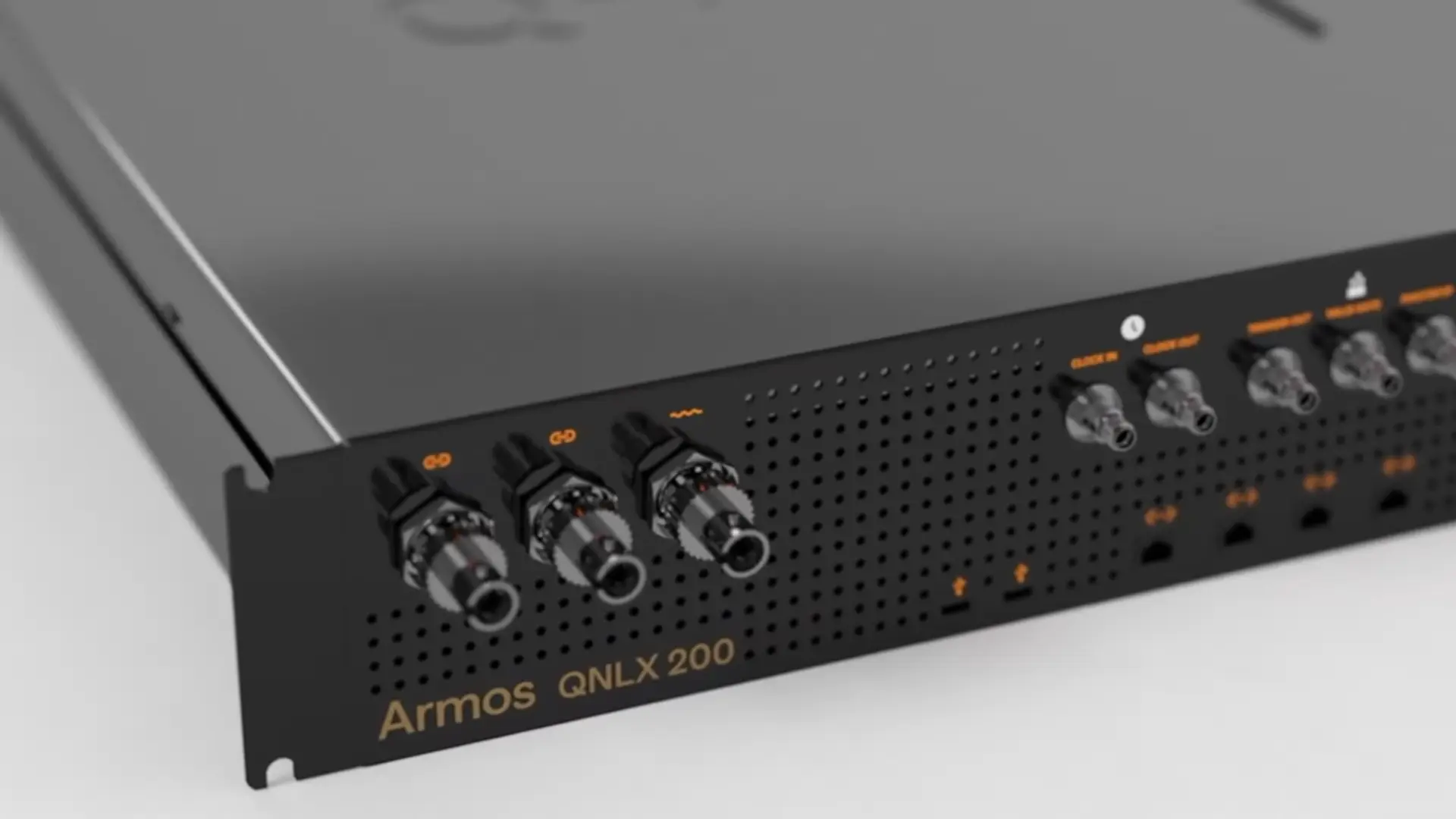
India's quantum-security push has picked up one of its larger single public commitments to a private company. On 16 October 2026 the Technology Development Board (TDB), which sits under the Department of Science and Technology, announced an agreement to put ₹150 crore into Bengaluru's QNu Labs. The money comes from the government's Research Development and Innovation (RDI) Fund and backs a ₹300 crore project to build what the agreement calls an indigenous technology backbone for India's Quantum Secure and Sensing Networks (IQSN).
The cheque is not a grant. TDB will provide the money as optionally convertible debt (OCD), and QNu Labs and its partners will fund the other half of the project cost. That structure matters, because it shows how the ₹1 lakh crore RDI Fund is meant to work: patient, repayable or convertible capital for companies taking research-stage technology to market, rather than another round of research grants.
What the money is meant to build
According to the TDB announcement, as reported by BW Businessworld, Swarajya and IANS, the programme will take a portfolio of QNu Labs technologies from Technology Readiness Levels (TRL) 4–5 to TRL 9. TRL 4–5 means a technology has been validated in a laboratory or a relevant test environment. TRL 9 means a system has been proven in an operational environment and is ready to be deployed. The project is therefore meant to cover the most expensive and failure-prone stretch of deep-tech development, the one between a working prototype and a product that a ministry, a bank or the armed forces can install.
The work is organised around four areas:
- Identity security: making sure that devices and users on a network are who they claim to be.
- Location integrity: knowing where an asset is when satellite navigation cannot be trusted.
- Network security: protecting data moving across communication links.
- Time integrity: keeping accurate, tamper-resistant time, which telecom networks, power grids and financial systems all depend on.
The location work is the part most likely to interest defence users. Reports on the agreement say it will include compact quantum magnetometers, sensors that measure magnetic fields very precisely. These can detect electromagnetic interference and help with navigation in places where GPS is jammed, spoofed or unavailable. Satellite-navigation jamming has become a routine feature of modern conflict and a growing risk for civil aviation and shipping, so GPS-independent navigation is a capability many militaries are now pursuing.
"Building indigenous capabilities across these interconnected domains is important for strengthening India's technological self-reliance and long-term security," TDB Secretary Rajesh Kumar Pathak said in the announcement.
Why "secure and sensing" belong together
Quantum technology in India is usually discussed in three separate buckets: quantum computing, quantum communication and quantum sensing. The IQSN framing puts the last two together. QNu Labs is best known for quantum key distribution (QKD), which uses the quantum properties of light to share encryption keys so that any attempt to intercept them can be detected. Adding identity, timing and location to that core turns QKD from a point product into infrastructure, the trust layer under a secure network.
The pieces depend on each other. A secure network needs accurate time to synchronise its links. It needs to know which devices are genuine. Increasingly, it also needs to know where its nodes and users physically are. Building all four in one programme, and taking them to TRL 9 together, is a bet that Indian buyers will want integrated systems rather than separate imported components for each.
The company behind it
QNu Labs, incubated at IIT Madras, has become the most visible Indian company in quantum-safe communication. Our own coverage this year has followed several steps in that build-out. In June the company reported that it had reached 1,000 km of quantum-secure communication and signed an agreement with Eindhoven University of Technology (TU/e) in the Netherlands. In September it raised ₹200 crore for expansion and launched QShield 2.0, a platform for managing India's move to quantum-safe cryptography. Earlier this month, QNu Labs, BISAG-N and IIT Gandhinagar ran what they described as India's first 5.56 km free-space quantum key link.
The TDB agreement differs from those milestones. It is a multi-year development contract with defined readiness targets, tied to public money, rather than a single demonstration or an equity round.
How it fits the national picture
The Union Cabinet approved the National Quantum Mission in April 2023 with an outlay of about ₹6,003.65 crore for 2023–24 to 2030–31. Quantum communication and quantum sensing are two of its pillars, alongside quantum computing and quantum materials. Much of the mission's early money went to academic hubs. The RDI Fund now opens a second route, in which companies can get large, long-dated capital to industrialise what those labs and their own R&D teams have built.
The timing also lines up with defence demand. This week DRDO said it had set up and tested a QKD platform on the live network of its Proof and Experimental Establishment at Chandipur, Odisha. Banks, telecom operators and government networks are under growing pressure to plan for "harvest now, decrypt later" attacks, in which adversaries store encrypted traffic today and wait for future quantum computers to break it. A domestic supplier that can deliver key distribution, trusted timing and resilient navigation from one stack would serve all of those buyers.
What to watch
The agreement sets goals, not results. Optionally convertible debt has to be serviced or converted, so QNu Labs will be judged on whether its systems reach TRL 9 and find paying customers. Magnetometer-based navigation in particular is still an emerging field around the world. Deployed units, field-trial data and procurement orders over the next two to three years will show whether the ₹300 crore programme has built the backbone it promises.
For the RDI Fund, the deal is an early test of whether government-backed debt can carry Indian deep-tech companies through the "valley of death" between lab and market. If it works here, it is likely to be used again.
Sources
- https://www.businessworld.in/article/qnu-labs-gets-rs-150-cr-under-rdi-fund-629035
- https://swarajyamag.com/tech/india-invests-in-homegrown-quantum-technologies-with-rs-150-crore-government-support-for-qnu-labs
- https://english.punjabkesari.com/business/tdb-backs-qnu-labs-with-rs-150-crore-to-build-backbone-for-indias-quantum-secure-networks
- https://www.thehawk.in/news/economy-and-business/tdb-backs-qnu-labs-with-rs-150-crore-to-build-backbone-for-indias-quantum-secure-networks
- https://idrw.org/qnu-labs-secures-%E2%82%B9150-crore-rdi-support-for-quantum-secure-technology/
- https://aninews.in/news/national/general-news/drdo-successfully-tests-quantum-key-distributionqkd-platform-in-live-network20261014110557/
- https://en.wikipedia.org/wiki/National_Quantum_Mission_India