Serum Institute's Cervavac Wins WHO Prequalification, Taking India's Home-Grown HPV Vaccine Global
WHO has prequalified Serum Institute of India's Cervavac, the country's first home-grown HPV vaccine, so UN agencies can now procure it. The gender-neutral quadrivalent shot was developed with DBT-BIRAC, IARC and the Gates Foundation.
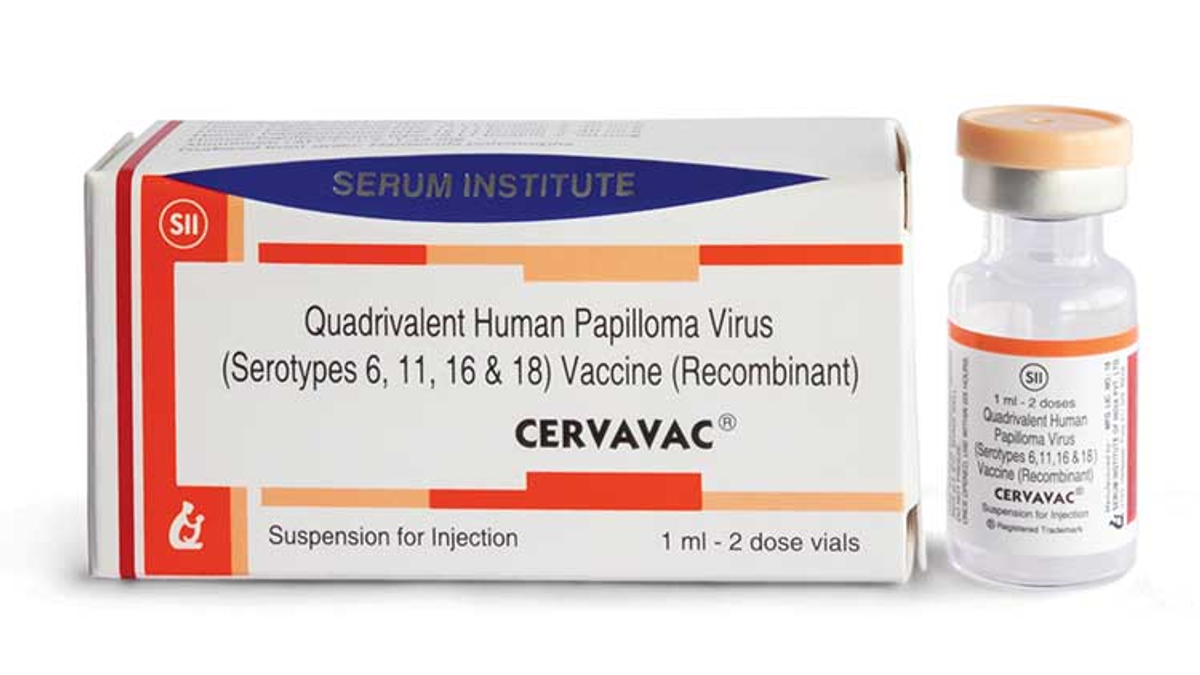
India's first locally developed vaccine against human papillomavirus (HPV) can now be bought by United Nations agencies. Serum Institute of India (SII) announced on 5 October 2026 that Cervavac, its quadrivalent HPV vaccine, has received World Health Organization (WHO) prequalification. WHO's live product listing gives the prequalification date as 25 September 2026.
Prequalification is less visible than a domestic licence but in some ways more important. It is the WHO quality check that UN procurement agencies depend on when they buy vaccines for low- and middle-income countries. A vaccine without it is largely shut out of those large pooled purchases. Cervavac now has that clearance.
What prequalification means, and what it does not
WHO's listing means the product has met WHO's applicable standards for quality, safety and efficacy, and is eligible for procurement by UN agencies. Some headlines called it a "safety nod", but the assessment covers all three.
Prequalification is not an order, and it does not decide whether a given country adopts the vaccine. Each country's regulator still has to approve it, procurement processes still apply, and immunisation policy is set nationally. The listing makes Cervavac eligible to compete. It does not guarantee sales.
SII says Cervavac is its 32nd WHO prequalification across vaccines and biological products. That record is one reason the Pune company is the world's largest vaccine maker by doses.
The vaccine
Cervavac is a recombinant quadrivalent vaccine. It protects against four HPV types:
- Types 16 and 18, the high-risk strains responsible for most cervical cancers and linked to several other cancers.
- Types 6 and 11, which cause most genital warts.
According to SII’s product information, it is gender-neutral, indicated for both girls and boys aged 9 to 26 years. In girls and women it is indicated for preventing cervical, vulvar, vaginal and anal cancer and genital warts. In boys and men the indication covers anal cancer caused by types 16 and 18 and genital warts caused by types 6 and 11.
SII’s product information describes an age-dependent schedule. Children aged 9 to 14 receive two doses, and people aged 15 to 26 receive three. It is given as an intramuscular injection and comes in single-dose (0.5 mL) and two-dose (1.0 mL) vials.
How India built it
Cervavac was developed through a partnership that included SII, India's Department of Biotechnology (DBT) and its innovation agency BIRAC, WHO's International Agency for Research on Cancer (IARC), and the Gates Foundation. The Drugs Controller General of India (DCGI) approved it for domestic use in 2022. SII has since described it as India's first indigenously developed gender-neutral qHPV vaccine.
This development model is worth noting. Public research funding, an international cancer research agency and a philanthropic funder shared the early-stage risk. A private manufacturer with global scale took on development and production. Several of India's most successful biologics have followed a similar path.
Why it matters, in India and beyond
Cervical cancer is largely preventable. Vaccination before exposure to HPV, combined with screening, can sharply reduce it, and WHO has a global strategy to eliminate it as a public-health problem. Yet the disease still kills far more women in low- and middle-income countries than in rich ones, partly because HPV vaccines have been expensive and in short supply.
A WHO-prequalified vaccine from a high-volume Indian manufacturer adds supply at a time when many countries want to expand HPV programmes. For SII, it opens a large export market that runs through UN procurement. For India, it is one more case of a home-grown biologic meeting the global regulatory bar. That matters for the credibility of the country's wider biotech ambitions, from biosimilars to new vaccines.
There is also a domestic angle. A vaccine developed and manufactured in India could reduce cost and supply risks for HPV immunisation at home; actual benefits depend on pricing, procurement and programme delivery. The gender-neutral indication also gives health planners the option to vaccinate boys as well as girls, which some countries do to build wider community protection.
What to watch
The next signals will be procurement awards from UN agencies, the countries that register Cervavac under their own regulators, and whether SII publishes or cites comparative immunogenicity and long-term protection data. Prequalification makes Cervavac eligible to compete globally. Contracts and immunisation programme data will show how far it gets.