QpiAI's Kaveri and India's Superconducting-Qubit Gambit
QpiAI's 64-qubit flip-chip Kaveri processor and its $32M NQM-backed Series A make Bengaluru India's best-funded quantum bet. The qubit count is real; the performance benchmarks and logical-qubit roadmap are not yet proven.
Manik Gupta
Founder and editor of DeepTech India. Manik writes about India's frontier technology ecosystem — AI, semiconductors, space, quantum, robotics and biotech — translating research and policy into clear, reliable reporting.
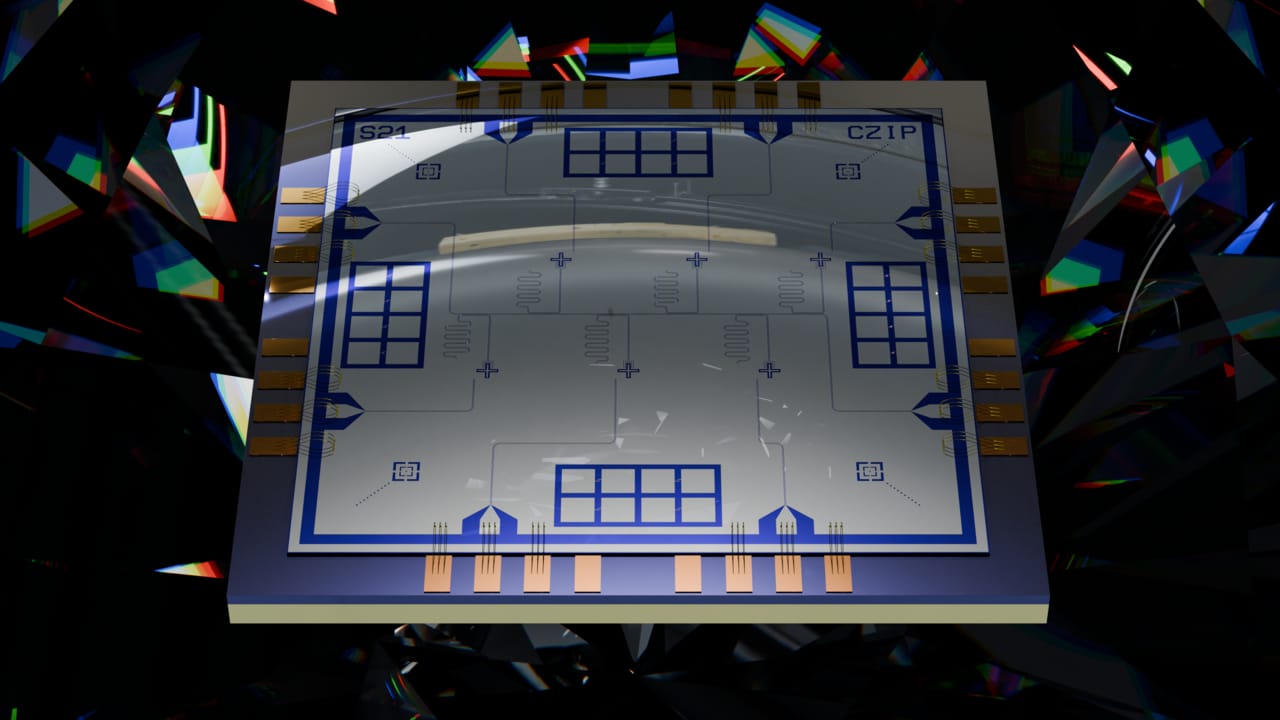
On 3 November 2025, Bengaluru-based QpiAI unveiled Kaveri, a 64-qubit superconducting quantum processor, and in doing so moved India's domestic quantum-computing effort from the demonstrator class into something an investor can underwrite. The chip is the successor to QpiAI's 25-qubit Indus device, and the company has put a date on commercialisation: general availability is targeted for Q3 2026. For a sector where most national programmes are still measured in single-digit qubit counts and grant milestones, Kaveri is the first credible Indian bid at a processor scale that begins to matter for near-term algorithm work.
The more consequential number sits on the balance sheet. In July 2025 QpiAI closed a $32 million Series A co-led by Avataar Venture Partners and the National Quantum Mission (NQM), at a $162 million post-money valuation. The NQM's participation is not a grant. It is direct state equity in a private quantum startup, which is rare anywhere and effectively unprecedented in India's quantum landscape. That structure, and the resulting capital base, make QpiAI India's best-funded quantum company by a wide margin.
What Kaveri actually is
A superconducting quantum processor encodes information in transmons, superconducting circuits built from a Josephson junction shunted by a capacitor, cooled to roughly 10-15 millikelvin so that the lowest two energy levels behave as a controllable qubit. Transmons are the modality IBM and Google have standardised on, because they are lithographically fabricated on a chip and controlled with microwave pulses, which makes them comparatively manufacturable. The hard part is not making qubits. It is making many of them while keeping each one isolated from the noise and crosstalk introduced by the wiring needed to read and control its neighbours.
This is where Kaveri's architecture is the headline. QpiAI says the processor uses flip-chip 3D integration: the qubits sit on one chip and the control and readout interconnect sits on a second chip, bonded face-to-face with superconducting bumps rather than crammed onto a single 2D plane. Separating the qubit layer from the lossy routing and resonator layer reduces dielectric loss and frees up surface area, which is the standard route IBM, Google and Rigetti have taken to push past the few-dozen-qubit ceiling. That QpiAI is building at this level of integration domestically, rather than wire-bonding a planar device, is the technically meaningful claim.
The important caveat is equally specific. Independent fidelity and coherence benchmarks for Kaveri have not been published. Qubit count is the easiest number to cite and the least informative on its own. What determines whether a 64-qubit device is useful is two-qubit gate fidelity, T1/T2 coherence times and readout error, and until those are reported and reproduced by a third party, Kaveri's qubit count should be read as a fabrication and integration milestone, not a performance one.
Logical versus physical, and the roadmap that depends on it
QpiAI's roadmap is built explicitly around the distinction between physical and logical qubits, and any investor in this space needs to hold that distinction firmly. A physical qubit is a single transmon, and it is noisy. A logical qubit is an error-corrected abstraction built by spreading quantum information across many physical qubits and using quantum error correction to detect and fix errors faster than they accumulate. Useful, fault-tolerant computation is denominated in logical qubits, and the overhead is brutal: depending on physical error rates and the code used, a single logical qubit can require hundreds to over a thousand physical qubits.
Against that backdrop, QpiAI's stated trajectory is aggressive:
- 2026 — first logical qubit, codenamed Yukti
- 2027 — a five-logical-qubit system, Shakti
- 2030 — a 100-logical-qubit machine, Unnati, with physical scaling to 1,000-plus qubits
The physical scaling target to 1,000+ qubits by 2030 is roughly in line with where the global frontier is heading. The logical-qubit milestones are the harder promises. Demonstrating a single error-corrected logical qubit that outperforms its physical constituents is a research result that only a handful of groups worldwide have achieved at all, and getting to 100 logical qubits by 2030 implies error-correction performance that no one has yet shown at scale. These dates are targets, and should be tracked as such.
The moat: full-stack, and the policy tailwind
QpiAI's investment thesis is not the chip in isolation. The company positions itself as a full-stack quantum and AI business spanning the processor, the cryogenic control electronics, the software and compiler layer, and AI tooling that runs on classical hardware today. The strategic logic is that a vertically integrated stack is harder to displace than a fabless chip design, and it lets QpiAI generate revenue from AI and quantum-software products while the hardware matures, which is what makes the Q3 2026 commercial target plausible even before logical qubits arrive.
The policy context amplifies the moat. The National Quantum Mission is a ₹6,003 crore programme running to 2031, organised around four thematic hubs (computing at IISc, communications at IIT Madras with C-DOT, sensing at IIT Bombay, materials at IIT Delhi) with a headline goal of building machines in the 50-1,000 qubit range over eight years. Having the NQM as an equity holder gives QpiAI privileged alignment with the buyer, the standards-setter and the talent pipeline simultaneously. In a market where the largest near-term customers will be governments, national labs and defence agencies rather than commercial enterprises, that alignment is itself a moat, and it lowers QpiAI's cost of capital relative to a purely venture-backed competitor that has to win every government contract on the open market.
The comparison set sharpens the point. India's other domestic superconducting work, principally the DST-sanctioned five-institute consortium and the indigenous six-qubit "Quantromon" device, remains anchored in academic labs and is years behind on integration and qubit count. Internationally, QpiAI is not competing with IBM or Google on absolute scale; it is competing to be the sovereign supplier of choice for a government that has explicit reasons to want one. That is a smaller, more defensible market than the global cloud-quantum race, and arguably a better one to occupy early.
The risks are real and worth stating plainly. Performance is unverified. The logical-qubit roadmap is ambitious against the global state of the art. And like every superconducting effort in India, QpiAI depends on an imported supply chain for dilution refrigerators and precision control hardware, which is a strategic vulnerability the NQM is trying to close but has not yet. None of that negates the achievement. A domestically designed 64-qubit flip-chip processor with a funded path to commercialisation puts India on a very short list of countries with a homegrown superconducting quantum platform. The question for 2026 is whether the benchmarks, when they come, match the qubit count.
Tags
More from Quantum Computing
QClairvoyance and Samgnya Announce a Quantum Research Partnership
The MoU covers computing, algorithms, quantum AI and post-quantum security, with research and validation ahead of deployment.
RBI Urges Payment Operators to Prepare for Post-Quantum Security
A September 11 speech urges coordinated preparation across payments. It announces no migration deadline and does not endorse a particular vendor or technology.