Leanwatts Raises $2 Million to Develop and Manufacture EV Chargers
The company says seed funding will support product development, manufacturing and validation. Its charger claims need product-level evidence, beyond the choice of semiconductor material.
Manik Gupta
Founder and editor of DeepTech India. Manik writes about India's frontier technology ecosystem — AI, semiconductors, space, quantum, robotics and biotech — translating research and policy into clear, reliable reporting.
Leanwatts says it has raised $2 million in seed funding led by Trivest Partners, with Abraham George and Alok Rungta participating. The company’s public announcement identifies R&D, manufacturing, testing, supply chains and localisation among the intended uses.
The round was already covered in early September. It should not be presented as a new September 12 technical demonstration.
The product is the relevant unit of analysis
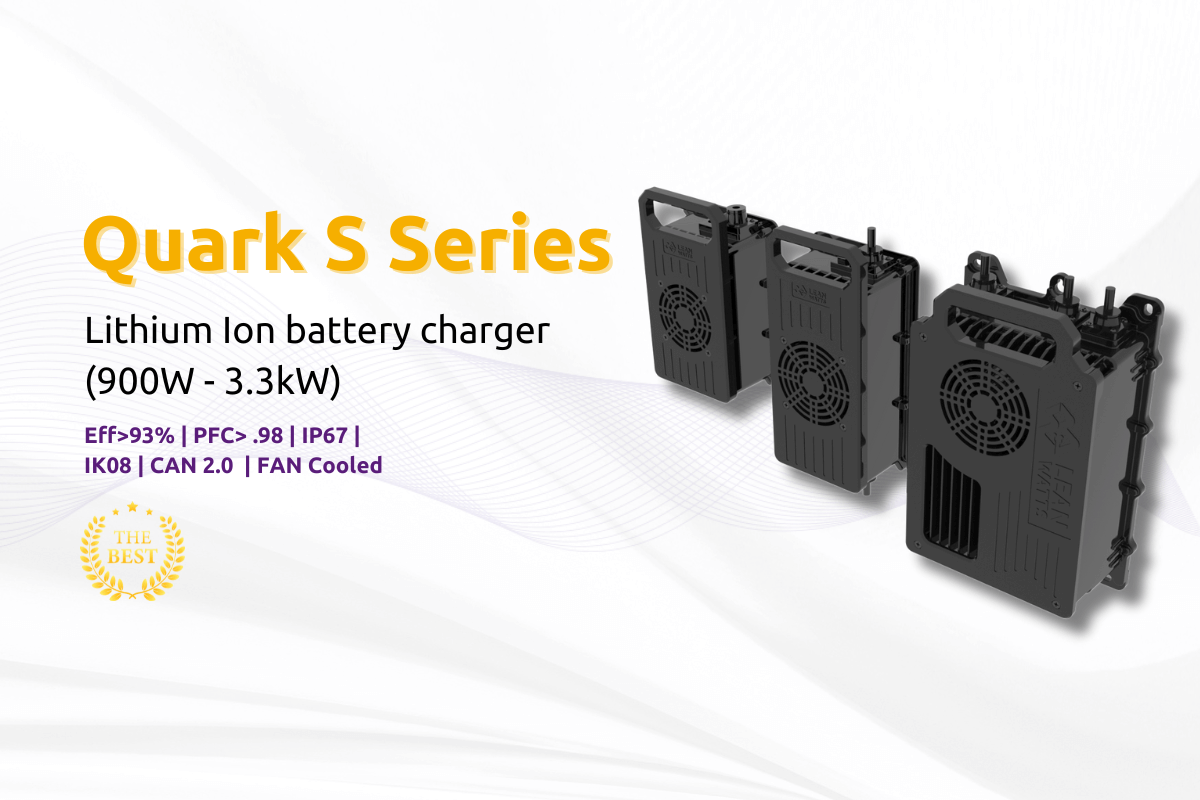
Leanwatts’ official portfolio includes portable and onboard charging products, with GaN and SiC product families. Its Quark S Series visual describes 900 W–3.3 kW lithium-ion battery chargers and explicitly identifies fan cooling.
That detail matters: choosing a semiconductor material does not establish that a complete charger needs no substantial cooling. Product design, operating conditions and validation remain important.
The funding coverage reports a ₹60 crore annualised revenue run-rate target for March 2027. A target is not evidence that the company has reached that revenue or shipment scale.
Why it matters
Charging hardware has to work as a system, including its enclosure, control software and interfaces with the vehicle. A useful assessment would compare efficiency across loads, performance under heat and voltage variation, and the protection behaviour of the actual product being supplied.
The funding can support that engineering work, but an investment announcement cannot verify the result. The next measurable milestones would be identified production programmes, published test conditions, manufacturing throughput and field reliability.
That is also how localisation should be assessed: through the components and processes actually qualified for production. Broad claims about domestic design or imported alternatives are less informative than a traceable bill of materials and an account of what has been tested.
Image: Leanwatts Quark S Series charger visual. Printed specifications are company claims.
Tags
More from Semiconductors
Makr Microsystems Raises ₹10.2 Crore to Help Chipmakers See What's Buried Beneath the Surface
Bengaluru's Makr Microsystems has raised ₹10.2 crore in a seed round led by Bluehill.VC to build nanoscale metrology tools that let chipmakers find hidden defects beneath a chip's surface without damaging it.
Zenergize Raises $4 Million to Scale India's First Indigenous Silicon-Carbide Power Electronics
Gurugram's Zenergize Technologies has raised a Pre-Series A round to scale its silicon-carbide EV chargers and solar inverters against an order book already worth ₹150 crore.