
KuhlTherm Launches Made-in-India Data-Centre Cooling Gear, Opens India's First Liquid-Cooling Validation Lab
Ahmedabad startup KuhlTherm has launched Made-in-India rear-door heat exchangers and coolant distribution units for AI data centres and opened what it calls India's first liquid-cooling validation lab, as it targets a jump from 300 MW to 2 GW of cooling capacity by 2027.
A thermal bottleneck for India's AI build-out
As India races to add gigawatts of AI-ready data-centre capacity, an unglamorous engineering problem has moved to centre stage: getting heat away from densely packed server racks fast enough to keep the chips running. On 7 August 2026, Ahmedabad-based startup KuhlTherm stepped squarely into that gap, launching a set of indigenously designed liquid-cooling products and opening what it describes as India's first dedicated liquid-cooling validation laboratory.
What was launched
KuhlTherm unveiled two Made-in-India products aimed at the heart of the data-centre cooling loop: a Rear Door Heat Exchanger (RDHx) and a Coolant Distribution Unit (CDU). The RDHx captures heat at the back of the server rack before it spills into the wider facility, while the CDU manages coolant flow, temperature and pressure across the circuit. Both are designed to plug into NexusFlow OS, the company's AI-driven "thermal intelligence" platform that it says stitches together the power path from grid to rack and the cooling path from chip to chiller, optimising energy use across the whole system.
The two new products sit alongside the rest of KuhlTherm's portfolio — direct-to-chip cold plates, immersion cooling, manifolds and universal quick-disconnect couplings — giving the company a claim to designing and manufacturing the complete thermal loop, "from chip to chiller", entirely in India. That end-to-end approach is the pitch: rather than importing sub-assemblies, KuhlTherm wants to own the full cooling stack for domestic data centres.
India's first liquid-cooling validation lab
Alongside the products, KuhlTherm opened an integrated liquid-cooling validation laboratory in Ahmedabad that it calls the first of its kind in the country. The facility is built to test hardware against real-world operating conditions — the temperatures, flow rates and pressures of a live data hall — before equipment ships to customers. For a young hardware company selling into mission-critical infrastructure, an in-house validation lab is as much about credibility as engineering: operators need assurance that cooling gear will not fail under sustained AI workloads.
Why liquid cooling, and why now
Air cooling struggles once rack densities climb past the levels typical of modern AI training and inference clusters, where high-wattage accelerators pack far more heat into the same footprint. Liquid cooling — whether direct-to-chip or full immersion — moves heat far more efficiently and has become a practical prerequisite for the newest generation of AI hardware. For India, which is actively courting hyperscale and sovereign-AI data-centre investment, building a domestic supply chain for that cooling hardware also chips away at import dependence in a part of the stack that has historically been sourced abroad.
Scaling ambitions
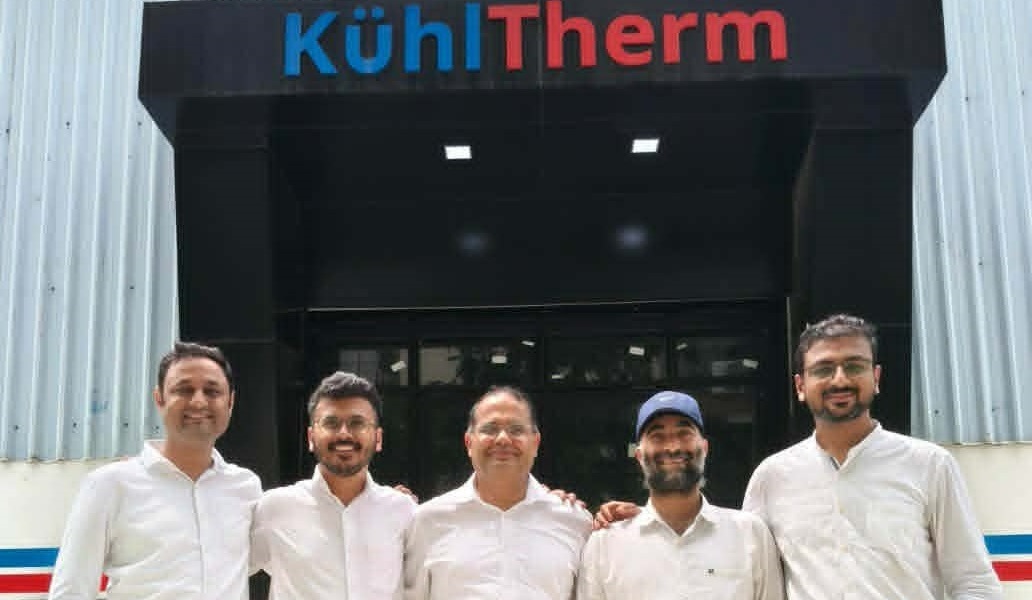
KuhlTherm, founded in 2025 by Vishant Gandhi, Kamish Kachhadia, Shailesh Bishnoi, Jasvipul Chawla and Kishan Baravaliya, is led by co-founder and chief executive Shailesh Bishnoi. The company said it aims to lift manufacturing capacity from about 300 MW of cooling today to 2 GW by 2027 — a roughly six-fold expansion sized to the demand it expects from Indian data-centre operators. Earlier in 2026, the startup raised about $1.1 million in a seed round led by Arkam Ventures to build out its AI-focused cooling systems.
The bigger picture
The launch is a small but telling marker of an Indian hardware ecosystem trying to climb the value chain — from assembling imported parts toward designing and validating the thermal systems that AI infrastructure now depends on. Whether KuhlTherm hits its 2 GW target will hinge on execution and on how quickly India's much-discussed data-centre pipeline converts announcements into operational megawatts. For now, a domestically designed RDHx, CDU and a home-grown validation lab give the country one more piece of the AI-infrastructure puzzle that it can build for itself.