KuhlTherm Raises $1.1 Million to Cool India's AI Data Centres With Liquid, Not Air
Ahmedabad-based KuhlTherm has raised $1.1 million in seed funding led by Arkam Ventures to scale precision liquid-cooling systems for the AI data centres and high-performance computing clusters straining under GPU heat.
Manik Gupta
Founder and editor of DeepTech India. Manik writes about India's frontier technology ecosystem — AI, semiconductors, space, quantum, robotics and biotech — translating research and policy into clear, reliable reporting.
A Small Round for a Big Thermal Problem
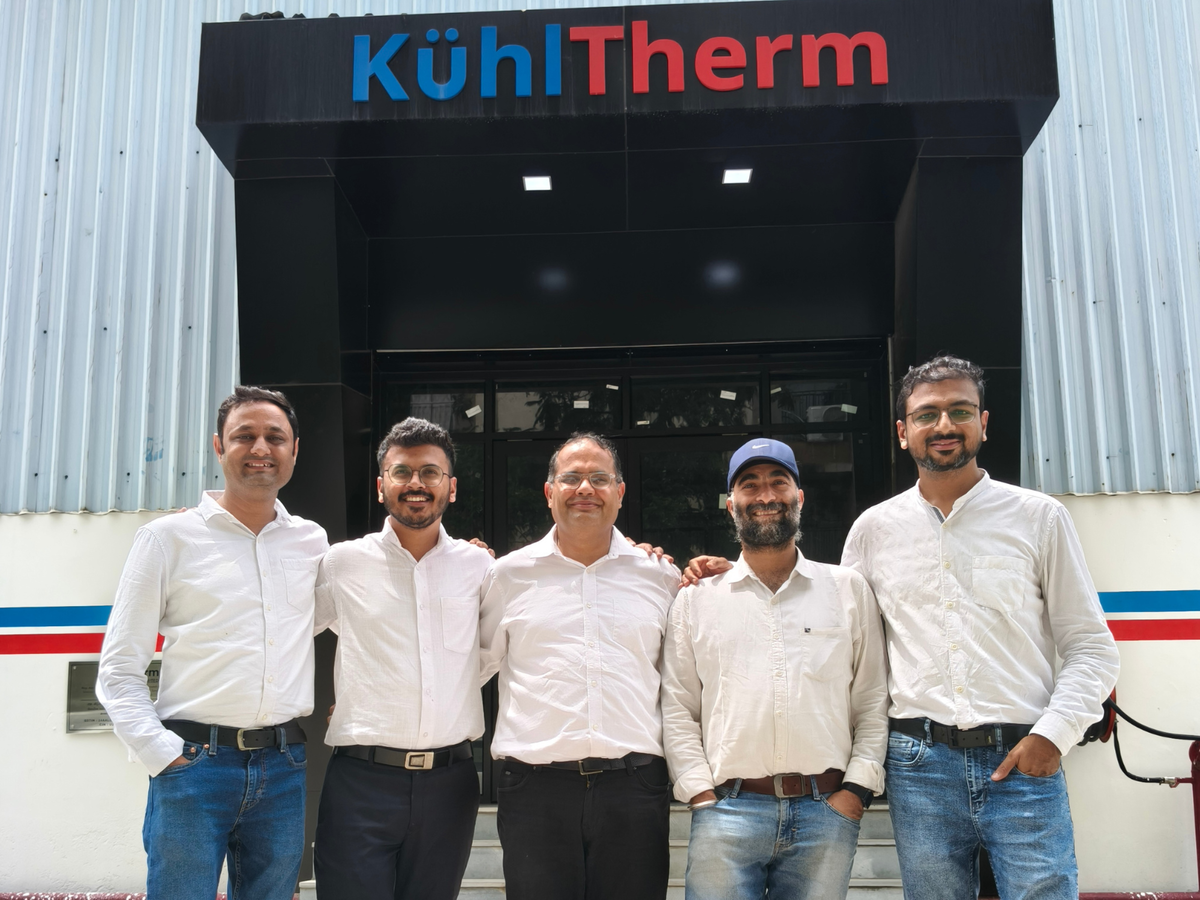
KuhlTherm, an Ahmedabad-based precision-cooling startup founded in 2025, has raised $1.1 million (about ₹9 crore) in a seed round led by Arkam Ventures. The company will spend the money on product development, research, team expansion and partnerships as it scales cooling technology aimed squarely at one of computing''s fastest-growing headaches: the heat thrown off by AI.
The sum is modest, but the problem is not. As data centres pack in ever-denser racks of power-hungry GPUs to train and run AI models, the older approach of blowing cold air across servers is running out of headroom. Chips now concentrate so much heat in so small an area that air alone cannot carry it away efficiently — and every watt spent on cooling is a watt not spent on computing.
Direct-to-Chip, Immersion and an OS for Heat
KuhlTherm''s answer is to move the coolant closer to the silicon. Its portfolio spans direct-to-chip liquid cooling, rear-door heat exchangers, immersion cooling, coolant distribution units, manifolds and universal quick disconnects — the plumbing of a modern liquid-cooled data hall. Tying it together is NexusFlow OS, the company''s proprietary "cooling intelligence" software, meant to manage and optimise how all that hardware behaves in real time.
The mix matters because there is no single right way to cool an AI cluster. Direct-to-chip cold plates handle the hottest components; rear-door exchangers retrofit existing racks; immersion — submerging hardware in a non-conductive fluid — pushes density furthest of all. A vendor that offers the full range, plus the software to orchestrate it, can meet operators wherever they sit on that curve.
Why India, Why Now
The raise arrives as India rides an AI data-centre build-out, with operators announcing gigawatts of new capacity to serve domestic AI startups and global tenants alike. Almost all of that capacity will need liquid cooling to run the latest accelerators at full tilt — and much of the specialised cooling hardware is currently imported.
That is the gap KuhlTherm is aiming at: a home-grown supplier of the thermal systems that AI infrastructure cannot do without. Cooling rarely makes headlines the way chips or models do, but it is fast becoming one of the binding constraints on how much AI a country can actually run. For a 2025-founded startup, that is a large problem to grow into — and, if it executes, a large market to grow with.
Sources
Tags
More from Energy Tech
Magna Doubles Down on Yuma Energy With $35 Million to Scale India's Battery-Swapping Network
Automotive supplier Magna International has put a further $35 million into Yuma Energy, the battery-swapping venture it co-founded with Yulu, to expand the network past 60 million swaps.
India Weighs a ₹13,000 Crore Push to Build the Battery Materials It Still Imports From China
A proposed incentive scheme would target anode, cathode, electrolyte, separator and copper-foil manufacturing — the upstream layer India's battery gigafactories still depend on Chinese suppliers for.