
ISRO Readies September Return to Flight With GISAT-1A, Ending a Near Seven-Month Launch Pause
ISRO will return to flight in early September 2026 with GISAT-1A (EOS-05), an Earth-observation satellite launching on a GSLV, ending a near seven-month launch pause and replacing the geo-imaging satellite lost in 2021.
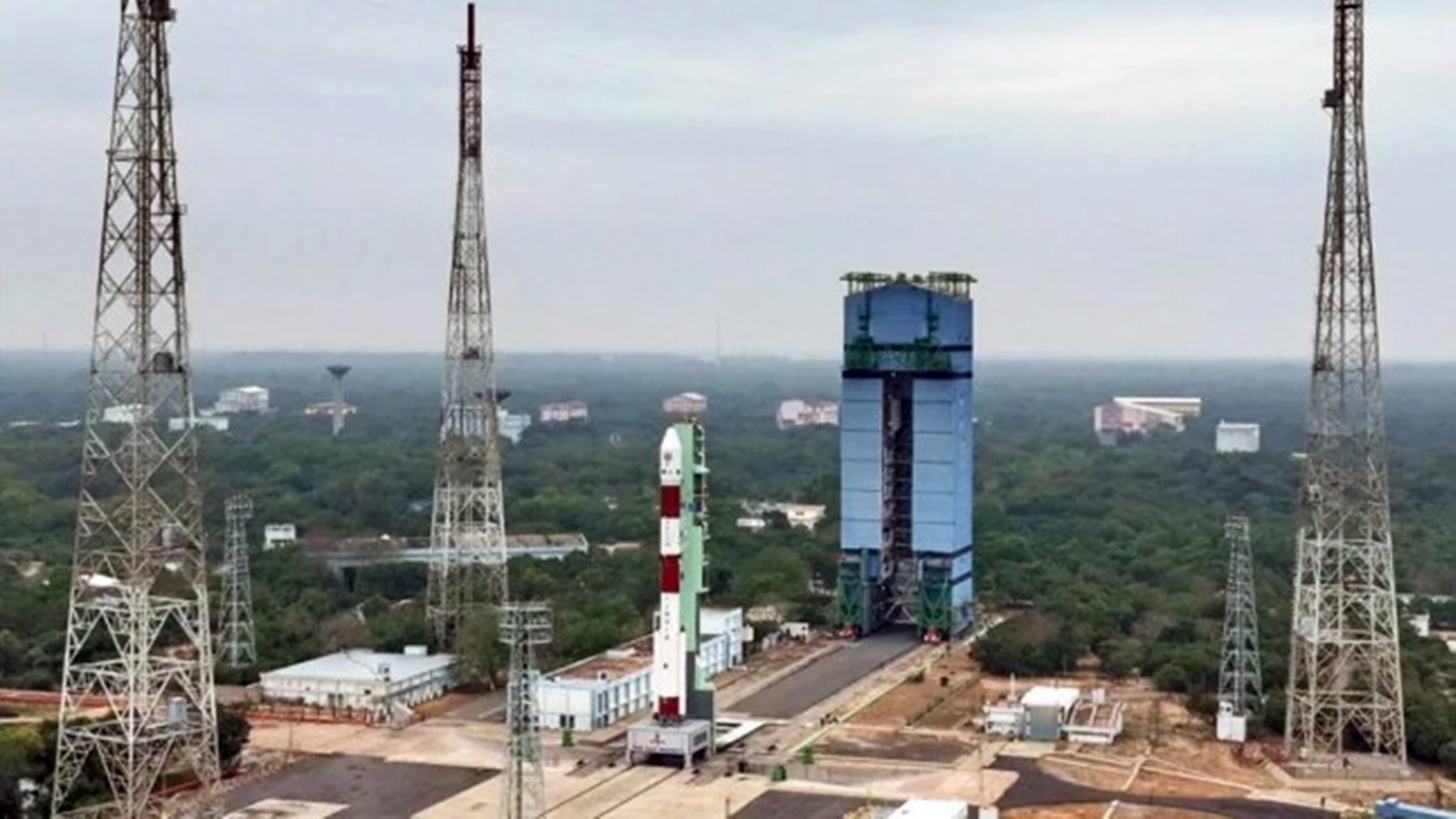
India's space programme is preparing to break its longest operational silence in years. The Indian Space Research Organisation (ISRO) is set to return to the launch pad in the first week of September 2026 with GISAT-1A, an Earth-observation satellite that will end a launch pause of close to seven months and mark the agency's first orbital mission since a failure earlier this year.
The satellite, also catalogued as EOS-05, is scheduled to lift off from the Satish Dhawan Space Centre at Sriharikota aboard a Geosynchronous Satellite Launch Vehicle (GSLV). For an agency that typically launches on a steady cadence, the gap since the start of 2026 has been conspicuous, and the September mission carries weight well beyond the payload it will place in orbit.
Why the gap matters
ISRO's launch calendar stalled after a mission early in 2026 ended in failure, and the agency has spent the intervening months on reviews and corrective work rather than flying. A pause of this length is unusual for ISRO, which has built its reputation on reliability and a relatively high launch tempo for its budget. Getting back to flight is therefore as much about restoring confidence — among domestic stakeholders, commercial customers and international partners — as it is about the satellite itself.
ISRO chairman V. Narayanan has indicated that GISAT-1A is under review as the agency finalises its readiness for the mission. The methodical approach reflects a hard lesson from India's recent experience: a botched return to flight would be far more damaging than a few extra weeks of preparation.
A replacement two missions in the making
GISAT-1A is not a new idea. It effectively stands in for GISAT-1 (EOS-03), a geo-imaging satellite that was lost in August 2021 when the cryogenic upper stage of the GSLV-F10 rocket failed to ignite after a normal lift-off and first-stage flight. That loss deprived India of a capability it had specifically designed for: a satellite parked in a high orbit that could stare continuously at the Indian subcontinent rather than sweeping over it a few times a day.
The design goal behind the GISAT class is near-real-time imaging. From its planned orbit, the satellite is intended to provide frequent, wide-area coverage of India — useful for monitoring floods, cyclones, agriculture, water bodies and the country's long land and maritime borders. Where a typical low-Earth-orbit imaging satellite revisits a location periodically, a geostationary imager can revisit the same region far more often, making it valuable for tracking fast-changing events such as developing storms or disaster zones.
The launch vehicle question
The choice of the GSLV is significant. The rocket has had an uneven history, and the 2021 GISAT-1 loss was a GSLV failure at the cryogenic stage — the very technology India worked for years to indigenise. Successfully flying GISAT-1A on a GSLV would help re-establish trust in the vehicle for heavier, higher-value payloads that cannot ride on the smaller, more prolific Polar Satellite Launch Vehicle.
A clean flight would also matter commercially. India is trying to expand its share of the global launch and Earth-observation markets, and a demonstrated, dependable heavy-lift path is central to that ambition. Every successful GSLV mission strengthens the case that India can be trusted with strategic and commercial payloads alike.
Part of a busier road ahead
The September launch is meant to be the first step back into a packed manifest. ISRO has signalled an ambitious slate of missions for the current and coming financial years, spanning Earth observation, communications and the uncrewed test flights that will pave the way for the Gaganyaan human spaceflight programme. A confident return with GISAT-1A is, in effect, the gate the rest of that calendar has to pass through.
For India's fast-growing private space sector, ISRO's tempo also sets a backdrop. Startups building satellites, launch vehicles and downstream data services benefit when the national agency is flying regularly, both because of the shared supply chain and because a healthy launch ecosystem attracts investment and customers.
What to watch
Three things will define whether the mission is judged a success. First, a clean flight of the GSLV through the cryogenic phase that doomed the 2021 attempt. Second, correct injection of GISAT-1A into its intended orbit and successful deployment and checkout of the spacecraft. Third, the quality and cadence of the imagery the satellite begins delivering once operational — the ultimate measure of whether India has finally fielded the persistent, wide-area eye it has wanted since 2021.
If all three line up, ISRO will not only have recovered a lost capability but also reset a launch programme that has been on hold for the better part of a year. The first week of September, once a routine slot on the calendar, has become one of the more closely watched dates in India's space year.
Sources
- Business Standard — "ISRO set to end seven-month launch freeze with GISAT-1A in September": https://www.business-standard.com/technology/tech-news/isro-gisat-1a-launch-september-seven-month-launch-gap-126081800329_1.html
- Swarajya — "ISRO's Seven-Month Launch Gap To End In September With GISAT-1A Mission": https://swarajyamag.com/news-brief/isros-seven-month-launch-gap-to-end-in-september-with-gisat-1a-mission
- GKToday — "ISRO Readies GISAT-1A Launch After Past Setbacks": https://www.gktoday.in/isro-readies-gisat-1a-launch-after-past-setbacks/
- Space Launch Schedule — "GSLV Mk II GISAT-1A (EOS-05)": https://www.spacelaunchschedule.com/launch/gslv-mk-ii-gisat-1a-eos-05/
- Wikipedia — "EOS-05": https://en.wikipedia.org/wiki/EOS-05