₹7,000 Crore for Two Reactors: India Puts Numbers — and a Site — on Its Home-Grown Small Modular Reactors
In a written reply in Parliament on 3 August 2026, the Centre disclosed the costs of India's indigenous small modular reactors — about ₹7,000 crore for two 55 MWe SMR-55 units and ₹320 crore for a hydrogen-producing high-temperature reactor — and confirmed Tarapur, Maharashtra as the first site.
Manik Gupta
Founder and editor of DeepTech India. Manik writes about India's frontier technology ecosystem — AI, semiconductors, space, quantum, robotics and biotech — translating research and policy into clear, reliable reporting.
Costs, on the record
For years India's plan to build small modular reactors (SMRs) has been described mostly in ambition. On 3 August 2026 it acquired price tags. In a written reply in Parliament, Union minister Jitendra Singh, who handles the atomic energy portfolio, set out the costs of the country's indigenous reactor designs and, notably, confirmed where the first of them will be built.
Two units of the SMR-55, a 55-megawatt-electric (MWe) reactor, will cost about ₹7,000 crore, the minister said. A separate, smaller machine — a 5-megawatt-thermal (MWth) High-Temperature Gas-Cooled Reactor, or HTGCR — is pegged at ₹320 crore. Both sit within a wider indigenous programme that also includes the 220 MWe Bharat Small Modular Reactor, the BSMR-200.
Three reactors, three jobs
The designs are aimed at different problems. The BSMR-200, at 220 MWe, is the workhorse — sized to be dropped onto the sites of retiring coal plants, reusing their land and grid connections to deliver firm, low-carbon power. The SMR-55, at 55 MWe, is the smaller, more modular unit, better suited to captive use by industry or to remote locations where a full-size reactor makes no sense.
The HTGCR is the most experimental of the three, and arguably the most interesting. It is being developed by the Bhabha Atomic Research Centre (BARC) to demonstrate a different use of nuclear energy altogether: not electricity, but heat. By running hot enough to drive thermochemical reactions, the reactor is designed to split water and produce hydrogen — a route to "green" hydrogen that does not depend on grid electricity or electrolysers. At 5 MWth it is only a demonstrator, but it points at a future in which reactors feed industry and fuel production directly.
Tarapur gets the first units
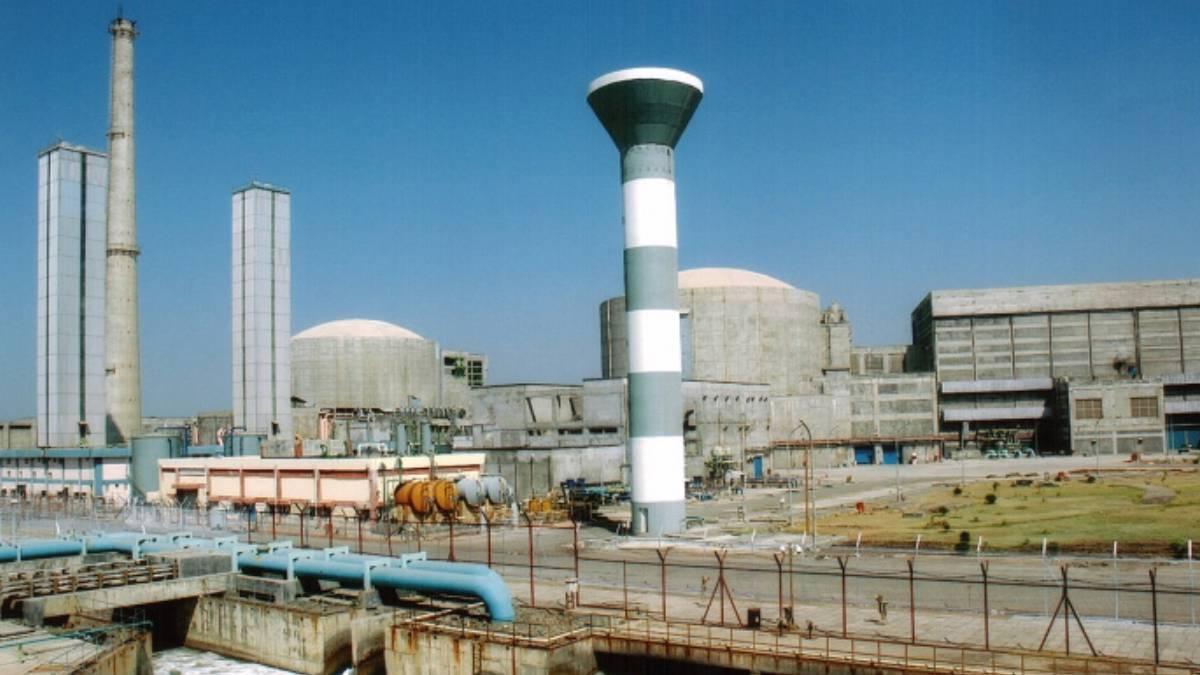
The clearest new detail in the reply was geography. Tarapur, in Maharashtra — home to India's oldest nuclear power station — has been approved as the site for both the BSMR-200 and the SMR-55, with in-principle approval granted for engineering and construction to begin. That places the programme a step beyond the drawing board.
The siting matters because it settles one of the practical questions that so often stalls nuclear projects. Tarapur already has a nuclear workforce, a security perimeter, grid connections and public familiarity with the technology — the kind of established footprint that can shave years off a first-of-a-kind build.
The bigger bet
The SMR effort is the technical edge of a broader push. India has set a target of at least five indigenous small modular reactors by 2033, part of a national ambition to expand nuclear capacity sharply over the coming decades and lean on it, alongside solar and wind, to cut the country's dependence on coal. SMRs are central to that logic because their smaller size, factory-style construction and flexible siting are meant to make nuclear faster and cheaper to deploy than the giant reactors of the past.
Whether they deliver on that promise remains unproven anywhere in the world; no commercial SMR fleet yet exists at scale, and cost overruns have dogged first-of-a-kind nuclear projects almost everywhere they have been tried. Putting firm numbers and a real site on paper does not remove those risks. But it converts a slogan into a project — with a budget, a location and, now, a public cost against which the programme will be measured.
Sources
- Business Standard — Two 55 MW nuclear SMRs to cost ₹7,000 crore, Centre tells Parliament
- Deccan Herald — India's gen-next nuclear reactors BSMR-200 and SMR-55 to come up at Maharashtra's Tarapur by 2033
- Indian Defence Research Wing — India developing 3 types of small modular reactors, govt tells Lok Sabha
Tags
More from Energy Tech
Magna Doubles Down on Yuma Energy With $35 Million to Scale India's Battery-Swapping Network
Automotive supplier Magna International has put a further $35 million into Yuma Energy, the battery-swapping venture it co-founded with Yulu, to expand the network past 60 million swaps.
India Weighs a ₹13,000 Crore Push to Build the Battery Materials It Still Imports From China
A proposed incentive scheme would target anode, cathode, electrolyte, separator and copper-foil manufacturing — the upstream layer India's battery gigafactories still depend on Chinese suppliers for.