Gaganyaan Clears Key Human-Rating Milestones: HLVM3, Crew Escape and Life-Support Systems Qualified
ISRO has developed, tested and qualified the core systems needed to human-rate Gaganyaan — from the HLVM3 launch vehicle's propulsion stages to the crew-escape motors and life-support hardware — the government told the Rajya Sabha, as the first uncrewed flight is targeted for Q4 2026.
Manik Gupta
Founder and editor of DeepTech India. Manik writes about India's frontier technology ecosystem — AI, semiconductors, space, quantum, robotics and biotech — translating research and policy into clear, reliable reporting.
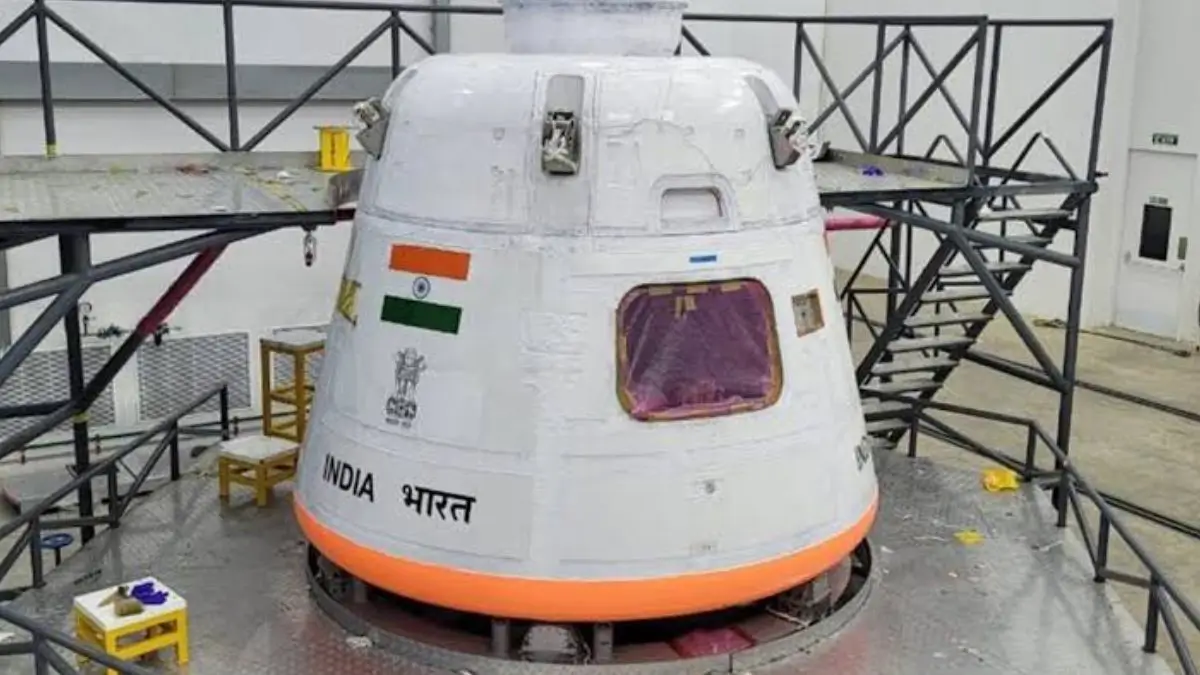
India's first human spaceflight programme has crossed a set of decisive engineering hurdles. In a written reply in the Rajya Sabha on 6 August 2026, Union Minister of State for Science and Technology Dr Jitendra Singh told Parliament that the Indian Space Research Organisation (ISRO) has developed, tested and qualified the core systems required to human-rate the Gaganyaan mission — from the launch vehicle's propulsion stages to the crew-escape motors and the hardware that will keep astronauts alive in orbit. The update sets the stage for the first uncrewed experimental flight, now targeted for the last quarter of 2026.
Parliament gets a Gaganyaan progress report
Human-rating is the exhaustive process of proving that every element of a rocket-and-capsule system is safe enough to carry people. Unlike a satellite launch, where a failure means a lost payload, a crewed mission has to protect a human life at every phase — on the pad, during ascent, in orbit and through the fiery return. The minister's reply amounted to a system-by-system scorecard of how far ISRO has come in meeting that standard, and it showed that most of the foundational hardware is no longer on the drawing board but built and validated.
A human-rated launch vehicle
At the centre of the programme is the HLVM3 — the Human Rated LVM3, a version of India's heavy-lift launcher re-engineered to the tighter margins that crewed flight demands. According to the government, the HLVM3 has completed the development and ground testing of all its propulsion stages and structures. That covers the vehicle's solid, liquid and cryogenic elements, each of which must demonstrate reliability well beyond the levels accepted for uncrewed launches. Qualifying the full stack is a prerequisite before the rocket can be trusted to loft the crew module.
Crew safety: the escape system and the capsule
Perhaps the most safety-critical element of any crewed rocket is the mechanism that pulls astronauts clear if something goes wrong during launch. The minister confirmed that five types of motors for the Crew Escape System (CES) have been developed and static tested, and that all CES structures have been realised and qualified. The Crew Escape System is designed to yank the capsule and its occupants away from a failing rocket in a fraction of a second. Alongside it, the propulsion systems for both the Crew Module — the pressurised cabin that carries the astronauts — and the Service Module that supports it have been developed, tested and qualified.
Keeping astronauts alive: ECLSS and re-entry hardware
Getting to orbit is only half the challenge; surviving there and returning safely is the other. The government listed a series of subsystems that have now been developed and tested, including the Environmental Control and Life Support System (ECLSS), which regulates the cabin's air, temperature and pressure; the Thermal Protection System that shields the capsule from re-entry heat; the Deceleration System of parachutes that slows the descent; the Crew Module Up-righting System that keeps the capsule the right way up after splashdown; and the end-to-end avionics that tie the vehicle's electronics together. An engineering model of the ECLSS has been realised, a key step toward flight-ready life-support hardware.
What comes next: Vyommitra, then crew
With the hardware maturing, attention turns to flight testing. The first uncrewed experimental mission — which will carry the half-humanoid robot Vyommitra to validate systems in a real flight environment — is targeted for the fourth quarter of 2026. That will be followed by two more uncrewed missions flown in the identical configuration of the first crewed flight, before Indian astronauts finally ride to orbit, with the crewed mission targeted by 2027. Each step is designed to retire risk incrementally, so that by the time a crew boards, every system will have been proven in the exact configuration they will fly. The parliamentary update makes clear that the long, unglamorous work of qualification — the part of human spaceflight the public rarely sees — is now largely behind India's flagship programme.
Sources
- PIB (via GlobalSecurity): https://www.globalsecurity.org/space/library/news/2026/space-260805-india-pib01.htm
- Prokerala: https://www.prokerala.com/news/articles/a1797224.html
- NewKerala: https://www.newkerala.com/news/a/indias-1st-human-space-mission-advances-after-passing-254.htm
- NE India Broadcast: https://neindiabroadcast.com/2026/08/07/indias-gaganyaan-hits-major-milestones-first-uncrewed-flight-set-for-q4-2026/
Tags
More from Space Technology
ISRO's GSLV-F17 Places EOS-05 Into Orbit, Its Heaviest-Ever Payload on a GSLV
ISRO's GSLV-F17 placed the 2,367-kg EOS-05 satellite into a higher-than-planned geosynchronous transfer orbit on September 4, redeeming the GSLV family after the 2021 loss of its predecessor and setting up a packed launch calendar toward Gaganyaan.
Kepler Aerospace Raises $8 Million to Build Six Autonomous ISR Satellites That Talk to Each Other in Orbit
Bengaluru's Kepler Aerospace has closed its first-ever external funding round to launch six swarming ISR satellites under two Ministry of Defence iDEX contracts.