EyeROV's ₹47-Crore Navy Order Signals the Coming-of-Age of Indian Marine Robotics
Kochi's EyeROV has won one of India's largest marine-robotics contracts — a ₹47-crore Indian Navy order for indigenous underwater remotely operated vehicles. Founded in 2017 with a fully in-house tech stack and 100-plus deployments behind it, the startup is turning subsea inspection into a sovereign capability.
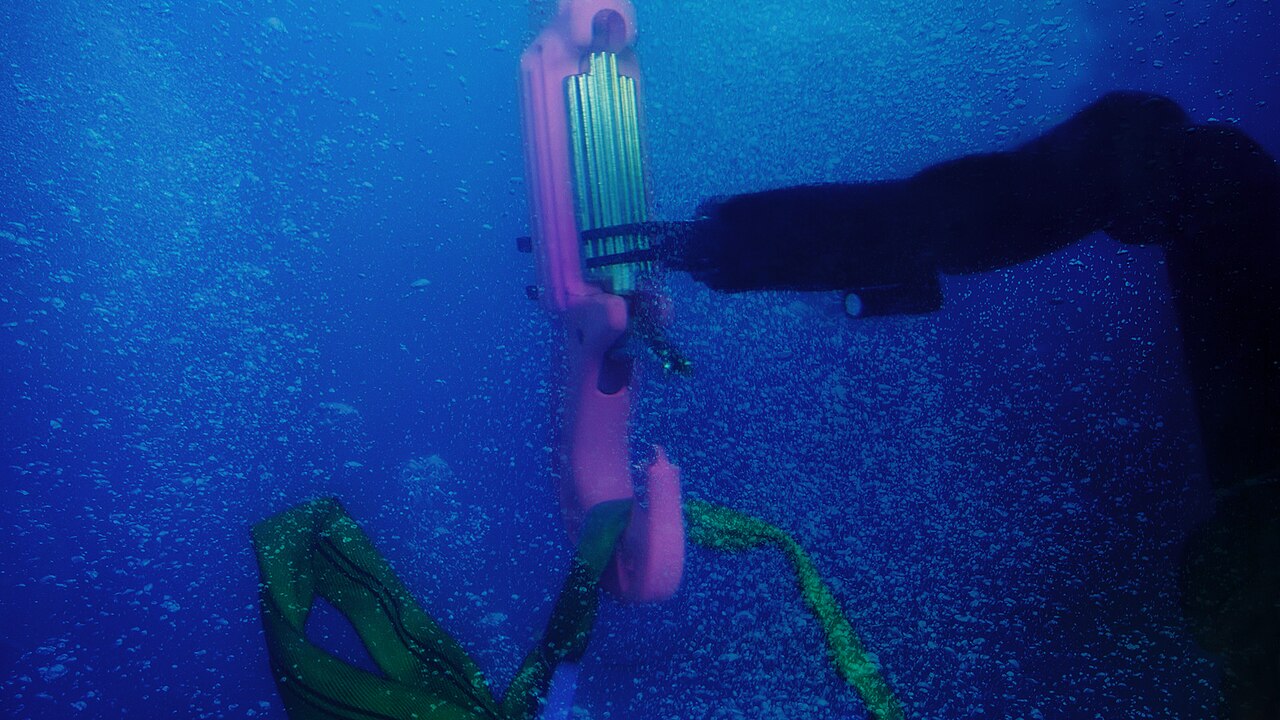
On 30 September 2025, the Kochi marine-robotics startup EyeROV (IROV Technologies) announced a ₹47-crore order from the Indian Navy for underwater remotely operated vehicles (UWROVs) — among the largest contracts an Indian marine-robotics company has secured, and a marker that the field has graduated from pilot projects to production.
What the Navy is buying
EyeROV's flagship is the TROUT, a compact, military-grade UWROV rated to 300 metres depth. It carries high-definition cameras, sensing payloads and manipulators, and is built for the unglamorous but mission-critical work of underwater surveillance, reconnaissance, hull and asset inspection, and search. For a navy, that means inspecting ship hulls and harbour infrastructure for limpet mines or sabotage, surveying the seabed around assets, and reducing the need to put divers into dangerous water.
Why "indigenous stack" is the headline
The detail that makes this strategically significant is that EyeROV's technology is developed end-to-end in India — the vehicle, its controls and its software. Subsea robotics has long been dominated by a handful of Western and East Asian suppliers, and import dependence in this category carries the same risks as in any defence segment: cost, lead times, spares, and the possibility of supply being cut at the worst moment. An indigenous UWROV directly serves the Atmanirbhar Bharat goal of sovereign capability in sensitive domains.
EyeROV is not a paper champion. Founded in 2017, it reports 100-plus deployments across India, the Middle East, Asia-Pacific and Europe, with a customer list spanning DRDO, the Indian Coast Guard, CSIR and the polar-research body NCPOR. iDEX and the Navy provided the development support that helped convert that commercial track record into a defence order.
The market read
The opportunity stretches well beyond this contract. Underwater inspection is a recurring, dual-use need: ports and shipyards, offshore energy, undersea cables and pipelines, dams and bridges all require periodic subsea survey, and ROVs are steadily replacing divers for cost and safety reasons. A company with a proven, indigenous platform can ride both the defence wave (mine countermeasures, harbour security, seabed awareness) and the far larger commercial infrastructure-inspection market.
For investors, EyeROV exemplifies a pattern worth watching across Indian deeptech: a hardware-plus-software platform, validated first in tough commercial deployments, then pulled into defence by a maturing procurement system. The moat is the integrated stack — vehicle, sensors and the autonomy/analytics that turn raw footage into inspection reports. The execution challenge is scaling manufacturing and field support while keeping the technology ahead of cheaper imports. A ₹47-crore Navy order is both validation and the working capital to attempt exactly that.