India Orders Its Own Marine Gas Turbine Generators in a ₹425-Crore Navy Deal
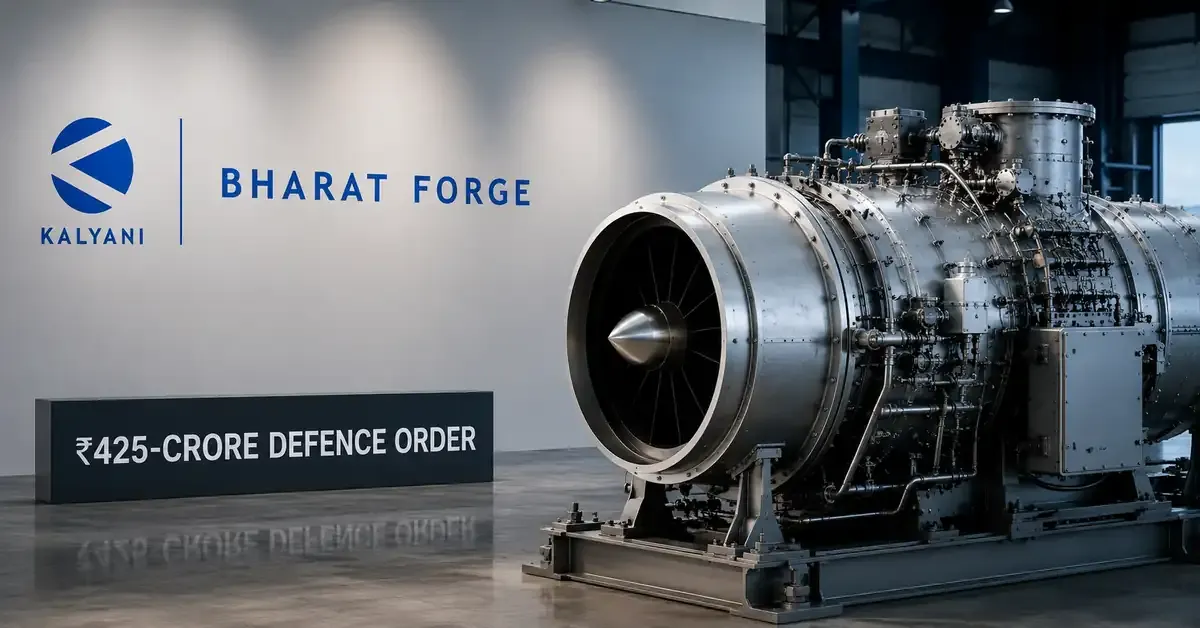
India's Ministry of Defence has signed a ₹425 crore contract with Bharat Forge for 12 sets of indigenous 1.25 MW Marine Gas Turbine Generators for the Navy — closing a strategic gap in who makes a warship's onboard electrical power.
A small contract with a strategic point
On June 19, 2026, India's Ministry of Defence signed a ₹425 crore contract with Pune-based Bharat Forge Limited for 12 sets of indigenous 1.25 MW Marine Gas Turbine Generators (MGTGs) for the Indian Navy. The deal is modest in rupee terms, but it closes a long-standing gap in India's warship supply chain: the machinery that makes a ship's electricity.
The contract was signed in New Delhi in the presence of Defence Secretary Rajesh Kumar Singh, under the "Buy (Indian)" category of the Defence Acquisition Procedure (DAP) 2020, which mandates a minimum of 60% indigenous content. It is to be executed over five years.
What an MGTG actually does
It is easy to conflate this with a ship's propulsion. It is not. A warship's main gas turbines turn the propellers; a Marine Gas Turbine Generator is an auxiliary system that burns fuel to spin an alternator and produce onboard electrical power. That power runs the parts of a modern combatant that increasingly define it — combat-management networks, radars and sensors, communications, and power-hungry weapon systems.
Because these generators sit at the heart of a warship's electrical backbone, importing them is a strategic vulnerability: a sanctioned or delayed supplier can hold up a fleet. Building them at home is exactly the kind of unglamorous import-substitution that self-reliance in defence is meant to deliver.
Who builds it
Kalyani Strategic Systems Limited (KSSL), Bharat Forge's defence arm, will act as the production and integration partner for the programme. The 1.25 MW generators are earmarked for onboard power generation on the Navy's Kolkata-class destroyers, and establishing a domestic line gives the Navy a repairable, upgradable source for a subsystem it will need across many future hulls.
The contract also builds on Bharat Forge's wider push into marine turbomachinery. In May 2026 the company signed a memorandum of understanding with the Andhra Pradesh government to set up a private-sector facility in Visakhapatnam for the repair, overhaul and indigenous development of marine gas turbines — work that has historically depended on foreign original-equipment manufacturers.
The bigger picture
Marine gas turbines are among the hardest pieces of naval engineering to master: they demand exotic high-temperature alloys, precision machining and decades of metallurgical know-how, which is why only a handful of countries make them. India has largely imported both propulsion turbines and their auxiliary generators. A 12-set order will not change that overnight, but it puts an Indian private-sector manufacturer on the learning curve for turbomachinery the Navy can no longer afford to source only from abroad.
If KSSL delivers on schedule, the more interesting prize is the one implied by the Visakhapatnam plan: not just building generators, but maintaining and eventually designing the turbines themselves.
Sources
- https://www.business-standard.com/external-affairs-defence-security/news/bharat-forge-bags-425-crore-indian-navy-gas-turbine-generator-order-126061901338_1.html
- https://www.etvbharat.com/en/bharat/aatmanirbhar-bharat-government-inks-rs-425-crore-contract-for-1-dot-25-mw-marine-gas-turbine-generators-enn26061907042
- https://www.outlookbusiness.com/news/bharat-forge-signs-425-cr-contract-for-supply-of-gas-turbine-generators-to-indian-navy