Zorawar Clears High-Altitude Firing Trials, Giving India a China-Facing Light Tank
DRDO and L&T's 25-tonne Zorawar put live rounds on target above 4,200 metres at Nyoma in eastern Ladakh, and was airlifted in by an IAF Il-76 — a milestone toward an air-portable combat vehicle the heavy Arjun and T-90 fleets simply cannot replace in the Himalayas.
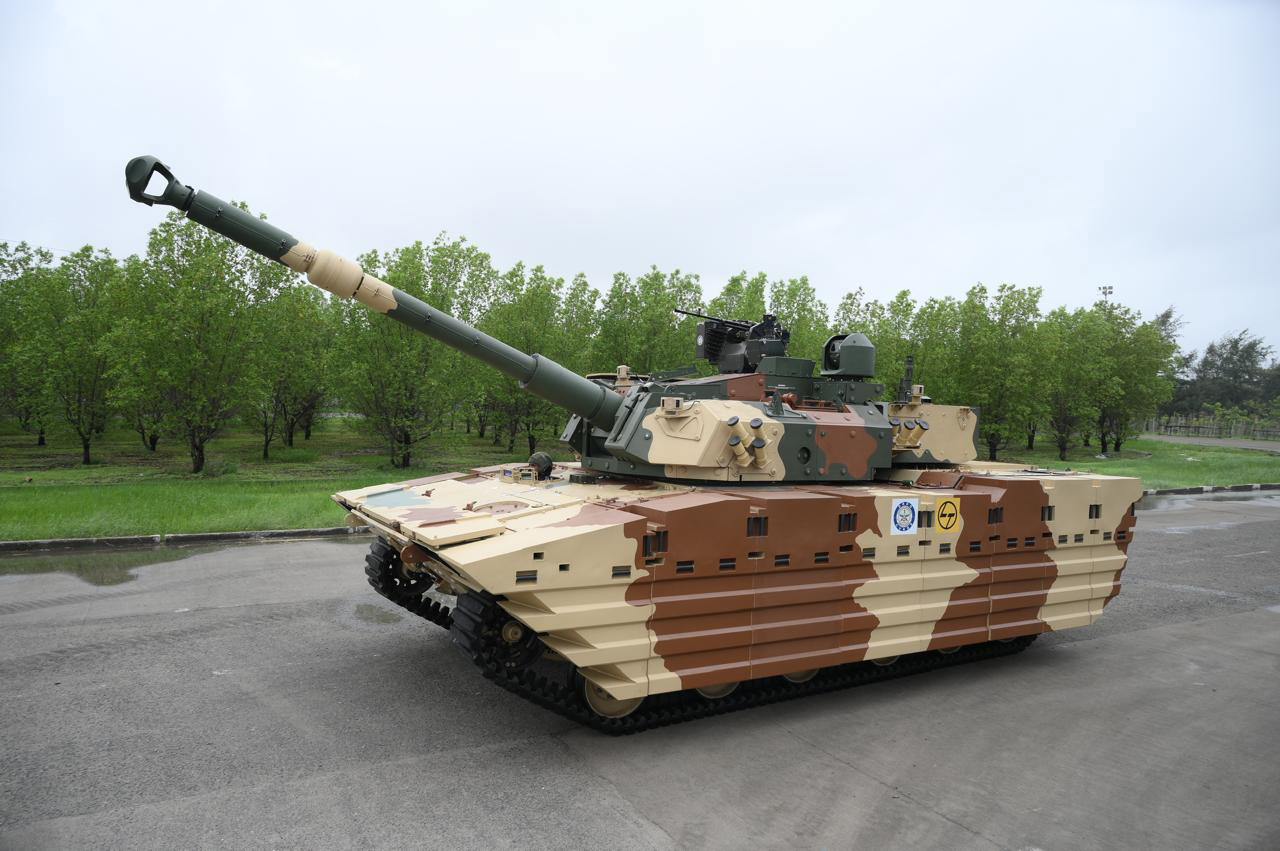
When the Ministry of Defence released footage on 12 December 2024 of a squat, sand-coloured tank firing on a wind-scoured Ladakh range above 4,200 metres, it was making a strategic argument as much as a technical one. The Zorawar — named after the 19th-century Dogra general who campaigned across Ladakh and Tibet — had completed high-altitude firing trials at Nyoma, landing rounds accurately in air thin enough to starve a conventional powerpack.
Why India needs a light tank at all
India's armoured backbone was built for the plains. The 45-tonne T-90 and the ~68-tonne Arjun are formidable in Punjab or the Rajasthan desert, but neither moves easily above 14,000 feet, where roads are seasonal and bridges are rated for a fraction of that weight. The 2020 Galwan crisis exposed the gap: as forces faced off along the Line of Actual Control, the PLA deployed its ~30-tonne Type 15 light tanks across the Tibetan plateau, a platform purpose-built for altitude. India had no equivalent.
Zorawar is the response. Developed by DRDO's Combat Vehicles Research and Development Establishment (CVRDE) with Larsen & Toubro as the production partner, the 25-tonne vehicle trades armour mass for power-to-weight, mobility and — decisively — air-portability.
What the December trials actually proved
- Live firing above 4,200 m with repeatable accuracy, validating the gun, fire-control system and, most importantly, the engine and transmission in low-density air where combustion and cooling both suffer.
- Strategic airlift: an Indian Air Force Il-76 flew the tank to the range, demonstrating that Zorawar can be moved into forward sectors in hours rather than the days a road march demands.
- It built on first-phase firing trials conducted in September 2024, moving the programme from the proving ground toward a representative operational environment.
A point of precision worth correcting in earlier coverage: the trials were held at roughly 4,200 metres (about 13,800 feet), not 15,000-plus. The number matters, because high-altitude engine de-rating is non-linear — every few hundred metres compounds the design challenge.
The industrial and investor read
Zorawar is a flagship of the private sector's deepening role in Indian land systems. For L&T, it extends a defence portfolio that already spans artillery, submarine construction and bridging systems, and it is being built with a high indigenous content target under Make in India. The Army's projected requirement runs to several hundred light tanks; the DRDO–L&T effort covers an initial tranche, with additional volumes expected through a separate procurement that other Indian players are positioning for.
The design also bakes in manned-unmanned teaming from the outset — the ability to operate alongside drones and loitering munitions at the squad level — which is where the platform's long-term value, and its upgrade revenue, will sit.
What's next
Expect desert and cold-weather trials to round out the envelope, followed by Army user trials slated for 2026 ahead of any production order. The harder questions are industrial: can the powerpack be progressively indigenised (early units rely on an imported engine), and can L&T hold cost and schedule at volume? Clear those, and India will field a credible high-altitude armour capability for the first time — and own an exportable platform pitched squarely at mountain and expeditionary armies.