DRDO and CSIR-CGCRI Develop Nanocrystal Glass Targeting Lighter Armoured-Vehicle Windows
A ₹50-crore, four-year DRDO–CSIR-CGCRI programme is developing transparent glass-ceramic armour aimed at BIS Level V–VI protection with 30–50% less weight and thickness than imported bulletproof glass.
The thick, greenish windscreen of an armoured vehicle is usually one of its heaviest parts, and in India it is often imported. The Defence Research and Development Organisation (DRDO) and the Kolkata-based CSIR-Central Glass and Ceramic Research Institute (CSIR-CGCRI) are working to change both. Their reported ₹50-crore programme is developing indigenous transparent armour with a target of lower weight and thickness than conventional imported products.
The project was reported in late September 2026. It aims to cut the weight and thickness of bullet-resistant glass by 30 to 50% compared with conventional imported products while still meeting India's most demanding ballistic-protection standards.
The material: glass with nanocrystals inside
Conventional bulletproof glass is a laminate: several layers of glass bonded with polymer interlayers. Stopping a high-velocity rifle round takes many layers, which makes the pane thick and heavy. Adding protection means adding weight, and on a vehicle that weight costs mobility, fuel and payload.
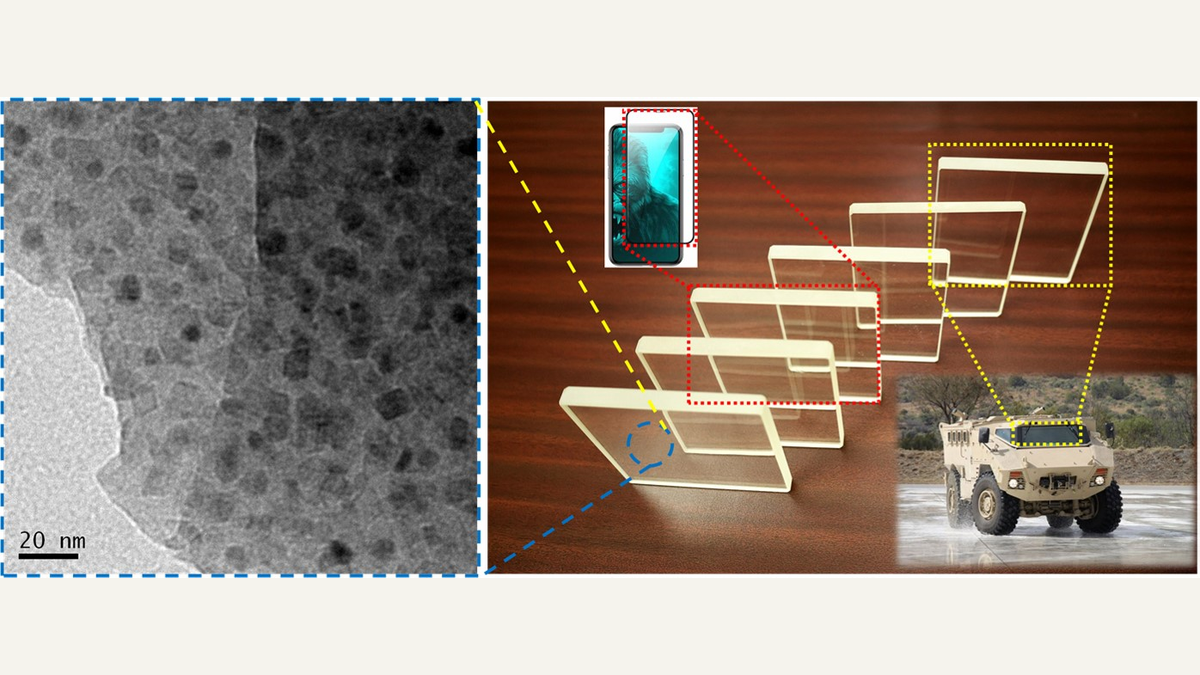
CSIR-CGCRI's approach uses transparent glass-ceramics. Scientists take a specially designed glass and put it through a controlled crystallisation process. The process grows nanometre-sized crystals spread evenly through the glass matrix. Keeping crystals sufficiently small and controlling optical scattering can help preserve transparency. They also make it much stronger and tougher, so it can absorb and spread the energy of a projectile that would shatter ordinary glass.
Glass-ceramics are not a new idea. Variants are found in cooktops and telescope mirrors. Engineering them to be both optically clear and ballistically tough, at the sizes vehicle windows need, is a much harder problem. CSIR-CGCRI's Specialty Glass Division has been developing transparent nanocrystalline glass-ceramics for armour for some time. This project is meant to carry that work to deployment.
The protection target
September reporting describes a target of protection against AK-47 fire under BIS V and VI test methods. This is a reported protection target, not certification already obtained.
Early results are encouraging. In initial ballistic trials, the material reportedly stopped rounds fired from a Trichy Assault Rifle in initial trials at TBRL. Further multi-shot testing is planned, because real combat rarely involves a single hit and a windscreen has to hold together after the first impact.
Who is doing what
The four-year project brings together CSIR-CGCRI and two DRDO laboratories:
- CSIR-CGCRI, Kolkata leads development of the glass-ceramic material and its processing.
- Naval Materials Research Laboratory (NMRL), Maharashtra is a DRDO materials laboratory partnering on the programme.
- Terminal Ballistics Research Laboratory (TBRL), Chandigarh brings DRDO's specialist expertise in how armour and projectiles behave on impact.
The project is reported to be at an advanced stage. The next step is the move from laboratory development to large-scale manufacturing, which DRDO plans to do with an industry partner it will choose. Moving from lab coupons to large, optically clear, defect-free panels in volume is where many promising materials fail, so the choice of manufacturing partner will matter a great deal.
Why it matters
The benefits for India go beyond one component.
Mobility and payload. Glass is a large share of the weight of protected-mobility vehicles, light armoured patrol vehicles and VIP transport. Cutting that weight by up to half frees capacity for extra armour elsewhere, more troops or equipment, or simply better speed, range and off-road performance.
Import substitution. Transparent armour has long relied on imported materials. An indigenous source reduces the exposure of vehicle programmes to foreign supply disruptions, export controls and price swings. That fits the government's push for self-reliance in defence manufacturing.
Spillover to other platforms. The researchers say the technology could eventually be used in aircraft, naval platforms and other security applications beyond armoured vehicles. Helicopter cockpits, ship bridge windows and protective visors all face the same trade-off between weight and protection.
Strengthening a national materials lab. CSIR-CGCRI was set up in 1950 and works across specialty glass, advanced ceramics, fibre optics and photonics. Projects like this give India's public materials-science institutions a direct route into strategic applications and build domestic expertise in advanced ceramics processing, which also matters for semiconductors, optics and energy.
What to watch
Key milestones over the next few years include the multi-shot test results, certification against BIS Levels V and VI, DRDO's choice of industrial partner and the first vehicle integration trials. Cost will also matter. Advanced glass-ceramics have to be affordable at scale to replace imported laminates across thousands of vehicles.
If the programme meets its targets, India will have an indigenous source of high-end transparent armour, built on a domestic advance in materials science.
Sources
Image: CSIR-CGCRI. Institute figure showing nanocrystalline glass-ceramic microstructure, transparent samples and application illustrations; background research figure, not a new ballistic-test photograph. Original source.