India Cracks Indigenous GaN-on-SiC, the Material Behind Modern Radar
DRDO's Solid State Physics Laboratory has developed home-grown processes for 4-inch silicon-carbide wafers and gallium-nitride HEMTs and MMICs up to X-band, with production established at GAETEC in Hyderabad, a wide-bandgap milestone that underpins AESA radar, electronic warfare and satellite communications.
The components that decide whether a modern radar can see, or a jammer can blind, are not the antennas you can point at; they are the tiny wide-bandgap transistors inside each transmit-receive module. India has long imported those, under tight export controls. In November 2024, DRDO announced it had closed that gap at the materials level.
What DRDO developed
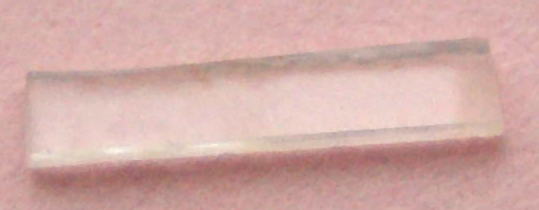
The Solid State Physics Laboratory (SSPL), a DRDO laboratory in Delhi, reported indigenous processes to grow and manufacture 4-inch-diameter silicon-carbide (SiC) wafers and to fabricate gallium-nitride (GaN) High Electron Mobility Transistors (HEMTs) delivering up to 150W, and Monolithic Microwave Integrated Circuits (MMICs) up to 40W, for applications up to X-band frequencies. Production of GaN-on-SiC MMICs, with an initial, limited capacity, has been established at GAETEC (Gallium Arsenide Enabling Technology Centre) in Hyderabad.
Why GaN-on-SiC is the material that matters
GaN and SiC are "wide-bandgap" semiconductors. Compared with the silicon and gallium-arsenide they displace, they handle far higher power densities, switch at higher frequencies and tolerate more heat. Put a GaN HEMT on a SiC substrate, the SiC pulls heat away efficiently, and you get the compact, powerful, efficient RF building block that modern systems crave:
- AESA radar. Active Electronically Scanned Array radars are built from thousands of GaN transmit-receive modules; GaN is what gives them their range and agility.
- Electronic warfare jammers and decoys, which need raw RF power in small packages.
- Satellite and 5G communications, where efficiency and bandwidth are everything.
- Power electronics for electric vehicles and the grid, the same materials, a different use.
The strategic stakes
RF GaN is among the most tightly export-controlled technologies in the world, precisely because it sits at the heart of radar and EW. Depending on imports for it means depending on a supplier's willingness to sell, and to keep selling, in a crisis. An indigenous SiC-wafer and GaN-MMIC chain feeds directly into India's sovereign radar ambitions, from the Uttam AESA radar destined for the Tejas fighter to naval and air-defence sensors, and into the EW systems a modern force cannot fight without.
The honest caveat
This is a milestone, not a finish line. The production capability at GAETEC is described as limited; the hard, capital-intensive work now is scaling yield and volume to industrial levels and pushing performance toward and beyond X-band. But materials and process mastery is the foundational step, the part that cannot be shortcut, and India now has it. For an ecosystem chasing self-reliance in strategic electronics, that is the difference between assembling someone else's chips and owning the recipe.