
ISRO's Bootstrap Start on the CE20: a Clever Trick That Buys Payload and Restarts
ISRO has started its CE20 cryogenic engine in 'bootstrap' mode, with no auxiliary start-up system, for 10 seconds under vacuum, a feat it believes may be a world first for a gas-generator-cycle cryogenic engine. The payoff: lighter rockets and the multiple in-flight restarts that multi-orbit and deep-space missions demand.
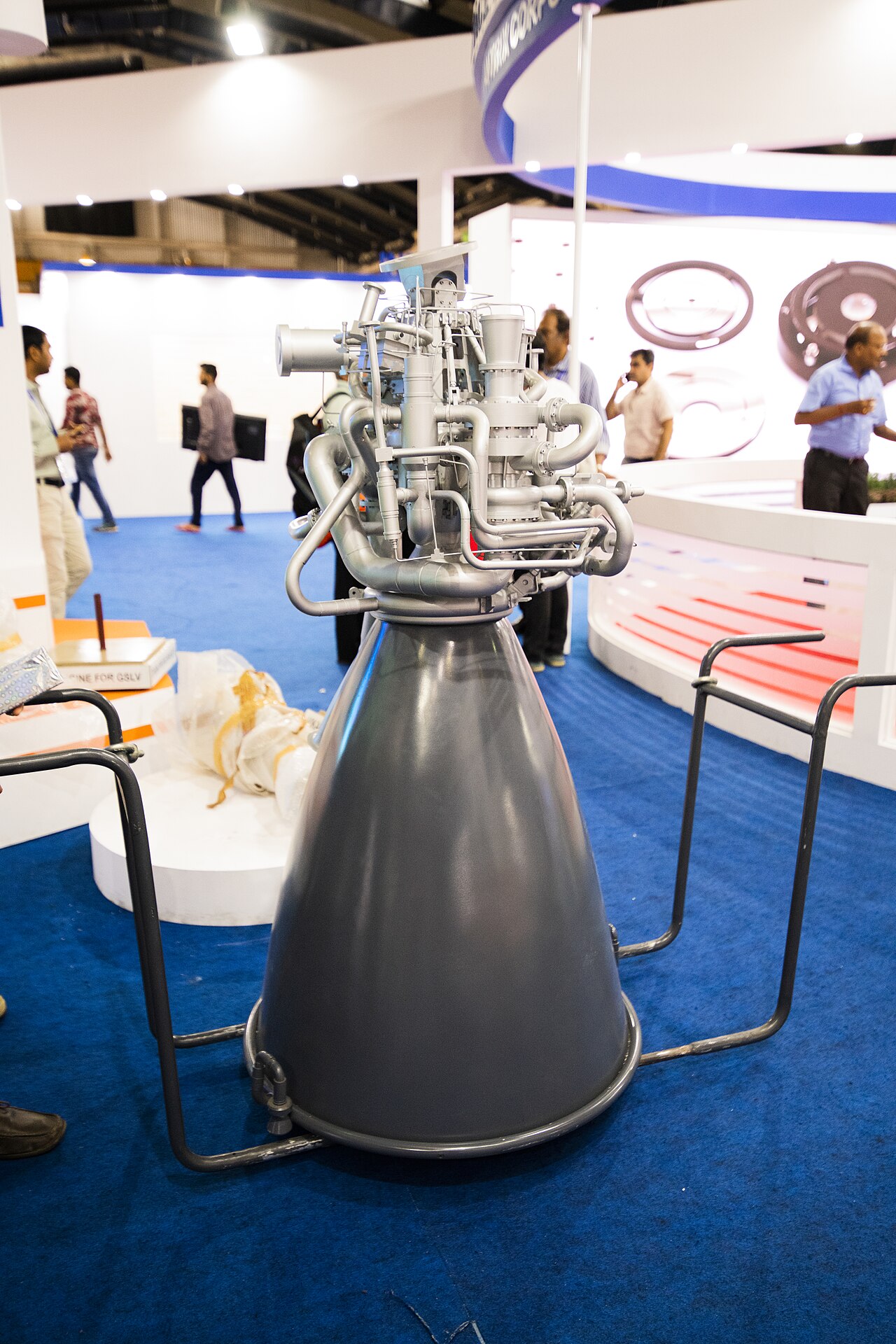
Cryogenic engines are hard to start. Getting fuel and oxidiser at a few hundred degrees below zero to ignite reliably, then spinning up turbopumps to flight speed, traditionally needs a dedicated start-up system, typically a high-pressure gas bottle and its plumbing, carried along just to light the engine. On 7 November 2025, ISRO showed it can do without one.
At the High-Altitude Test facility of the ISRO Propulsion Complex, Mahendragiri, engineers ran a bootstrap-mode start of the CE20 cryogenic engine for 10 seconds under vacuum conditions (the result was detailed in mid-November). ISRO believes it may be the first such demonstration on a gas-generator-cycle cryogenic engine anywhere.
What "bootstrap" means
In a bootstrap start, the engine pulls itself up by its own bootstraps, with no external spin-up. Here, a multi-element igniter lit both the thrust chamber and the gas generator. Once the thrust chamber ignited, the gas generator ignited under tank-head conditions (using only the modest pressure of the propellant tanks), and the resulting hot gas spun the turbopumps up to operating speed without any start-up system. The engine, in effect, lights and accelerates itself.
Why it is worth the trouble
The CE20 powers the upper stage (C25) of the LVM3 and is qualified across a 19-to-22-tonne thrust band, including for the human-rated Gaganyaan missions. Today, every additional in-flight restart of that stage demands another start-up gas bottle and its associated hardware, dead weight that comes straight out of payload.
Removing the start-up system changes the economics in two ways:
- More payload. Less inert mass on the upper stage means more kilograms delivered to orbit on every flight.
- Restart capability. A self-starting engine can be re-lit multiple times in space, which is exactly what multi-orbit deployments, complex insertions and deep-space missions require. It is also a natural fit for the restartable upper stages that future missions and any reusable architecture will need.
The read
This is incremental engineering of the most valuable kind, not a headline-grabbing launch, but a change to a core building block that quietly improves every mission that uses it. For ISRO's commercial ambitions through NSIL, payload and flexibility are the currency: more mass to orbit, and the ability to drop multiple satellites into different orbits on one flight, directly improve competitiveness. The next steps are to mature bootstrap starting toward flight qualification and to demonstrate genuine in-flight restarts. If those land, the CE20, already a workhorse, becomes a markedly more capable one without a single new engine being designed.