
C-DAC's Rigetti Buy and India's Hybrid Quantum-HPC Play
C-DAC's $8.4M order for a 108-qubit Rigetti system, paired with the PARAM line, is India's first on-prem quantum-in-supercomputer integration. It buys capability now and defers sovereignty, hedged by the indigenous Quantromon track.
Manik Gupta
Founder and editor of DeepTech India. Manik writes about India's frontier technology ecosystem — AI, semiconductors, space, quantum, robotics and biotech — translating research and policy into clear, reliable reporting.
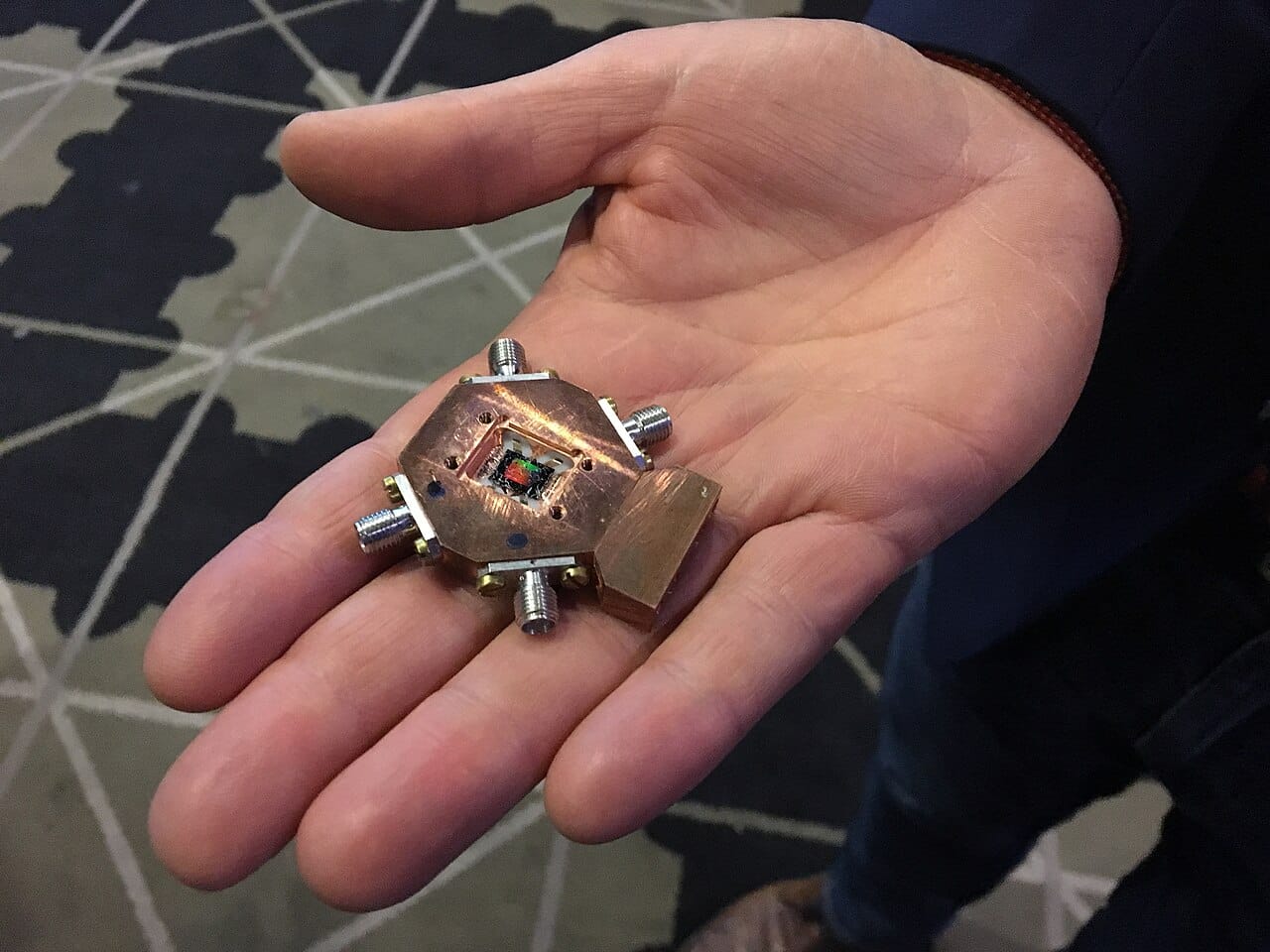
Rigetti Computing has secured an $8.4 million purchase order for a 108-qubit, chiplet-architecture superconducting system to be installed at C-DAC Bengaluru and deployed in the second half of 2026. The deal, which builds on a memorandum of understanding signed in September 2025, marks C-DAC's first on-premises quantum-in-supercomputer integration, pairing the Rigetti machine with the indigenous PARAM high-performance computing line to run hybrid quantum-classical workloads. For an Indian government computing agency to buy quantum hardware and place it next to its own supercomputers, rather than renting time on a foreign cloud, is a deliberate and notable choice.
Why on-prem hybrid, and why chiplets
The hybrid quantum-classical model is the only one that is practically useful in the noisy-intermediate-scale era. A near-term quantum processor cannot run a full application alone; instead, a classical HPC system handles the bulk of the computation and offloads the specific sub-problems where a quantum processor has an advantage, such as parts of quantum chemistry, certain optimisation routines, or sampling tasks. Co-locating the quantum device with PARAM rather than reaching it over a network minimises the latency of that back-and-forth, which is what makes the integration worth doing on-premises. It also keeps the workload, and any sensitive data in it, inside C-DAC's own facility.
Rigetti's chiplet architecture is the technically relevant detail. Rather than fabricating one large monolithic quantum chip, where yield falls sharply as area grows, Rigetti builds smaller qubit tiles and assembles them into a larger processor. This modular approach mirrors how the classical semiconductor industry moved to chiplets to push past the limits of monolithic dies, and it is Rigetti's chosen path to scaling qubit counts while keeping fabrication yields workable. A 108-qubit system delivered this way is a coherent engineering proposition, not just a number.
The sovereignty trade-off, and the indigenous hedge
The flip side of the deal is foreign-vendor reliance, and it is the same tension that runs through every part of India's quantum programme. An $8.4 million purchase order routes capital and the core technology to a US company, and it makes a flagship Indian HPC integration dependent on Rigetti's hardware, support and roadmap. For a national computing agency, that is a strategic exposure, even as it delivers a working hybrid system years faster than waiting for a domestic equivalent.
India is hedging that exposure in parallel rather than instead. The Department of Science and Technology sanctioned a five-institute superconducting consortium on 27 June 2025, drawing in TIFR, IISc, IIT Bombay and IIT Madras to build indigenous superconducting quantum hardware. That effort already has a demonstrator behind it: the indigenous six-qubit "Quantromon" processor, developed through DRDO's quantum lab with TIFR and TCS. The contrast is instructive for an investor. The Rigetti buy gives C-DAC a 108-qubit machine now; the indigenous track is at six qubits and years from comparable scale.
That gap is the whole strategic question in one comparison. Buying foreign hardware delivers capability immediately but defers sovereignty; building domestically builds sovereignty but defers capability. C-DAC's approach is to do both at once, using a procured Rigetti system to develop the hybrid software stack, the PARAM integration patterns and the user base today, while the DST consortium works to supply the hardware layer later. Whether the indigenous track can close the qubit-count gap before the imported machine becomes the permanent dependency is the metric to watch. For now, the $8.4 million order is the fastest route to a usable hybrid quantum-HPC platform in India, and the on-prem, government-owned structure is the right way to acquire it.
Tags
More from Quantum Computing
QClairvoyance and Samgnya Announce a Quantum Research Partnership
The MoU covers computing, algorithms, quantum AI and post-quantum security, with research and validation ahead of deployment.
RBI Urges Payment Operators to Prepare for Post-Quantum Security
A September 11 speech urges coordinated preparation across payments. It announces no migration deadline and does not endorse a particular vendor or technology.