Radiology-AI marketplace CARPL.ai raises $10 million Series A led by IFC
CARPL.ai, an Indian-founded radiology-AI marketplace with over 300 applications from 100-plus partners, has raised $10 million in a Series A led by the World Bank's IFC to expand across North America, Europe and emerging markets.
Manik Gupta
Founder and editor of DeepTech India. Manik writes about India's frontier technology ecosystem — AI, semiconductors, space, quantum, robotics and biotech — translating research and policy into clear, reliable reporting.
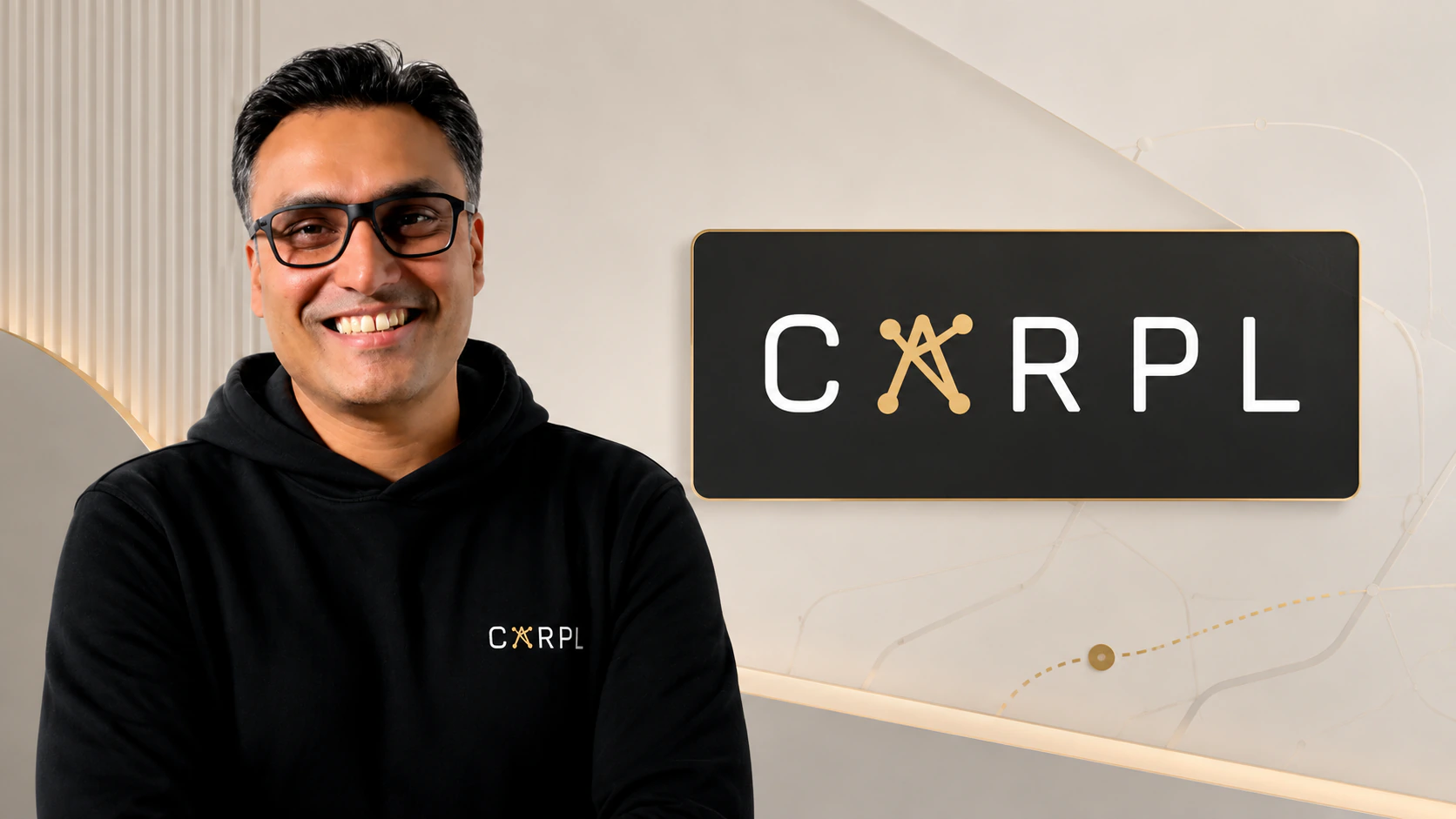
CARPL.ai, a Delhi- and San Francisco-based platform that helps hospitals find, test and run artificial-intelligence tools for reading medical scans, has raised $10 million in a Series A round led by the International Finance Corporation (IFC), the private-sector arm of the World Bank Group. The round, announced on 23 July 2026, also drew participation from India's Stellaris Venture Partners and other investors.
An app store for radiology AI
Radiology has become one of the most fertile grounds for clinical AI — algorithms that can flag a suspected stroke on a CT scan, measure a tumour, or triage a chest X-ray for signs of tuberculosis. But hospitals face a messy reality: dozens of vendors, each with its own software, validation claims and integration quirks, and little way to compare them or run them side by side.
CARPL.ai positions itself as the connective layer for that fragmented market. Founded in 2021, the company bills its platform as the world's largest AI marketplace for radiology, offering more than 300 applications from over 100 AI partners. Through a single interface, radiologists and researchers can build, test, deploy and monitor these tools in clinical practice — evaluating how an algorithm performs on their own patient data before trusting it, then keeping an eye on it once it is live.
That "try before you buy, then watch it in production" model addresses a real barrier to AI adoption in medicine, where a tool that works in a research paper can quietly underperform on a different hospital's scanner, population or protocol.
Who is backing it
The involvement of the IFC is notable. As a development-finance institution, it tends to back businesses it sees as having impact across emerging markets, and its lead role signals confidence that CARPL's marketplace can scale in health systems well beyond the United States and Europe. Stellaris Venture Partners, an existing India-focused backer, joined the round alongside other investors.
CARPL, which YourStory lists among its Tech30 startups, said it will use the fresh capital to accelerate product innovation, expand its global partner ecosystem, and drive commercial growth across North America, Latin America, Europe, Asia-Pacific and other emerging markets.
Why a marketplace, not a model
CARPL's strategy is a deliberate contrast to the many startups racing to build the single best diagnostic algorithm. Instead of betting on one model, it is building the infrastructure on which many models compete — a picks-and-shovels play on the entire radiology-AI gold rush.
The advantage is neutrality: a hospital does not have to marry a single vendor, and an AI developer gets a distribution channel into clinics it could never reach alone. As the number of regulatory-cleared radiology algorithms climbs into the hundreds, the need for an independent layer to procure, validate and govern them grows with it.
Why it matters
For an Indian-founded company, CARPL's trajectory is a reminder that the country's health-tech ambitions are not confined to serving the domestic market. With dual headquarters in Delhi and San Francisco and a stated push into North America and Europe, CARPL is building from India for the world — the kind of globally competitive, infrastructure-grade AI company that the country's deep-tech ecosystem has been trying to produce.
It also lands at a moment when regulators and health systems are grappling with how to safely fold AI into clinical workflows. Platforms that make it easier to validate and continuously monitor these tools — rather than simply sell them — may end up being as important to safe adoption as the algorithms themselves.
Sources
- CARPL.ai raises $10 million from IFC to expand radiology AI platform — Business Standard
- Tech30 startup CARPL.ai raises $10M in Series A led by IFC — YourStory
- Radiology artificial intelligence marketplace CARPL.ai raises $10M — Radiology Business
- CARPL.ai raises US$10 million in Series A led by IFC to scale global clinical AI platform — Indian Pharma Post
Tags
More from Artificial Intelligence
AMD Partners With Delhi University to Train 10,000 Students in AI and ROCm
AMD has signed an MoU with the University of Delhi to train about 10,000 students on its open-source ROCm AI platform over the next year, extending its push to build developer loyalty in India.
Adobe Acquires Rilo, an IIT Bombay-Founded AI Agents Startup, Less Than a Year After Launch
Adobe has acquired Bengaluru-founded AI agents startup Rilo, less than a year after two IIT Bombay alumni launched it, in a deal that folds Rilo's six-person team and technology into Adobe's marketing suite.