India Names Its First RDI-Fund Biotech Cohort — and Bets Big on Fermentation
BIRAC has selected its first cohort of about eight biotech startups for backing under the government''s ₹1 lakh crore RDI Fund, with term sheets worth ₹450 crore signed with three fermentation and synthetic-biology firms alone.
Manik Gupta
Founder and editor of DeepTech India. Manik writes about India's frontier technology ecosystem — AI, semiconductors, space, quantum, robotics and biotech — translating research and policy into clear, reliable reporting.
The First Cohort
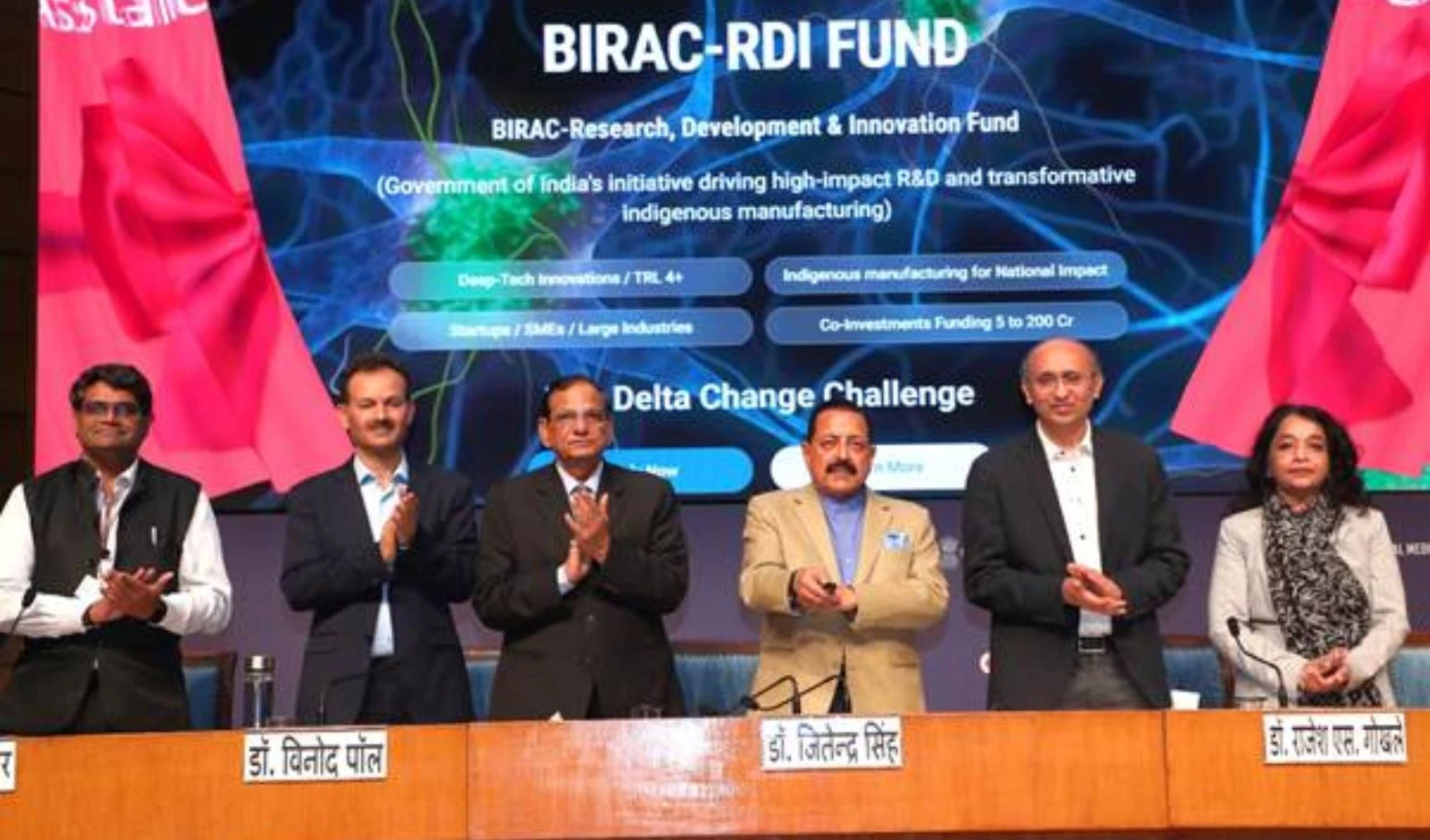
India''s push to bankroll commercially minded deep science has produced its first concrete list of biotech winners. The Biotechnology Industry Research Assistance Council (BIRAC) has selected roughly eight startups as the first cohort to receive money under the government''s ₹1 lakh crore Research, Development and Innovation (RDI) Fund.
The named companies include Fermbox Bio, Revelations Biotech, 4baseCare, Sea6 Energy and Telluris Biotech. BIRAC has signed term sheets with all the selected startups; the agreements with Fermbox Bio, Revelations Biotech and Sea6 Energy alone are collectively valued at about ₹450 crore. Across the cohort, the average investment is expected to be around ₹25 crore per company.
How They Were Chosen
The selection is the output of a competitive first call. BIRAC received close to 200 applications after inviting proposals earlier in the year, and has so far screened roughly a quarter of them — about 50 proposals — to arrive at its initial slate of around eight companies. More names are expected as the remaining applications are worked through.
The money sits inside a deliberately unusual structure. The RDI Fund, created to back commercially viable research in strategic sectors — biotechnology, artificial intelligence, quantum computing, robotics, space and the energy transition — routes capital through second-level fund managers rather than as ordinary grants. BIRAC, alongside the Technology Development Board, is one of those managers, and is set to receive an initial ₹2,000 crore from the Special Purpose Fund under the Anusandhan National Research Foundation. The instrument is closer to patient, low-cost capital than to a subsidy — a design meant to push funded work toward the market rather than the shelf.
A Clear Tilt Toward Bio-Manufacturing
What stands out in the first cohort is its bias toward industrial biotechnology — using biology to make things at scale, not just to make medicines.
Fermbox Bio, for instance, has been picked to set up a large-scale precision-fermentation biomanufacturing facility with 400 kilolitres of fermenter capacity. Its aim is to produce "made-in-India" cellulosic enzymes for second-generation ethanol and active dried distiller''s yeast for first-generation ethanol — inputs that are today often imported, and that sit directly in the path of India''s biofuel ambitions.
Sea6 Energy, also based in Bengaluru, plans to use its funding to scale seaweed-feedstock production, tapping marine biomass as a raw material for fuels and chemicals. Hyderabad''s Revelations Biotech is pursuing a synthetic-biology project centred on metabolic production. The through-line is fermentation and engineered biology as manufacturing platforms — the same toolkit India has been talking up under its broader bio-economy and BioE3 push.
Why It Matters
For years, Indian biotech funding leaned heavily toward diagnostics, drugs and services. The RDI Fund''s first biotech cohort suggests the state wants to seed something harder and more capital-intensive: domestic bio-manufacturing capacity that can substitute imports and, eventually, export.
The bet is not without risk. Precision fermentation and seaweed cultivation are notoriously difficult to scale economically, and a term sheet is not the same as a working plant. But the structure is telling. By channelling money as patient capital through BIRAC rather than as one-off grants, the government is signalling that it expects these companies to build real businesses — and is willing to live with the long timelines that frontier biology demands.
If even a handful of the first cohort reach commercial scale, India will have converted a policy slogan about a bio-economy into fermenters, enzymes and fuel. That is the test the RDI Fund has now set for itself, one term sheet at a time.
Sources
- First set of biotech startups picked for funding under ₹1 trillion R&D push — Business Standard
- BIRAC selects first cohort of biotech startups for funding under ₹1T RDI initiative — Medical Buyer
- Who Made the Cut? Govt Selects First Biotech Startups for RDI Fund — Outlook Business
- BIRAC announces three RDI-Fund beneficiaries for Rs 450 Cr+ — BioSpectrum India
Tags
More from Biotechnology
Remidio Wins a US Patent for a Wearable That Folds Five Eye Exams Into One
Bengaluru's Remidio has been granted a US patent for a headset that captures five separate eye exams without dilation, a step toward pulling Oculomics — reading the body's health through the retina — out of the clinic and into the home.
India Reopens Its ₹5,000 Crore PRIP Scheme, Inviting a Second Wave of Pharma and MedTech Innovators
The Department of Pharmaceuticals has opened a second call for applications under its ₹5,000 crore PRIP scheme, offering up to ₹100 crore per project to early- and late-stage pharma and medtech innovators.