
Army and IAF prepare to order around 200 indigenous Light Utility Helicopters from HAL
ANI reporting says the Army and IAF are preparing further HAL Light Utility Helicopter orders, with 12 built and another 187 in the pipeline. A firm contract and delivery schedule remain to be confirmed.
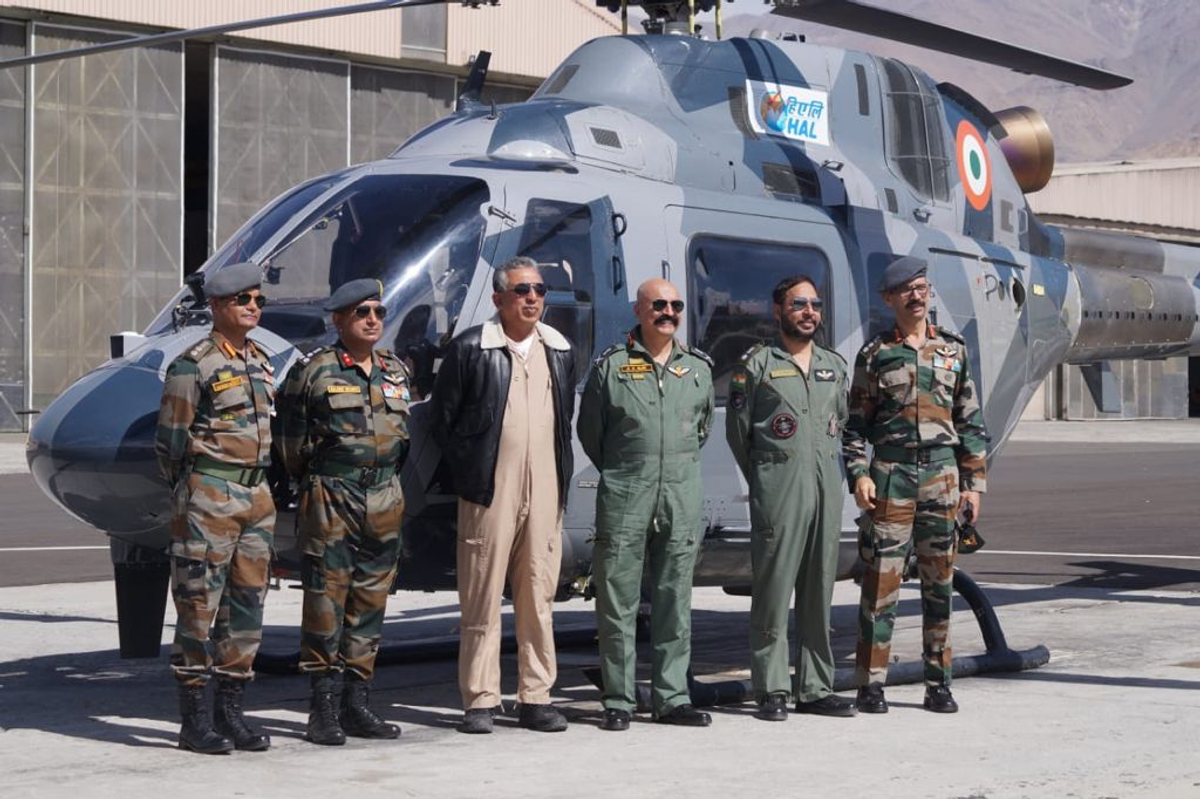
India's ageing fleet of Cheetah and Chetak helicopters may finally have a home-grown successor in large numbers. The Indian Army and the Indian Air Force are preparing to place orders for around 200 Light Utility Helicopters (LUH) from Hindustan Aeronautics Limited (HAL), according to reports published on 27 October 2026.
No contract has been signed yet. But the scale of the planned buy would make the LUH one of HAL's largest indigenous helicopter programmes and would close one of the longest-running gaps in Indian military aviation.
The numbers
According to ANI and other reports:
Reports put the value of the programme at more than ₹20,000 crore. That figure needs care. On 26 October, the Defence Acquisition Council (DAC) granted Acceptance of Necessity for 200 Light Multi-Role Helicopters (LMRH) at an estimated cost of about ₹20,000 crore, as part of a larger ₹2.12 lakh crore set of approvals. Some reports tie the ₹20,000 crore figure to the LUH, others to the LMRH approval. The available reporting does not settle whether these are the same procurement, and one report says the Army is expected to issue a tender that could be split between two bidders.
The helicopter
The LUH is a single-engine, three-tonne-class light helicopter designed by HAL to replace the Cheetah and Chetak. Those French-origin designs, built under licence by HAL since the 1960s and 1970s, remain the workhorses of high-altitude Army aviation. They fly supplies, troops and casualties to posts on the Siachen Glacier and along the Line of Actual Control, but many airframes are decades old and the fleet has had a series of accidents.
The LUH was designed with those missions in mind, with a focus on high-altitude performance. It completed its final test sorties in 2021, when the Director General of Army Aviation flew it, and HAL has since been working through certification and limited-series production. HAL showcased the helicopter again in September 2026, highlighting its suitability for high-altitude operations.
The helicopter is powered by a variant of the Shakti (Ardiden 1U) engine, developed by HAL with France's Safran Helicopter Engines. Engines from the same Shakti family power the Dhruv Advanced Light Helicopter and the Rudra and Prachand combat helicopters.
Why it matters
A 200-helicopter order would do three things.
It would modernise frontline mobility. Light helicopters are the lifeline of India's high-altitude posts. Replacing old Cheetahs and Chetaks with a new design improves safety, payload and reliability where the margins are thinnest.
It would give HAL's rotorcraft line volume. Indigenous aircraft programmes often struggle less with design than with scale. A large, predictable order lets HAL and its suppliers invest in tooling, train workers and bring down unit costs.
It would deepen the domestic supply chain. Each helicopter draws on Indian suppliers for structures, avionics, wiring and components. Steady production gives smaller firms the orders they need to grow.
What to watch
The key milestones are the signing of a firm contract, HAL’s delivery of the limited-series batch, and whether production can ramp fast enough to retire the old fleet on time. Clarity on how the LUH and the newly approved LMRH requirement fit together will also matter. For now, the direction is clear: India's armed forces are planning to replace a generation of imported-design helicopters with one designed at home.
Sources
Image attribution: Government of India / Indian Army, via Wikimedia Commons, GODL-India. Archival photograph of Army officers and HAL test pilot Unni K. Pillai with the LUH; not a new order-signing event. Source: https://commons.wikimedia.org/wiki/File:Indian_Army_Officers_and_HAL_test_pilot_Wing_Commander_(retired)_Unni_K._Pillai_with_LUH_in_background.jpg. Licence: https://data.gov.in/sites/default/files/Gazette_Notification_OGDL.pdf . No government endorsement implied.