VIMARSH 2026 Opens DRDO Testing and Software-Sharing Routes for Industry
DRDO announced support for smaller firms and controlled source-code access for licensees. Nine technology-transfer agreements were handed to 13 manufacturing partners.
Manik Gupta
Founder and editor of DeepTech India. Manik writes about India's frontier technology ecosystem — AI, semiconductors, space, quantum, robotics and biotech — translating research and policy into clear, reliable reporting.
Backlog edition: 16 September 2026. Reviewed on 20 September. Event date: 15 September.
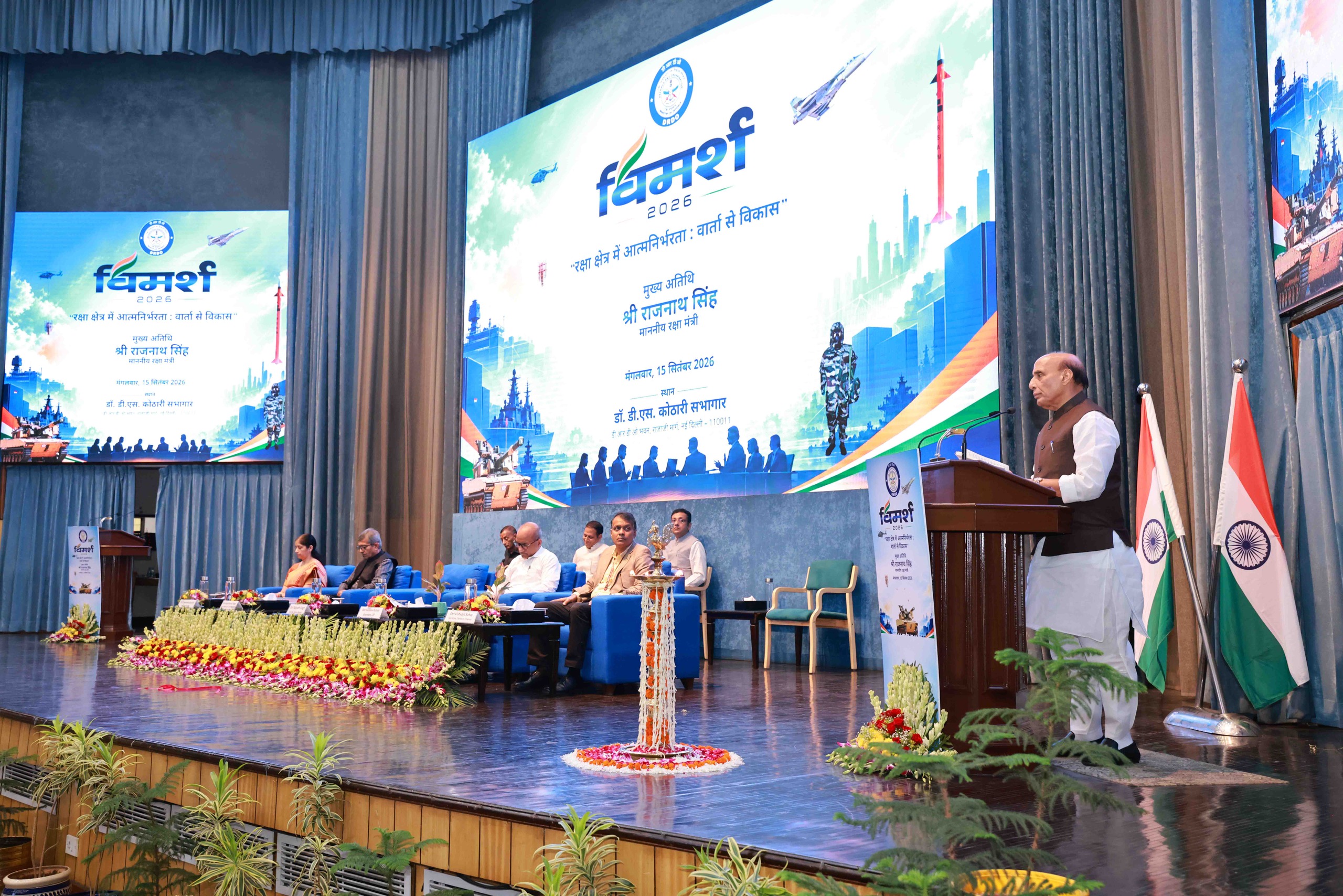
DRDO's VIMARSH industry meeting in New Delhi produced two practical announcements for companies working with defence technology: a support framework for MSMEs and deep-tech startups, and a controlled mechanism for sharing DRDO-developed software source code with licensee industries.
Defence Minister Rajnath Singh unveiled the initiatives on 15 September. The Ministry of Defence says the support framework covers direct funding, incubation and dedicated access to DRDO testing facilities. It describes the software framework as a way to support software-defined capabilities and manage obsolescence.
Access is the important engineering question
For a company developing a subsystem, a laboratory result is only one stage of the journey. The design must also meet a customer's operating requirements, be tested in relevant conditions and be reproducible in manufacturing. Access to appropriate facilities can help firms obtain the evidence needed for those decisions.
The announcement establishes the intended support route. It does not demonstrate that a particular startup has secured a testing slot or that qualification timelines have already fallen. Eligibility, scheduling and the results of actual projects will determine its effect.
Software access under a licence
The source-code initiative concerns authorised industrial licensees. It should not be described as an open-source release or unrestricted access to defence software.
Access to source code can help a partner understand, maintain and integrate a system. Those benefits still depend on the licence terms, documentation and the processes used to validate changes. Sharing code and certifying a modified system are different steps.
Technology transfer and production
At the meeting, nine licensing agreements for technology transfer were handed to 13 manufacturing partners. DRDO also signed a contract with the Quality Council of India for version 2.0 of SAMAR, its manufacturing assessment and rating system. Outreach agreements involved the Society of Indian Defence Manufacturers and Laghu Udyog Bharati.
These are mechanisms for moving research toward production. A transfer agreement itself is not evidence of completed deliveries, operational induction or an independently demonstrated increase in manufacturing capacity.
What to watch
The useful follow-up is project-level evidence: which firms obtain access, which designs complete qualification and whether industrial partners can manufacture consistently to the required specification. That is how the announcement's contribution to domestic R&D can be measured beyond the number of agreements signed.
Image: Rajnath Singh addresses VIMARSH 2026. Credit: Ministry of Defence / Press Information Bureau; reproduced under PIB's attribution policy.
Sources
Tags
More from DefenceTech
Army Design Bureau Reviews Garuda Aerospace's Indigenous Defence Drone Facility
Major General Gopal Kapoor of the Indian Army's Design Bureau visited Garuda Aerospace's Chennai manufacturing facility to assess its indigenous drone technology, RF and communications R&D, and defence-sector manufacturing capabilities.
IAF Opens Dronathon Trials for Unmanned Systems at Pokhran
The 14–16 September programme brings Indian drone and counter-drone systems into desert trials and includes a Vayu UTtaM demonstration.