Skyroot's Vikram-1 and India's First Private Orbital Shot
Skyroot became India's first space-tech unicorn on a ~$60M raise at ~$1.1B, and placed its carbon-composite Vikram-1 at Sriharikota. A June 2026 orbital attempt now de-risks the whole private-launch thesis.
Manik Gupta
Founder and editor of DeepTech India. Manik writes about India's frontier technology ecosystem — AI, semiconductors, space, quantum, robotics and biotech — translating research and policy into clear, reliable reporting.
Skyroot Aerospace has crossed the line that has long separated India's private space ambitions from its public-sector reality. The Hyderabad-based launch company has become India's first space-tech unicorn, raising roughly $60 million at a valuation of about $1.1 billion, and it has placed its Vikram-1 rocket on the pad at Sriharikota ahead of what would be the country's first orbital launch attempt by a private firm. For a sector that has produced impressive sub-orbital demonstrations but no commercial orbital cargo, the next eight weeks matter more than any funding round.
The raise, reported by TechCrunch and The Print, breaks down into approximately $50 million in equity and $10 million in debt, co-led by Sherpalo Ventures and Singapore's sovereign wealth fund GIC, with participation from Playbook Partners, Arkam Ventures and the founders of Greenko. Skyroot flagged Vikram-1 to Sriharikota in April 2026, with the maiden orbital flight targeted for around June 2026. That timing, if held, would compress the gap between India's regulatory opening of the launch market and a private orbital insertion to under four years.
The vehicle: carbon composites and solid motors
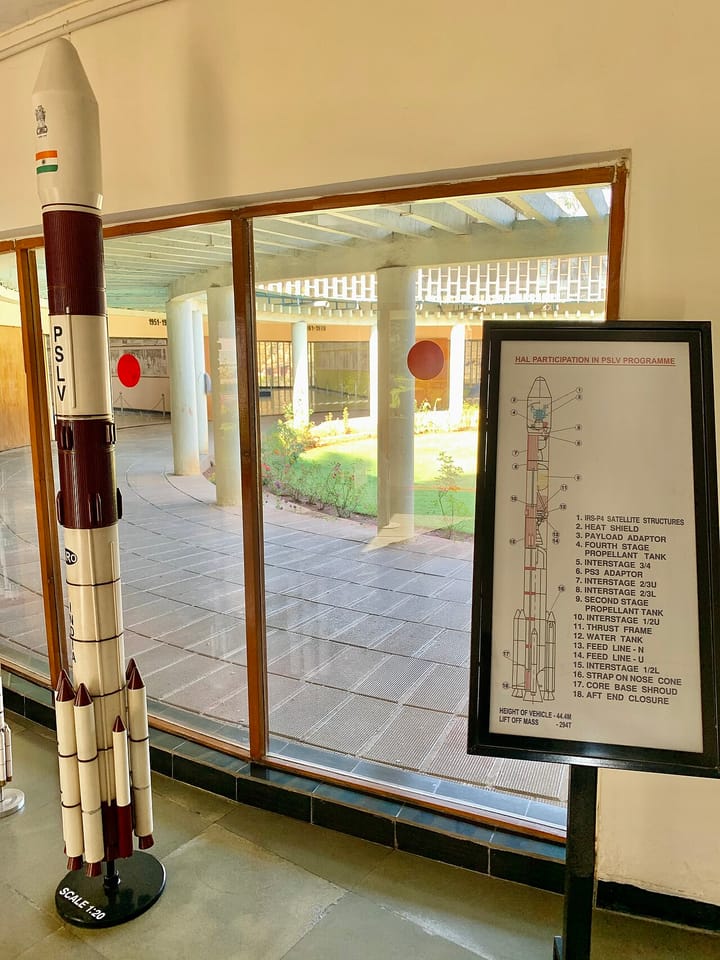
Vikram-1 is a three-stage rocket standing roughly 23 metres tall, and its defining engineering choice is structural. It is India's first carbon-composite orbital launch vehicle, meaning the airframe and motor casings are built from carbon-fibre-reinforced polymer rather than the aluminium alloys and steel that dominate legacy designs. The payoff is mass fraction. Composite structures can shave 30 percent or more off dry mass versus metallic equivalents, and in a launch vehicle every kilogram removed from the structure is a kilogram that can be added to payload or propellant. For a small launcher, where payload margins are thin, that is the difference between a viable manifest and a vanity flight.
The propulsion architecture leans on solid motors for the primary stages. Solid rocket motors store fuel and oxidiser together in a cast grain, which gives them high thrust density, long shelf life and far simpler ground handling than cryogenic liquid stages. They cannot be throttled or restarted, which is the trade-off, but for a stack designed around responsive, low-touch operations that simplicity is a feature. Skyroot's heritage motors, derived from its earlier Vikram-S sub-orbital demonstrator flown in 2022, use carbon-composite casings to keep the propulsion mass budget aligned with the airframe.
The last-mile problem is solved differently. Vikram-1 carries a liquid Orbital Adjustment Module, an upper stage with a restartable liquid engine that fine-tunes the final orbit after the solid stages have done the heavy lifting. This matters commercially because rideshare and dedicated small-sat customers increasingly demand precise insertion into specific planes and altitudes, not just "to orbit". The OAM lets Skyroot offer last-mile delivery and multi-orbit deployment on a single flight, a capability that turns a launcher into a logistics service.
Payload, unit economics and the manifest
Vikram-1 is rated to carry up to 350 kg to low Earth orbit. That places it squarely in the dedicated small-launch segment, the same band contested by Rocket Lab's Electron and Firefly Aerospace's Alpha, and it is a deliberate position. The economic logic of small launch is contested globally, because rideshare on large vehicles such as SpaceX's Falcon 9 has driven the price-per-kilogram floor very low. The counter-argument, and Skyroot's thesis, is schedule and orbit control. Operators of small constellations pay a premium for a launch on their timeline, to their orbit, without waiting for a rideshare slot to fill. Carbon-composite construction and solid motors are the levers Skyroot is pulling to make that premium service profitable rather than merely available.
Demand, the company says, is split roughly one-third domestic and two-thirds international. That mix is significant. It signals that Skyroot is not building a vehicle dependent on captive Indian government payloads but is competing for the global commercial small-sat manifest, where the addressable market is larger and the pricing is set by Rocket Lab and Firefly. India's structural advantage is cost: lower engineering labour costs and a maturing domestic supply chain, inherited in part from ISRO's decades of solid-motor and composites work, give Indian launchers a plausible path to undercutting Western competitors on price while matching them on service.
Credibility on the technical side is reinforced by personnel. Former ISRO chairman S. Somanath serves as Skyroot's honorary Chief Technical Advisor, a signal both to customers and to the regulator that the company's engineering is anchored in India's proven launch heritage rather than starting from a blank sheet.
Policy tailwind and the de-risking moment
Skyroot's path was cleared by the 2020 opening of India's space sector to private participation and the creation of IN-SPACe as the authorisation and facilitation body. That reform let private firms access ISRO facilities, including the Sriharikota range, and build flight hardware that previously sat exclusively inside the public sector. The Department of Space's FY26-27 budget of ₹13,705.63 crore, modestly up 2.16 percent, is explicitly oriented toward commercialisation and public-private partnership, and a private orbital success would validate that policy direction in the most tangible way possible.
The investor stakes are concentrated in a single event. A successful Vikram-1 orbital flight de-risks the entire Indian private-launch thesis. It would prove that an Indian startup can move from sub-orbital demonstration to commercial orbital delivery, that domestic composites and solid-motor manufacturing can meet flight reliability, and that international customers will trust an Indian vehicle with their payloads. That validation extends beyond Skyroot to peers such as Agnikul Cosmos and the broader supply chain, and it is why the round and the launch are best read together rather than separately.
Risks and the realistic read
The caveats are real and should temper the unicorn headline. Maiden orbital flights fail often; first attempts by Rocket Lab, Firefly and Astra all encountered failures before reaching orbit, and a slip from the targeted June 2026 window would be unremarkable by industry standards. The valuation, at roughly $1.1 billion, is set ahead of any orbital revenue, so it prices in execution that has not yet happened. Small-launch unit economics remain unproven worldwide, and a single successful flight does not establish a profitable cadence; the harder problem is flying often, reliably and cheaply enough to clear a manifest at margin.
What Skyroot has done is convert capital and policy into flight-ready hardware on a national range, with a credible technical pedigree and a manifest weighted toward the global commercial market. The carbon-composite airframe and the liquid Orbital Adjustment Module are not marketing; they are the specific engineering bets that, if they fly, make the business defensible. The orbital attempt around June 2026 will determine whether India's private launch industry has a flagship or a cautionary tale, and the answer arrives soon.
Tags
More from Space Technology
U-Space and AXISCADES Sign Cooperation Deal to Explore India's Microsatellite Market
French space company U-Space and Bengaluru's AXISCADES have signed a commercial cooperation agreement to jointly pursue India's microsatellite market, one of three India-France private space deals struck at the Paris International Space Summit.
RIDE! Targets Q3 2028 Launches for Two TakeMe2Space Satellites
The launch-services agreement covers mission management for two spacecraft in the Hyderabad company’s planned orbital-computing constellation. It is a future deployment commitment, not evidence that the network is operating.