
Ola Electric Enters Grid-Scale Storage With First 'Mahashakti' Deal — 20 GWh With Axis Energy
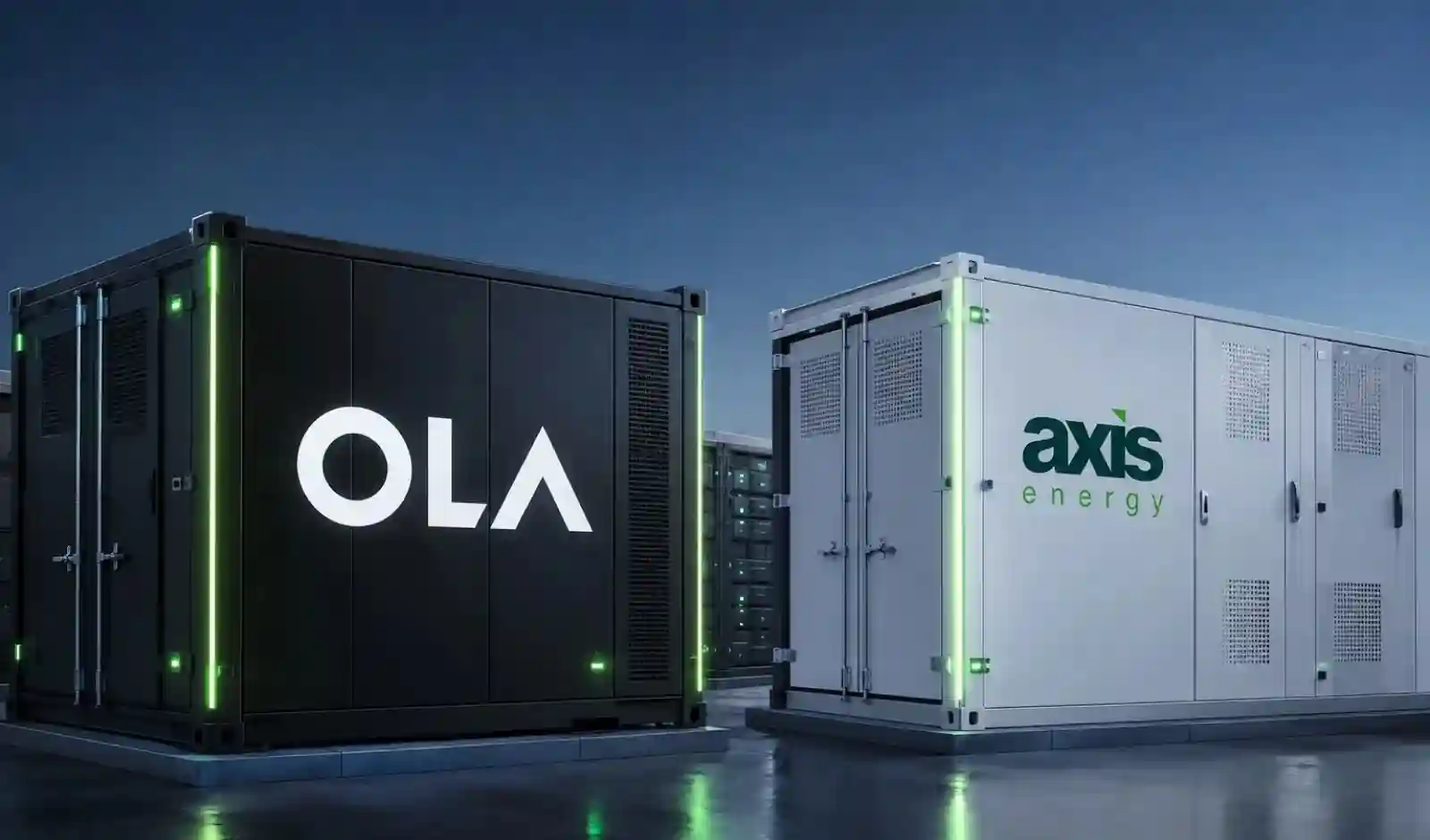
Ola Electric has signed its first partnership under a new grid-scale storage venture, Mahashakti, agreeing with developer Axis Energy to deploy up to 20 GWh of battery energy storage by 2032. The deal pushes the scooter-maker's cell ambitions well beyond electric vehicles.
Manik Gupta
Founder and editor of DeepTech India. Manik writes about India's frontier technology ecosystem — AI, semiconductors, space, quantum, robotics and biotech — translating research and policy into clear, reliable reporting.
A scooter-maker steps onto the grid
Ola Electric, best known for its electric scooters and the lithium-ion cell factory it is building in Tamil Nadu, is moving into a very different corner of the energy business. On 5 August 2026 the company said it had signed its first partnership under a new grid-scale storage venture it calls Mahashakti, agreeing with renewable-energy developer Axis Energy to deploy up to 20 gigawatt-hours (GWh) of battery energy storage systems (BESS) by 2032.
The memorandum of understanding is non-binding, but it is the clearest signal yet that Ola intends to sell batteries by the megawatt-hour to power producers and industrial users, not just package them into two-wheelers. Investors responded quickly: Ola Electric shares climbed about 10% on the day of the announcement.
What Mahashakti is
Mahashakti is Ola's planned utility-scale energy-storage business, which the company said it will formally launch on 15 August 2026. It targets three markets — utility-scale storage for the grid, and commercial and industrial (C&I) installations — where large battery banks store surplus solar and wind power and release it when the sun sets or demand peaks.
Under the proposed arrangement, deployments would ramp gradually, with annual installations reaching about 5 GWh a year from 2028 onwards and building toward the 20 GWh cumulative figure by 2032. "India will need energy storage at a massive scale," Ola Electric chairman and managing director Bhavish Aggarwal said, describing Axis Energy as "our first large-scale partner and an important early validation of Mahashakti's potential."
Why Axis Energy
Axis Energy brings the pipeline. The developer has secured grid-connectivity approvals for more than 3,750 MW of projects across Andhra Pradesh and Rajasthan, and has an additional project pipeline of roughly 3,500 MW. For Ola, that is a ready channel of renewable projects that will need storage bolted on as India tightens rules requiring solar and wind plants to firm up their output.
The cells behind the ambition
The move leans on infrastructure Ola has already built. Its gigafactory in Krishnagiri district, Tamil Nadu, produces lithium-ion cells — beginning at an initial 5 GWh of annual capacity and designed to scale in phases toward 100 GWh. Redirecting part of that output into stationary storage gives the factory a second, potentially large customer base beyond electric vehicles.
The timing tracks a genuine national need. The Central Electricity Authority has estimated that India will require more than 400 GWh of energy storage by 2032 to balance a grid that is adding renewable capacity far faster than dispatchable power. Storage is the missing piece that lets cheap daytime solar be shifted into the evening peak.
A crowded, capital-heavy race
Ola is not alone. Reliance, Amara Raja, Exide and others are building cell lines, and a wave of pumped-hydro and battery-storage tenders from agencies such as SECI has begun to define the market. An MoU is only a statement of intent, and Ola Electric — which has faced questions about service quality and profitability in its core scooter business — will have to show it can execute at grid scale and on cost.
Still, the announcement reframes what Ola is trying to be. If Mahashakti delivers, the company that set out to electrify India's commutes could end up as a supplier to the power system those commutes run on.
Sources
- Business Standard — Ola enters utility-scale battery storage with first Mahashakti partnership
- Inc42 — Ola Electric shares jump after signing BESS MoU with Axis Energy
- SaurEnergy — Ola Electric expands into utility-scale BESS with 20 GWh Axis Energy partnership
- BioEnergy Times — Ola Electric signs first Mahashakti MoU with Axis Energy for 20 GWh storage
Tags
More from Energy Tech
Magna Doubles Down on Yuma Energy With $35 Million to Scale India's Battery-Swapping Network
Automotive supplier Magna International has put a further $35 million into Yuma Energy, the battery-swapping venture it co-founded with Yulu, to expand the network past 60 million swaps.
India Weighs a ₹13,000 Crore Push to Build the Battery Materials It Still Imports From China
A proposed incentive scheme would target anode, cathode, electrolyte, separator and copper-foil manufacturing — the upstream layer India's battery gigafactories still depend on Chinese suppliers for.