Meril's MISSO and the Push for Affordable Indigenous Surgical Robots
Meril's MISSO, a 100% Made-in-India knee-replacement robot priced 66% below incumbents, attacks Stryker's Mako on cost and signals India now has multiple indigenous surgical-robot OEMs.
Manik Gupta
Founder and editor of DeepTech India. Manik writes about India's frontier technology ecosystem — AI, semiconductors, space, quantum, robotics and biotech — translating research and policy into clear, reliable reporting.
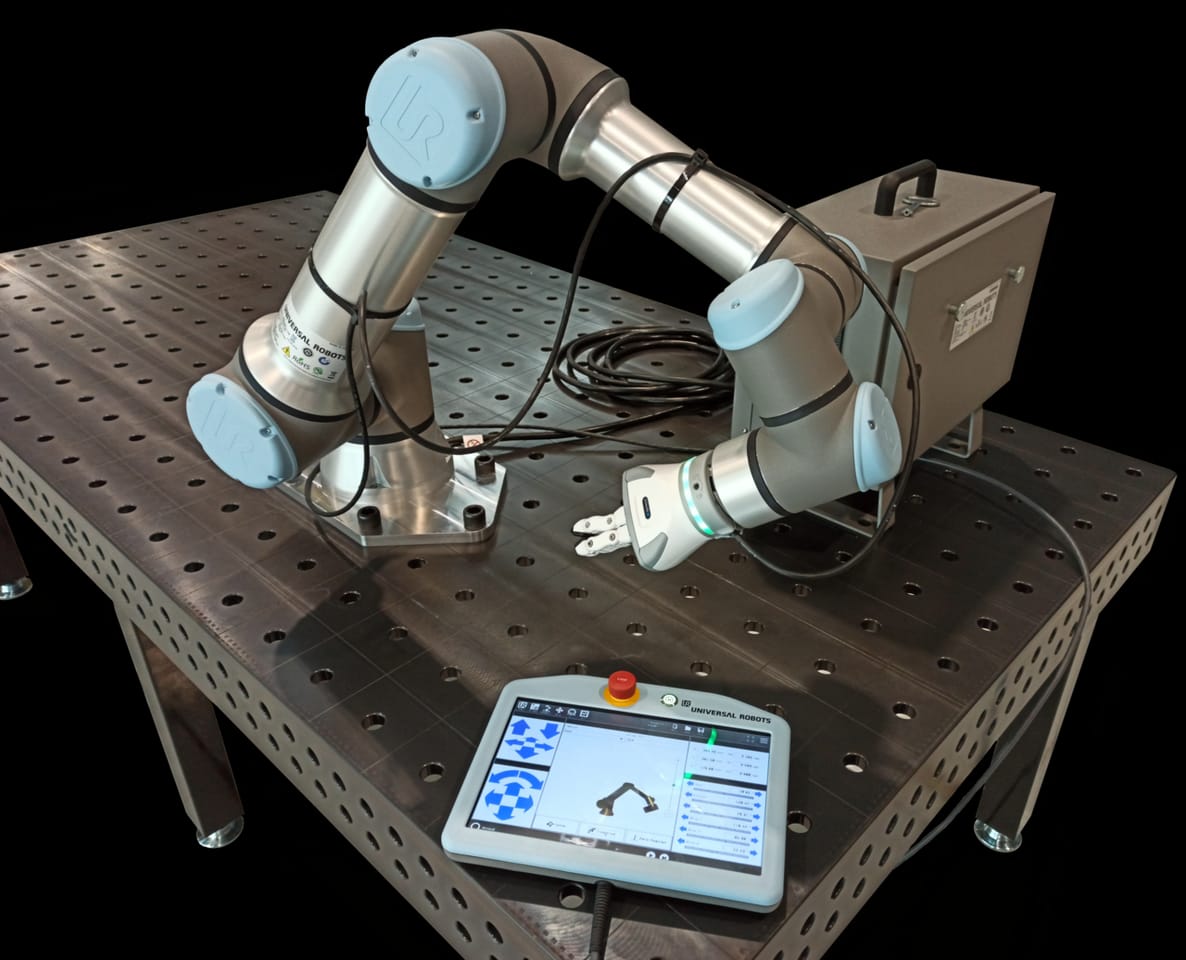
Meril Life Sciences has entered the surgical-robotics race from a different direction than most: not with a general-purpose platform but with a focused, low-cost orthopaedic system aimed squarely at the hospitals that incumbents have priced out. The Vapi, Gujarat company has unveiled MISSO, which it describes as a "100% Made in India" robotic-assisted system for knee replacement, built around AI-driven pre-operative planning and targeted explicitly at Tier-2 and Tier-3 hospitals. The product matters less as a single device than as a marker that India now has more than one indigenous surgical-robot original equipment manufacturer.
Attacking orthopaedic robotics on cost
MISSO is positioned against the established orthopaedic-robotics incumbent, Stryker's Mako system, which dominates robotic knee and hip replacement globally. Meril's wedge is price. The company has priced MISSO at roughly 66% below incumbent systems, a discount steep enough to change the capital-budgeting calculus for mid-tier hospitals that could never justify a Western robotic platform on their procedure volumes.
The clinical pitch rests on the software. MISSO uses AI-driven pre-operative planning to map the patient's anatomy and plan implant positioning before the surgeon enters the operating theatre. Meril claims the system delivers a 98% success rate and an 83% reduction in pre-operative planning time, the latter being the more concrete efficiency argument: shrinking planning from a labour-intensive manual exercise to a largely automated one improves surgeon throughput and lowers the per-procedure cost of using the robot. These are company claims, not independent trial outcomes, and should be read as such until peer-reviewed data follows.
Regulatory status is partway there. MISSO is approved by the CDSCO, India's Central Drugs Standard Control Organisation, which clears it for the domestic market. CE and FDA approvals are pending, meaning European and US market access remains ahead of the company rather than secured. The architecture is designed to be extensible to other joints beyond the knee, which is the platform optionality that would let Meril amortise its R&D across a wider procedure base over time.
Two Indian OEMs, two segments
The strategic significance is structural. With MISSO, India now has at least two credible indigenous surgical-robot makers occupying distinct segments: Meril in orthopaedics, and SS Innovations in general and cardiac surgery with its SSi Mantra. That is no longer a single-company curiosity but the early formation of a domestic surgical-robotics industry, each player attacking a different incumbent, Stryker's Mako on one side, Intuitive's da Vinci on the other, with the same fundamental weapon of cost.
The thesis aligns with the affordability narrative that NITI Aayog, the government's policy think tank, has championed: indigenous manufacturing that brings advanced medical technology within reach of the broader hospital market rather than concentrating it in a handful of metropolitan tertiary centres. For an investor, the addressable market is the long tail of Tier-2 and Tier-3 hospitals that perform meaningful knee-replacement volumes but have been structurally excluded from robotic surgery by capital cost.
The honest caveats
The risks are familiar for a new surgical-robot entrant. The performance figures are company-stated and await independent validation; a 98% success-rate claim in particular needs peer-reviewed, multi-centre evidence before it carries clinical weight. CE and FDA clearances are pending, so international expansion is a plan, not a present capability. And competing against Stryker means competing not just on the device but on the surgeon training, service network and clinical-evidence base that an entrenched incumbent has built over years. Cost disruption opens the door; clinical trust, distribution and proven outcomes are what determine whether MISSO walks through it.
Tags
More from Robotics
BonV Aero Joins GENIUS NY’s Tenth Cohort for Heavy-Lift Drone Development
The Odisha company is one of five finalists in the yearlong accelerator, with investment awards to be decided at the May 2027 pitch finals.
Alteon Raises $2.5 Million to Build Aircraft That Ride Ocean Wind Like an Albatross
Bengaluru's Alteon has raised a $2.5 million pre-seed round to build autonomous aircraft that use dynamic soaring — the wind-shear trick albatrosses use — to stay airborne for months without fuel.