
ISRO Goes All-Electric on the LVM3's Boosters, Quietly Banking ~150 kg of Payload
On its 24 December 2025 LVM3-M6 mission, also ISRO's 100th orbital launch, ISRO debuted electromechanical actuators on the giant S200 solid boosters, replacing hydraulics. The switch trims inert mass and adds an estimated 150 kg of payload, part of a steady upgrade path on India's heavy-lifter.
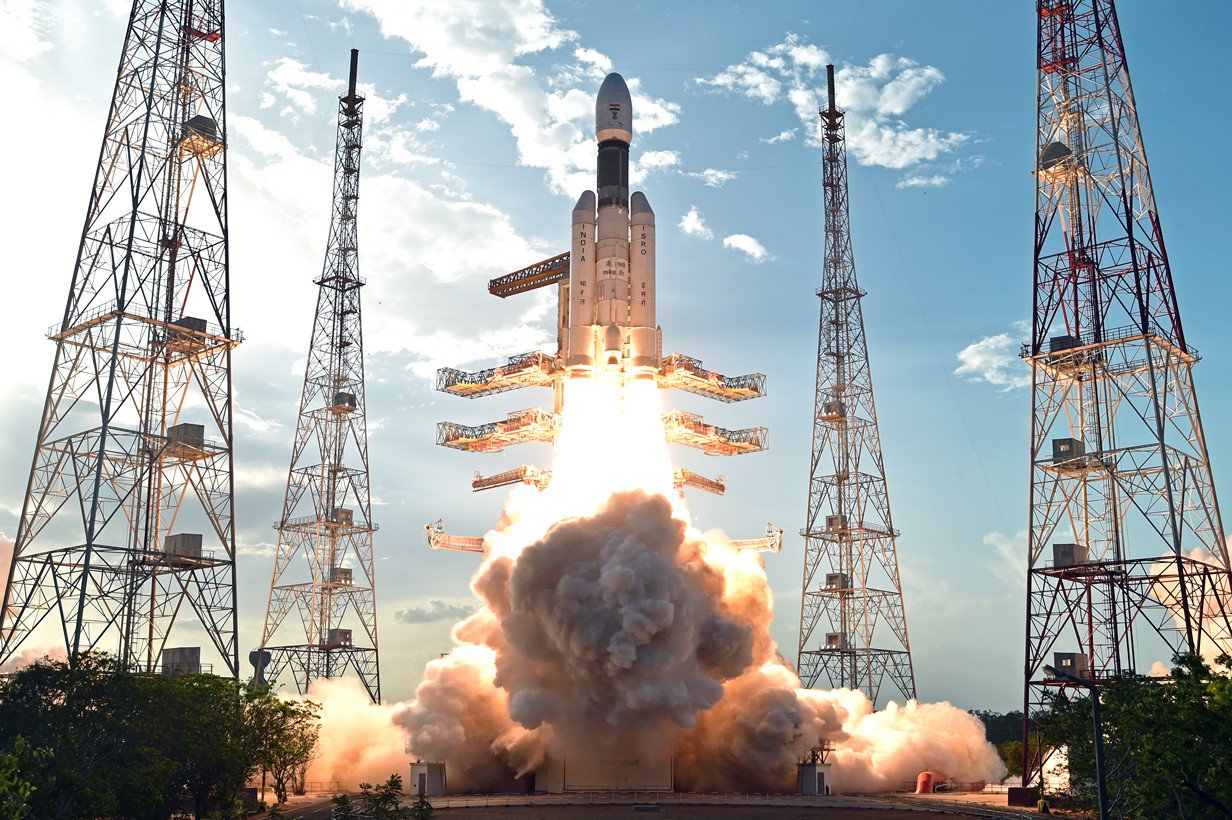
Some of the most valuable engineering changes never make the headline. The LVM3-M6 mission on 24 December 2025 got its attention for the right reasons, it was ISRO's 100th orbital launch since SLV-3 in 1980, and it lofted AST SpaceMobile's roughly 6,100 kg BlueBird Block-2 satellite to low Earth orbit under a commercial contract through NSIL. But the upgrade worth dwelling on flew on the rocket's giant solid boosters.
The quiet first
For the first time, the S200 solid boosters, the two enormous motors that provide most of the LVM3's lift-off thrust, used electromechanical actuators (EMAs) to steer their nozzles for thrust-vector control, replacing the hydraulic (electro-hydraulic) actuation used until now. According to VSSC, the move contributes on the order of 150 kg of additional payload capability across the vehicle (roughly 85 kg per stage as the technology is adopted more widely).
Why swap hydraulics for electric motors
Hydraulic actuation is powerful but heavy and fussy: it needs pumps, high-pressure fluid, accumulators and plumbing, all of which add mass and failure modes, and the fluid itself is a hazardous, leak-prone consumable. Electromechanical actuators replace that with electric motors and drive electronics. The benefits stack up:
- Less inert mass, which converts directly into payload.
- Fewer failure modes and no hazardous fluids, improving reliability and simplifying ground handling.
- Faster, cleaner turnaround, and a better fit for the reusable, "more-electric" launch vehicles the whole industry is moving toward.
It is the same philosophy, replacing hydraulics with electrics, that has reshaped modern aircraft, now applied to a heavy-lift rocket's most powerful stage.
The cumulative game
A 150 kg gain may sound modest against a 640-tonne vehicle, but launch competitiveness is won in exactly these increments. Every kilogram added to capacity is a kilogram NSIL can sell, and the EMA upgrade stacks on top of other improvements working through the LVM3, including the planned semi-cryogenic core (SC120) and uprated C32 cryogenic stage expected to push GTO capacity from about 4,200 kg toward 5,200 kg later this decade.
For the ecosystem, there is also a supply-chain story: space-grade actuators and their power electronics are precisely the kind of high-value components an indigenous base needs to build. LVM3-M6 will be remembered as a milestone launch. The all-electric boosters are why it also mattered as an engineering one.