ISRO Lights a 3D-Printed Methane Engine: a Small Test With Outsized Implications
On 27 January 2026 ISRO hot-fired a sub-scale LOX-methane thrust chamber whose chamber and injector were entirely 3D-printed, reaching 56 bar with stable combustion. It is an early step, but it points at two futures at once: methane as India's reusable-rocket propellant, and additive manufacturing as the way those engines get built.
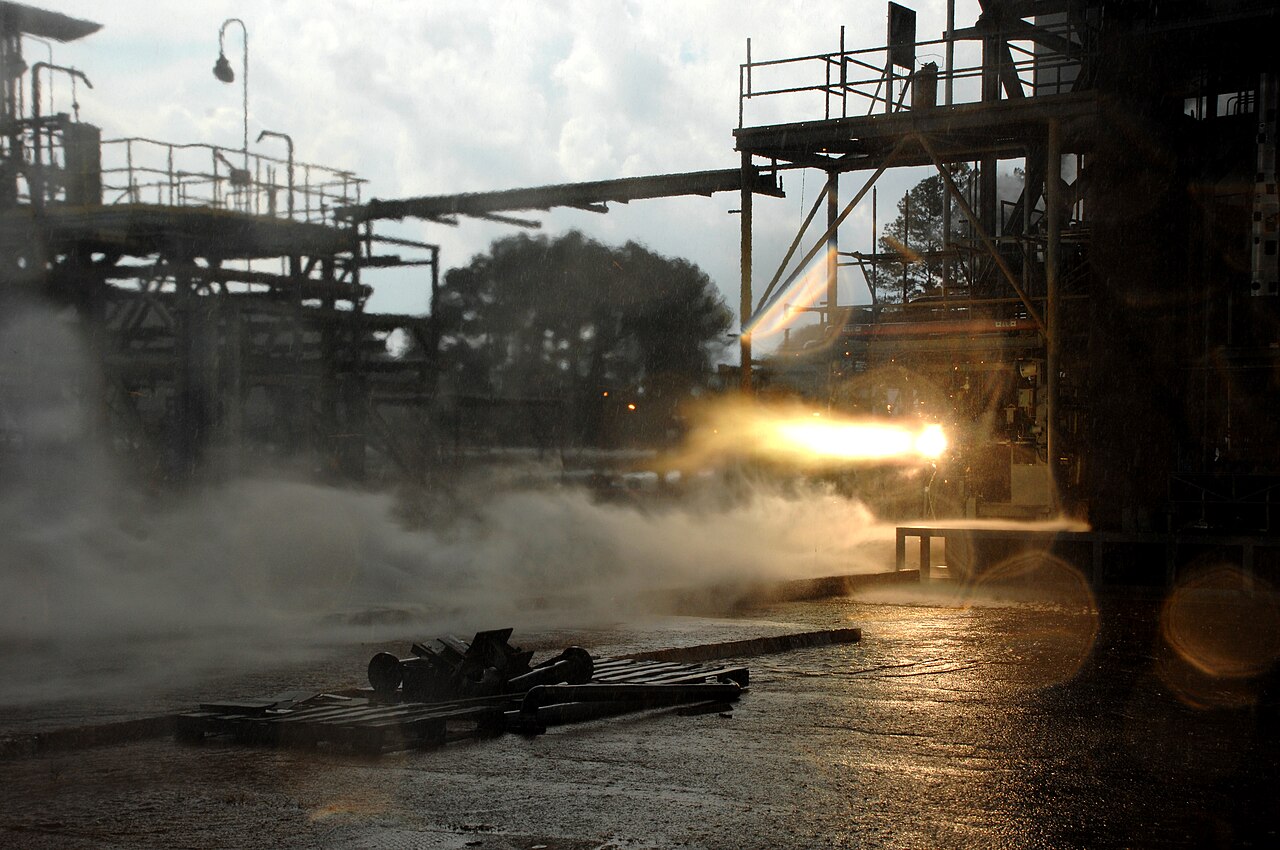
It lasted only moments and produced a sub-scale flame, but the hot test ISRO ran on 27 January 2026 at the Thrust Chamber Test facility of the ISRO Propulsion Complex, Mahendragiri, is the kind of quiet milestone that compounds. Engineers at the Liquid Propulsion Systems Centre (LPSC) fired the high-thrust thrust chamber of a developmental LOX-methane engine, fitted with a single-element injector, and recorded ignition and sustained combustion at a chamber pressure of about 56 bar, with all systems nominal.
Two design choices make it matter: the propellant, and the way the part was made.
Why methane
ISRO's operational engines run on solids, hypergolics and the hydrogen-oxygen cryogenic combination. Methalox (liquid oxygen + liquid methane) is the propellant of the moment for good reasons:
- Reusability. Methane burns cleanly, leaving little of the soot ("coking") that fouls kerosene engines, so chambers and turbopumps survive repeated flights with less refurbishment, the foundation of a reusable rocket.
- Performance and density. It sits between hydrogen and kerosene, offering strong efficiency without hydrogen's bulky, deeply cryogenic tankage.
- Deep-space logic. Methane can, in principle, be made on Mars from the atmosphere and water ice, which is why it features in long-range exploration roadmaps.
- Safety and handling are easier than for hypergolics, which are toxic and corrosive.
This is the same calculus driving SpaceX's Raptor, Blue Origin's BE-4, ESA's Prometheus and China's methalox startups. India's Next Generation Launch Vehicle (NGLV) programme, conceived as a partly reusable, heavy-lift successor to the current fleet, is the obvious home for a mature methane engine.
Why "3D-printed" is the real story
Both the sub-scale chamber and the injector head were realised through additive manufacturing. Rocket injectors and regeneratively cooled chambers are among the most intricate parts in any machine, dense with internal cooling channels and propellant passages that are painful, slow and expensive to make by traditional machining and brazing. Printing them collapses dozens of welded components into a single part, slashes lead time, and unlocks internal geometries (optimised cooling, mixing) that simply cannot be machined.
That is why ISRO is iterating quickly: the test piece will now be re-fired in a series to home in on the optimal injector configuration, the parameter that governs combustion stability and efficiency.
The bigger picture
For investors and the wider ecosystem, the signal is twofold. First, India is methodically building toward reusable, cleaner propulsion, the prerequisite for bringing down cost-to-orbit and competing in the commercial launch market that NSIL and a clutch of NewSpace startups are chasing. Second, it validates a domestic additive-manufacturing supply chain for flight-critical metal parts, capability that spills directly into aero-engines, defence and high-end manufacturing. A 56-bar sub-scale firing is not a flight engine. But it is the kind of foundational step that, repeated and scaled, decides who builds the next generation of launch vehicles.