
ISRO Fires the CE20 for LVM3-M7, Debuting a Nozzle Shield to Guard Its 22-Tonne Upgrade
ISRO has cleared the CE20 cryogenic engine for its next heavy-lift flight, LVM3-M7, firing it at up to 22 tonnes of thrust and debuting a Nozzle Protection System for the first time in an acceptance test.
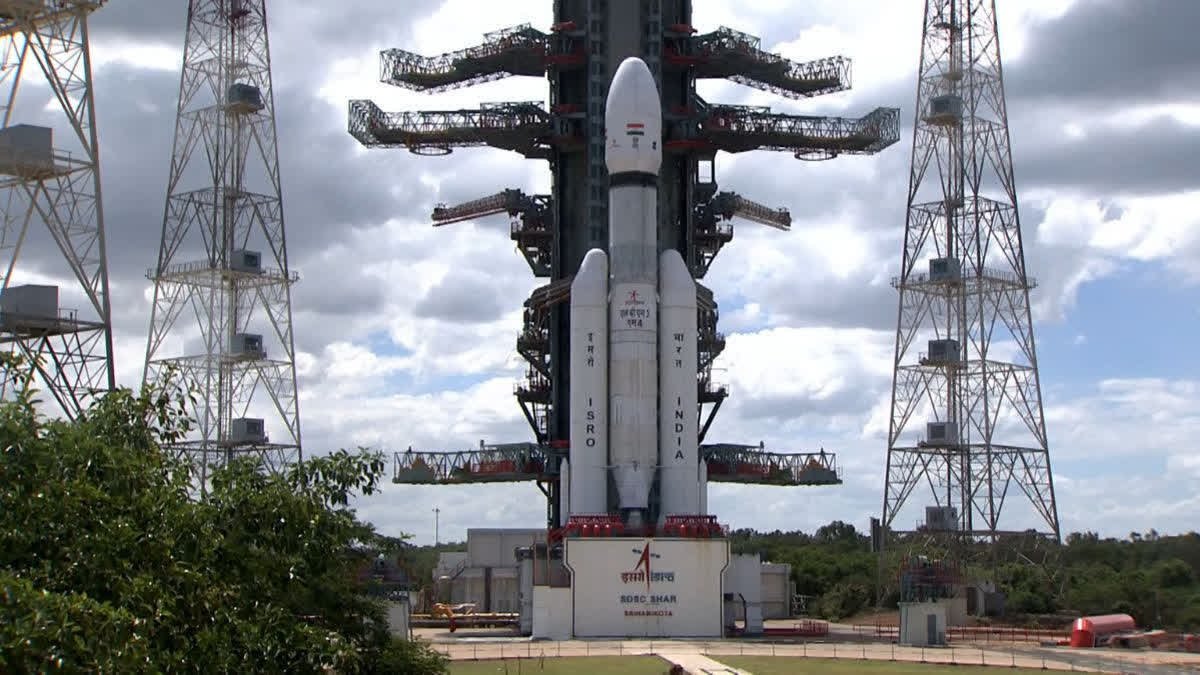
A quiet gate before the next heavy-lift flight
The Indian Space Research Organisation has cleared the cryogenic engine that will power the upper stage of its next heavy-lift mission — and it used the occasion to try out a piece of hardware it had never put through an acceptance firing before.
On 6 July 2026, ISRO carried out the flight acceptance hot test of the CE20 cryogenic engine earmarked for LVM3-M7, the seventh operational flight of the Launch Vehicle Mark-3, the most powerful rocket India flies. The test was conducted at the main engine and stage test facility at the ISRO Propulsion Complex (IPRC) in Mahendragiri, Tamil Nadu, the same site where every CE20 that has flown was first proven on the ground.
Flight acceptance testing is one of the least glamorous but most consequential steps in a launch campaign. Every cryogenic engine that ISRO flies is fired on a test stand under flight-like conditions before it is accepted for a mission, so that the exact engine bound for the rocket has demonstrated that it starts cleanly, holds its thrust and shuts down as designed. A green result here is what lets the rest of the LVM3-M7 stack move toward assembly.
The new element: a nozzle protection system
What made this particular test notable was the debut of a Nozzle Protection System (NPS). According to ISRO, this was the first time the NPS was used in such a hot test. During the run the engine was operated at a thrust level of about 19.5 tonnes for 45 seconds and then at 22 tonnes for 25 seconds, and the agency reported satisfactory performance from both the engine and the protection system.
The reason a shield matters comes down to a peculiarity of the CE20. Like most upper-stage engines, it carries a large, vacuum-optimised nozzle designed to work in the near-emptiness of space. When such a nozzle is fired at sea level — as it must be on a ground test stand — the dense atmosphere pushes back against the exhaust, producing uneven flow and mechanical stress that the nozzle would never see in flight. ISRO has grappled with this before; in an earlier campaign it deliberately hot-tested the CE20 at 22 tonnes at sea level with a full-area nozzle specifically to characterise those loads. A nozzle protection system is aimed squarely at that problem, guarding the hardware through the punishing seconds of a ground firing so the flight article reaches the pad intact.
Why the 22-tonne number keeps recurring
The CE20 has quietly become one of ISRO's most important workhorses. It powers the C25 upper stage of the LVM3 and is qualified to operate across a thrust band of roughly 19 to 22 tonnes. For most of its flying career it operated near the lower end of that range; the push to 22 tonnes is an uprating exercise that buys extra payload without redesigning the rocket around it.
That headroom is not academic. LVM3 lifts off at around 640 tonnes and stands more than 43 metres tall, and its payload ceiling is what determines which satellites India can loft on its own soil rather than paying for a foreign ride. Squeezing more thrust out of the cryogenic upper stage is one of the cheapest ways to move that ceiling upward, which is why each successful high-thrust CE20 test tends to be reported in tonnes rather than in adjectives.
What rides on LVM3-M7
The engine cleared on 6 July is not a prototype but a flight unit for a specific upcoming mission. The LVM3 has an unbroken run of operational successes behind it, having delivered Chandrayaan-2 and Chandrayaan-3 to the Moon and flown commercial constellations, including two OneWeb batches and, more recently, the heaviest payload ISRO has ever launched — the roughly 6,100 kg BlueBird Block-2 satellite placed in low Earth orbit for a US operator. Every one of those flights leaned on a CE20 that first passed an acceptance test at Mahendragiri.
The same engine family also carries a heavier responsibility. The CE20 has completed the human-rating qualification required for Gaganyaan, India's crewed spaceflight programme, which means the discipline visible in a routine acceptance firing is the same discipline that will eventually underwrite flights with astronauts aboard. Tests like this one — incremental, unglamorous, meticulously instrumented — are how a launch vehicle earns the reliability that a crew rating demands.
For now, the takeaway is narrower and concrete: the cryogenic engine for LVM3-M7 has been fired, a new nozzle protection system has been shown to work, and the uprated 22-tonne CE20 has passed another gate on its way to the pad.
Sources
- ISRO successfully conducts flight acceptance test of cryogenic engine for next LVM3 mission — ETV Bharat
- High Thrust Cryogenic Engine (CE20) Development — ISRO
- ISRO conducts sea level test of cryogenic engine at 22 tonne thrust level with full area nozzle — ISRO
- LVM3-M6 / BlueBird Block-2 Mission — ISRO
- CE-20 — Wikipedia