Agnikul and Finland's ICEYE Sign On to Build India a Sovereign Radar-Satellite Chain
Chennai's Agnikul Cosmos has signed an MoU with Finland's ICEYE to explore an end-to-end, India-built synthetic aperture radar constellation — satellites made locally and launched on Agnikul's indigenous Agnibaan rocket.
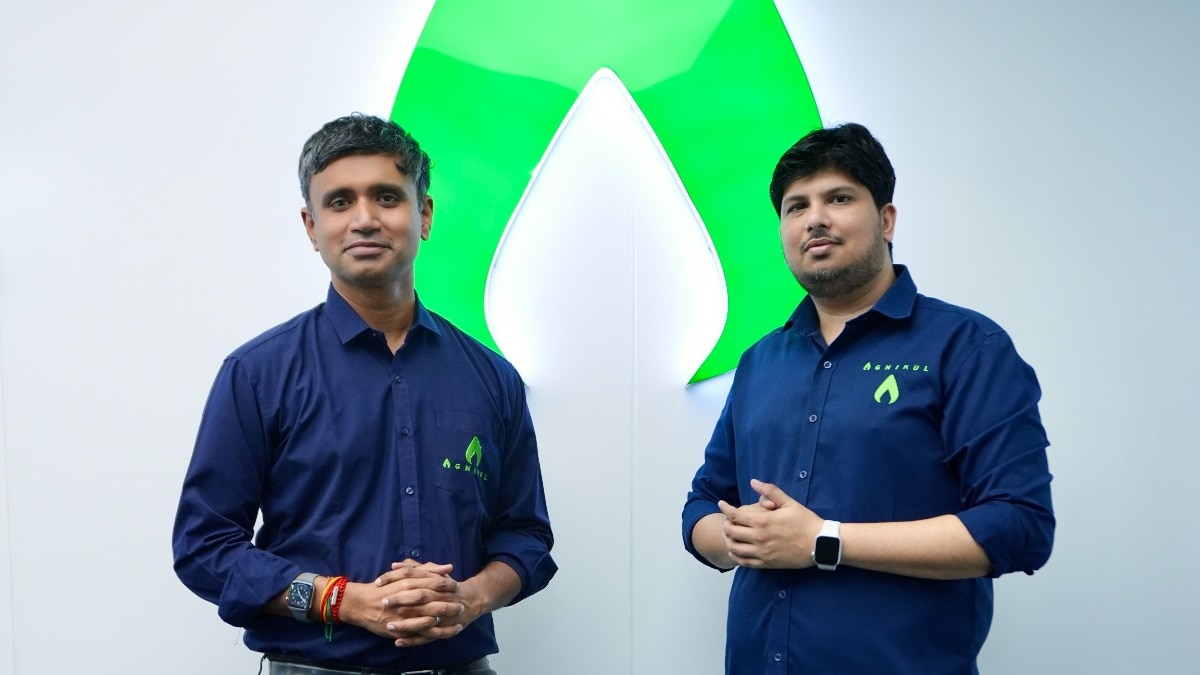
India''s push to see the Earth from space without depending on anyone else took a step forward at the end of June, when Chennai-based launch startup Agnikul Cosmos signed a memorandum of understanding with Finland''s ICEYE, the world''s largest operator of small radar-imaging satellites. Announced around 30 June and 1 July at the Bharat Innovates summit in Nice, France — an event attended by Prime Minister Narendra Modi and French President Emmanuel Macron — the agreement sets out to explore an end-to-end, made-in-India synthetic aperture radar (SAR) Earth-observation capability.
Radar eyes that ignore the weather
The technology at the centre of the deal is SAR. Unlike optical cameras, which need daylight and clear skies, synthetic aperture radar bounces microwave pulses off the surface and reconstructs an image from the echoes. That means it can see through clouds, smoke and darkness — a decisive advantage over a country like India, where the monsoon can blanket large regions for weeks and where round-the-clock monitoring of borders, coastlines and disaster zones is a standing requirement.
ICEYE has turned that capability into a business at scale. The company operates a constellation of more than 70 SAR satellites and has already supplied sovereign satellite systems to governments in Europe, giving individual states their own dedicated radar-imaging assets rather than access shared with commercial customers. It is that sovereign-capability playbook the two companies now want to reproduce in India.
Who does what
Under the MoU, the division of labour is straightforward. ICEYE will explore setting up satellite manufacturing capabilities inside India, bringing its SAR payload and platform know-how to local production lines. Agnikul, in turn, would provide the ride to orbit through its Agnibaan small-satellite launch vehicle. The stated goal is an integrated chain — satellites designed and built in India, then launched on an Indian rocket — so that the whole pipeline, from factory to orbit, sits within the country and is not held hostage to foreign launch schedules or export controls.
That last point is the crux of the word "sovereign." Today an Indian operator wanting a radar constellation would likely buy satellites abroad and book launches on foreign rockets, accepting whatever queue and conditions come with them. A domestic build-and-launch chain removes those dependencies — valuable for commercial customers, and close to essential for defence and strategic users who cannot rely on another government''s goodwill for time-critical imagery.
Why Agnikul is the chosen ride
Agnikul is an unusual launch partner, and that is precisely the appeal. Incubated at IIT Madras, the company builds rocket engines as single-piece, 3D-printed units — no assembled parts — which sharply cuts manufacturing time and complexity. In May 2024 it flew Agnibaan SOrTeD, a sub-orbital technology demonstrator, from its own private launchpad inside the Sriharikota range. That flight logged several firsts: the world''s first flight powered by a single-piece 3D-printed engine, India''s first launch from a private launchpad, and India''s first flight of a semi-cryogenic engine.
The Agnibaan launch vehicle that would carry the SAR satellites is designed to be configurable and responsive — the kind of on-demand small launcher that a radar constellation, with its need to replenish and reposition satellites, actually requires. Pairing a flexible indigenous launcher with a proven SAR manufacturer is what makes the combination more than the sum of a press release.
An MoU, not yet a constellation
It is worth keeping expectations calibrated. This is a memorandum of understanding to explore a capability, not a signed contract to build and fly a fixed number of satellites on a fixed date. Satellite manufacturing lines, payload localisation and a scaled-up Agnibaan all still have to be stood up, and the commercial and strategic terms — who the customers are, how much sovereign capacity the Indian government wants, how it is financed — remain to be worked out.
Even so, the direction of travel is clear. The agreement fits a broader pattern in Indian space over the past two years, in which private companies increasingly take on roles once reserved for ISRO, and in which the policy emphasis has shifted from simply having capabilities to owning them outright. If the Agnikul-ICEYE partnership matures, India would gain something it currently lacks: a radar constellation it designs, builds and launches on its own terms — all-weather eyes over the subcontinent that answer to no one else.
Sources
- Agnikul, ICEYE tie up to explore sovereign satellite and launch system in India — Business Today
- ICEYE-AgniKul agreement puts India''s space startups in global orbit — Business Standard
- ICEYE chooses India for sovereign SAR mission; picks Agnikul Cosmos as launch partner — The Hindu (via Vision IAS)
- Agnibaan SOrTeD — Wikipedia