India's Warehouse-Robotics Players Scale With the Logistics Boom
Reliance-backed Addverb and peers like GreyOrange are scaling AMR, sortation and ASRS systems on India's quick-commerce boom, with PLI and reshoring turning the country into both market and export base.
Manik Gupta
Founder and editor of DeepTech India. Manik writes about India's frontier technology ecosystem — AI, semiconductors, space, quantum, robotics and biotech — translating research and policy into clear, reliable reporting.
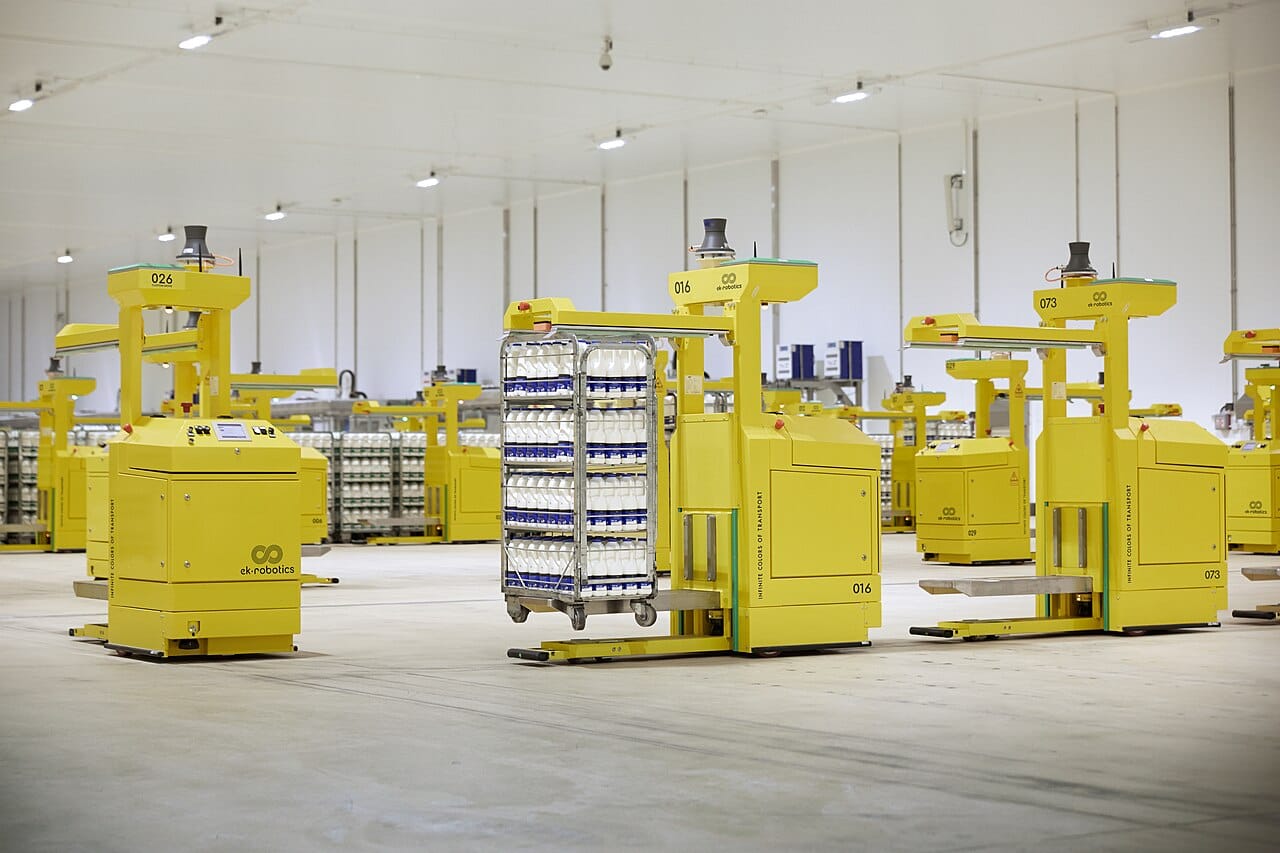
India's warehouse-robotics companies are scaling on the back of an e-commerce and quick-commerce logistics boom that has turned fulfilment speed into a competitive battleground. As same-day and ten-minute delivery models proliferate, the warehouse stops being a storage building and becomes a throughput engine, and that shift is driving demand for the autonomous mobile robots (AMRs), sortation systems and automated storage-and-retrieval (ASRS) infrastructure that domestic players build.
The players and the unit economics
Addverb Technologies, backed by Reliance, is among India's largest automation firms spanning both fixed and mobile systems. It builds AMRs, sortation lines and ASRS, and is expanding manufacturing capacity while pushing into export markets. Its peer set includes GreyOrange, whose Ranger mobile robots and GreyMatter fulfilment software target the same goods-to-person picking workflows. The competitive frontier is increasingly the software layer, the fleet-orchestration and warehouse-execution intelligence that coordinates dozens or hundreds of robots, rather than the hardware alone.
The investment case for AMR fleets is a labour-arbitrage and throughput story. A goods-to-person system brings inventory to stationary pickers instead of sending workers walking miles of aisle, lifting picks per hour and improving accuracy. The economics turn on fleet utilisation: the more orders flow through a given robot count, the faster the capital cost amortises, which is why peak-season volume and order density matter so much to the return. Unlike fixed conveyor automation, AMR fleets scale incrementally, letting operators add robots as volume grows rather than committing to a single large installation upfront.
Two structural tailwinds support the sector. Domestically, the Production Linked Incentive scheme and broader reshoring of manufacturing expand the industrial base that buys automation. Internationally, India is positioning as an export base for automation hardware, not merely a deployment market, giving firms like Addverb a second growth vector beyond domestic warehouses. The watch-items are familiar for capital-intensive hardware: margin pressure as the category commoditises, and dependence on continued logistics-sector capital spending that can soften if consumption slows.
Tags
More from Robotics
BonV Aero Joins GENIUS NY’s Tenth Cohort for Heavy-Lift Drone Development
The Odisha company is one of five finalists in the yearlong accelerator, with investment awards to be decided at the May 2027 pitch finals.
Alteon Raises $2.5 Million to Build Aircraft That Ride Ocean Wind Like an Albatross
Bengaluru's Alteon has raised a $2.5 million pre-seed round to build autonomous aircraft that use dynamic soaring — the wind-shear trick albatrosses use — to stay airborne for months without fuel.