India's Private Space Sector Puts a Number on Itself: Two Commercial Launches This Year, Six-Plus Next
Union Minister Jitendra Singh told Parliament on 13 August 2026 that Indian private companies plan two commercial launches in FY 2026-27 and more than six in FY 2027-28 — the first time the government has quantified private orbital activity beyond a single mission.
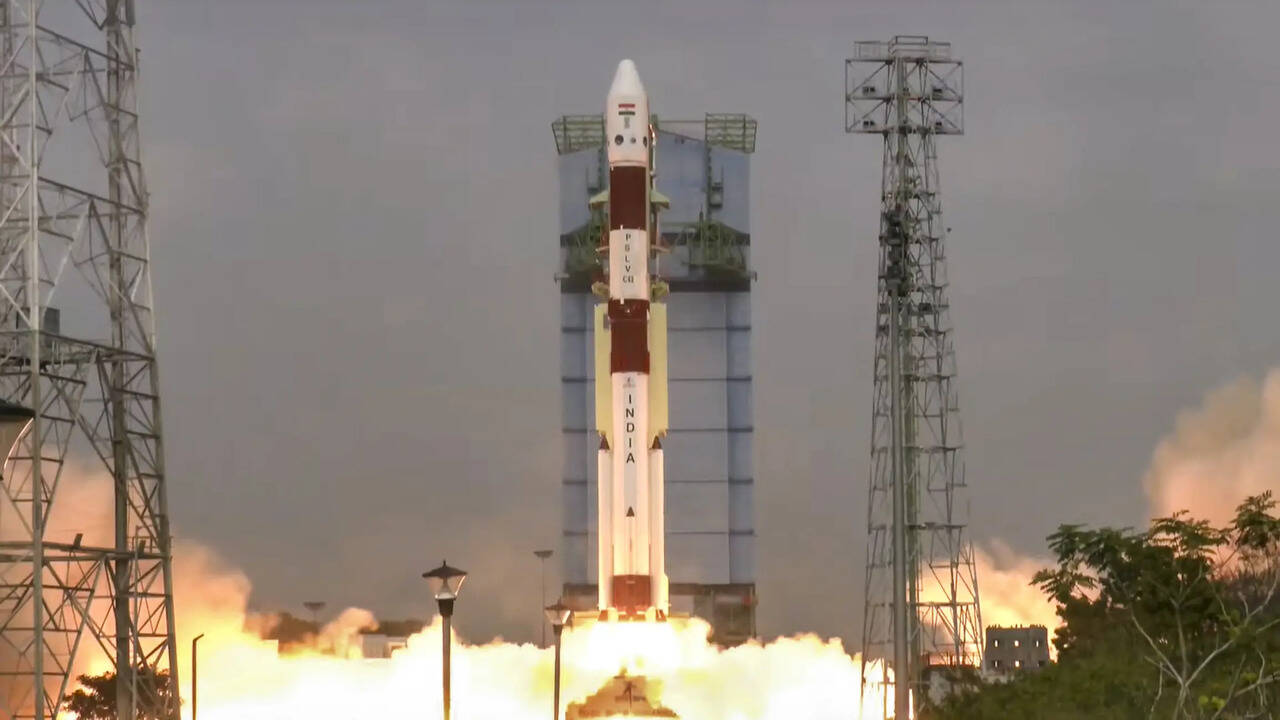
India's private launch industry is about to graduate from one-off demonstrations to a rolling manifest. In a written reply in Parliament on 13 August 2026, Union Minister Dr. Jitendra Singh told the Lok Sabha that Indian private companies plan to undertake two commercial launches in FY 2026-27 and more than six in FY 2027-28 — the first time the government has put a numeric shape on private orbital activity beyond a single mission.
The headline numbers
The reply, sourced from the Department of Space and the Indian National Space Promotion and Authorisation Centre (IN-SPACe), sets out three data points that together sketch the state of India's private space sector.
First, the launch numbers. Two commercial private launches are proposed in the current fiscal year, followed by more than six in FY 2027-28. That is more than three times the entire prior history of Indian private orbital activity, which to date consists of Skyroot Aerospace's Vikram-1 becoming the country's first privately built rocket to reach orbit in July 2026 and the shorter suborbital test flights that preceded it.
Second, the population count. The DPIIT Startup India portal shows around 440 space technology startups registered in India as of mid-August 2026 — a category that barely existed as recently as 2020, when IN-SPACe was created and the sector was opened up to non-government entities.
Third, the regulatory throughput. IN-SPACe has now granted 113 authorisations to 52 non-government entities to carry out various space activities, out of which 18 are startups. The named list of authorised startups reads like a map of the country's private space ambitions: Agnikul Cosmos, Bellatrix Aerospace, Dhruva Space, Digantara Research and Technologies, GalaxEye Space Solutions, Manastu Space Technologies, PixxelSpace India, Skyroot Aerospace and Space Kidz India are among them.
What "commercial launch" actually means
The distinction matters. Every previous Indian private rocket flight has been paid for by the company itself — a demonstrator carrying inert mass, or a first paying customer that is really a proof of concept. A commercial launch, in the sense the government is using here, is a paid mission for external customers with a real satellite going to a useful orbit.
Getting to that point requires three things simultaneously: a rocket that has flown at least once and worked; a manifest of paying customers willing to bet payloads on it; and a launch cadence at which the fixed costs of a rocket programme — range operations, insurance, mission assurance — can be spread across enough missions to make each one economic.
Skyroot cleared the first hurdle with Vikram-1 in July and has followed it up with a three-launch deal with the Australian smallsat integrator HEX20. Agnikul Cosmos is preparing its Agnibaan modular rocket, which is designed to be assembled to a customer's payload class rather than sold in a fixed configuration. Between them and the smallsat integrators — Pixxel, GalaxEye, Dhruva Space — the raw ingredients of a commercial manifest are visibly in place.
Two rockets, six missions
Getting from two commercial launches this year to more than six next year is not a linear extrapolation — it is a step change. A single vehicle typically supports two to three launches a year in its early years of operation, limited by manufacturing throughput, range availability and the launch team's ability to turn around infrastructure between missions.
Six-plus therefore implies more than one private vehicle in service. Skyroot's Vikram-1 is one of them. Agnikul's Agnibaan is the second candidate — the company has flown a suborbital test article and is working towards an orbital demonstration. Beyond them, several other startups have propulsion programmes at various levels of maturity, but none has flown to orbit yet.
The government's number is therefore an implicit forecast: that Agnibaan will fly commercially by FY 2027-28, that Vikram-1 will scale its own manifest and that at least one other vehicle from a smaller player may enter the picture. It is optimistic but not fantastical.
Ranges, spaceports and the plumbing that has to keep up
Numbers on paper do not translate into missions in orbit without ground infrastructure. In parallel with the launch forecast, ISRO and IN-SPACe are preparing to hand over operation of the upcoming Small-Satellite Launch Complex at Kulasekarapattinam in Tamil Nadu to private operators. That facility is being built specifically to serve small launch vehicles — SSLV as well as private rockets like Vikram-1 and Agnibaan — and allows direct southward launches, cutting fuel consumption and increasing payload capacity for polar and sun-synchronous orbits.
Kulasekarapattinam will not be commissioned in time for the FY 2026-27 missions, which will fly out of Sriharikota. But its progress matters for the FY 2027-28 target: a second launch pad, dedicated to small vehicles, is what makes a six-plus manifest technically plausible without displacing ISRO's own missions.
What the number tells you about the sector
A written parliamentary reply is not the highest-drama piece of news the space sector will produce this year. But the FY27/FY28 forecast is worth reading closely because it is one of the few places the government has quantified an expectation.
Behind the number sit three assumptions: that private capital continues to flow into propulsion and satellite startups at the pace of the last 24 months; that IN-SPACe's authorisation and range-slot allocation systems can support a much larger flight rate; and that at least two private vehicles reach a level of demonstrated reliability that customers, insurers and the government are willing to bet payloads on.
If those assumptions hold, India will have moved from a sector where every private launch was a headline to one where the individual missions blur into a manifest — the same transition that turned SpaceX from a curiosity into infrastructure. The 13 August reply is the government putting a stake in the ground on how quickly that transition is expected to happen.
Sources
- PARLIAMENT QUESTION: PRIVATE COMPANIES IN SPACE SECTOR — GlobalSecurity.org (PIB reply, 13 August 2026)
- India's Space Startup Boom: 440 firms registered, private players eye over 8 commercial rocket launches — Zee Business
- Indian Private Space Firms Set To Cross Eight Commercial Launches In FY 2027 And FY 2028 — Indian Defence News
- India's space sector sees 440 startups, 18 get IN-SPACe authorisations: Govt — IANS
- Indian Private Space Companies Eye Over Eight Commercial Rocket Launches Across FY27 And FY28 — Swarajya