India Endorses Global 6G Coordination and Security Initiative
DoT will coordinate India’s participation in the September 9 announcement. The pledge defines staged follow-up while preserving national positions in standards bodies.
Manik Gupta
Founder and editor of DeepTech India. Manik writes about India's frontier technology ecosystem — AI, semiconductors, space, quantum, robotics and biotech — translating research and policy into clear, reliable reporting.
India’s endorsement of the Call to Action for 6G Leadership and Security starts a coordination process. It does not select a finished network architecture or establish that Indian technology has secured a share of future standards.
The Department of Telecommunications announcement on September 9 places the endorsement alongside the September 1–2 G20 Innovation Ministerial in North Carolina. DoT will lead India’s follow-up with government, industry and academia.
Four stages of follow-up
The initiative sets out a sequence: identify expert contacts and stakeholders within one month; engage the telecom sector and examine barriers within three months; develop longer-term supply-chain strategies within six months; and meet in person in 2027 within the twelve-month programme.
Its priorities include interoperable and resilient networks, security and research cooperation. It also preserves participants’ independent positions in industry-led standards bodies and cautions against duplicating their technical work.
Why it matters
A coordination group can help research teams understand where joint work would be useful. Its value will depend on what participants bring back to the technical process: reproducible results, interoperable implementations and carefully evaluated contributions.
The policy announcement therefore needs a different scorecard from a laboratory demonstration. Useful evidence would include named Indian points of contact, a transparent stakeholder process, defined research collaborations and the resulting submissions to standards organisations.
The government’s ambition to contribute 10% of global 6G standards and patents remains a target in the announcement. It should not be presented as an achieved share, and a raw patent total would not establish how many inventions become essential to an adopted standard.
The next story should follow an identifiable contribution through evaluation. That is where a broad commitment to leadership can become a measurable technical role.
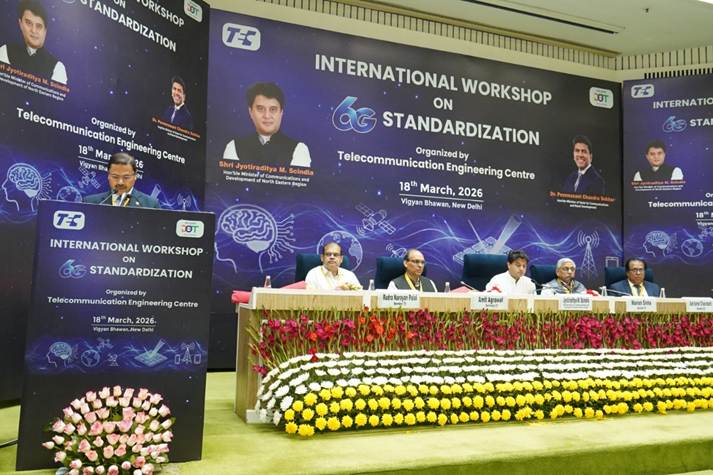
Image: Archive: the March 18, 2026 International Workshop on 6G Standardization in New Delhi. This is not a photograph of September’s endorsement.
Tags
More from Miscellaneous
Four Indian Ventures Join Google DeepMind’s AI for the Planet Cohort
Terrastack, Varaha Climate, Farmers for Forests and Climitra Carbon join the APAC programme, announced on 7 September.
CSIR’s Kolkata RISE Conclave Connects Four Labs With Industry
The September 6–7 programme linked minerals, medicine, materials and machinery. Its reported transfer initiatives need to be followed through to licensing, validation and production.